
Albert Einstein Coloring Pages
Find 20 printable sheets of the famous physicist Albert Einstein. These pages are designed for classroom science lessons, history projects, or anyone wanting to color his iconic portraits and scientific discoveries.
Albert Einstein Coloring Sheets
Color recognizable portraits of the physicist, including his famous wild hair and playful expressions at the chalkboard.


Einstein's Big Ideas
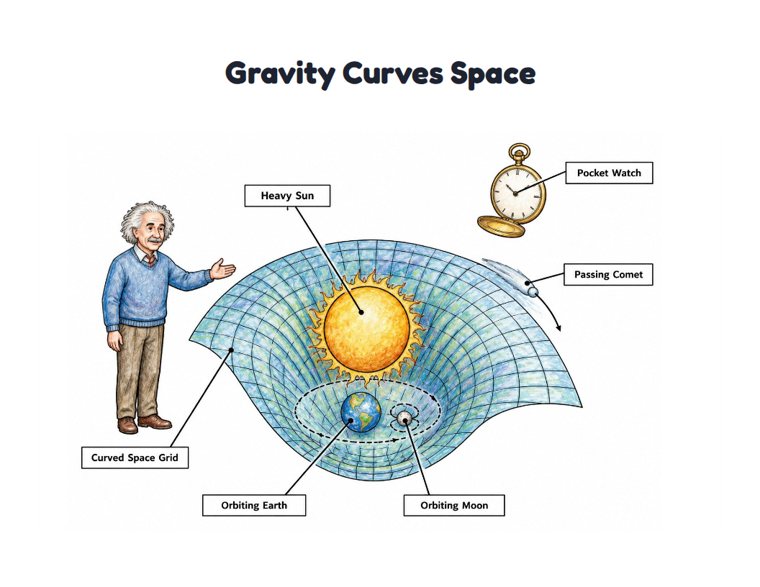
These pages illustrate his theories using visual metaphors like riding a light beam, trains, and exploring the solar system.


Young Einstein, His Violin and Everyday Life
Discover the man behind the science through scenes of him playing music, riding a bicycle, and working in the patent office.


More pages to explore
Related coloring pages on Color Confetti.


All 15 more: Educational (29), Hair (27), Violin (19), Science (28), Scientist (25), Science Lab Equipment (21), Gravity (19), Inventor (19), Space (38), Technology (20), Brain (29), Dna (21), Earth Science (21), Astronaut (34) and College (17).
Ready to print for home, preschool and classroom.
PDF paper size:
Using these pages in your nonprofit, library, hospital or at an event? We'd love to hear from you
Einstein Worksheets
4 printable einstein worksheets with answer keys, from tracing first words in Pre-K to labeling and writing in grades 3–4. Every PDF has the worksheet, the answer key and a colored example. You can change the title and the words before printing.
Download all 4 worksheets as one PDF with answer keys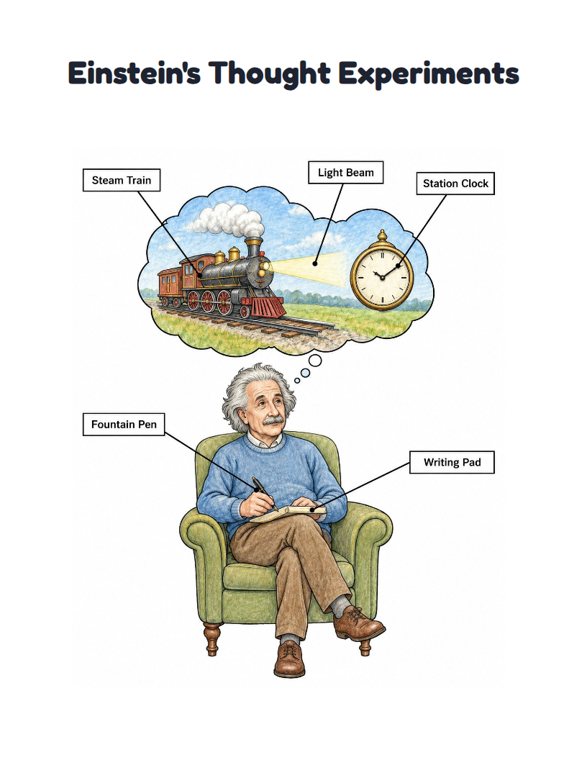
Teaching Physics Through Art
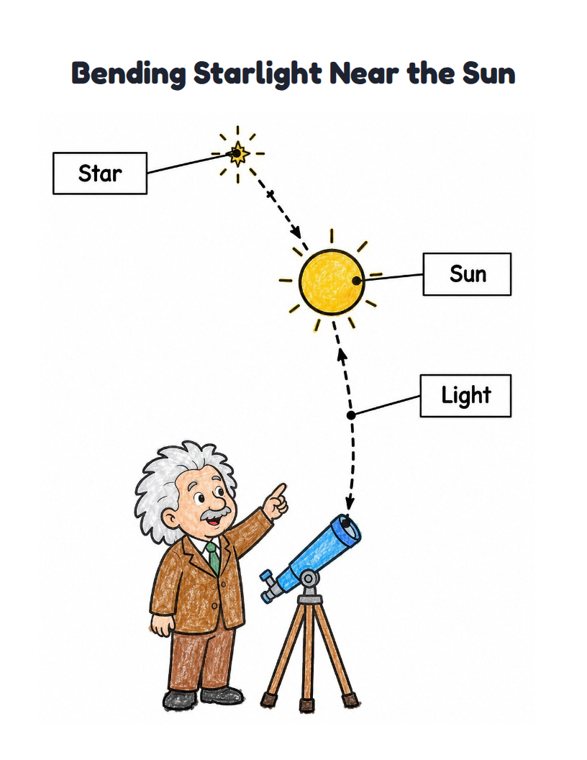
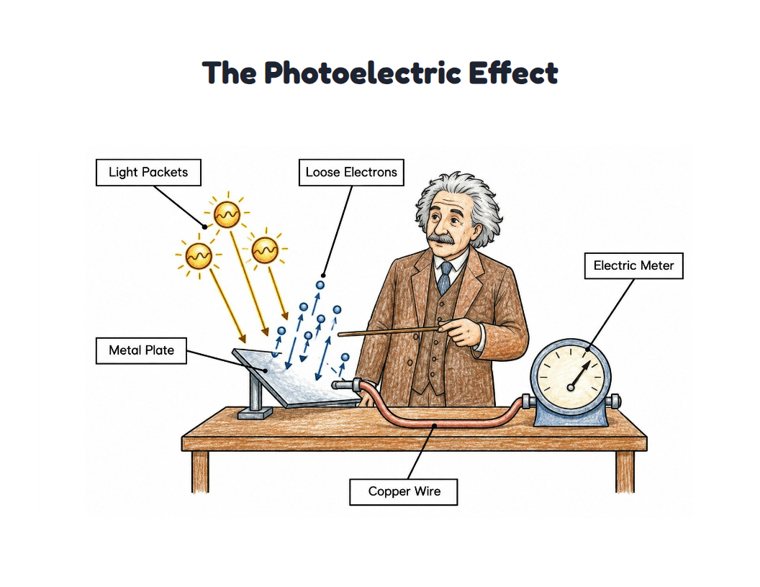
Using educational sheets helps students connect with historical figures. When coloring Einstein at the chalkboard or holding a lightbulb, children can visualize abstract concepts. His work in theoretical physics changed how we understand the universe, making these printables useful for introducing gravity, light, and energy in the classroom. The big ideas section uses visual metaphors, like trains and light beams, which Einstein himself used in his thought experiments to explain the theory of relativity. This makes complex science more approachable for younger learners.
Iconic Portraits and Expressions
The portrait section captures his distinct look and personality. Older students and adult colorists can practice shading techniques on his classic mustache, deep facial wrinkles, and unruly wild hair. The famous image of him sticking his tongue out shows his sense of humor, reminding students that brilliant scientists can also be playful. You can use a mix of grays and whites for his hair, while adding warm tones to his study desk or the chalkboard equations in the background to make the subject stand out.
The Man Behind the Equations
Beyond his scientific achievements, Einstein had a rich personal life. He found inspiration in music, nature, and simple daily routines.
These everyday scenes show a well-rounded individual. Coloring him riding a bicycle or balancing an apple offers a broader perspective on the physicist's life, making him relatable to students studying his scientific contributions.
- He was an accomplished musician, often seen playing his wooden violin to help him think through complex mathematical problems.
- He enjoyed sailing on lakes, finding peace on the water despite never learning how to swim.
- His fascination with science began in childhood when his father gave him a magnetic compass, sparking a lifelong curiosity about invisible forces.
- Before becoming a famous professor, he worked in a Swiss patent office, where he evaluated inventions and developed his own theories in his spare time.