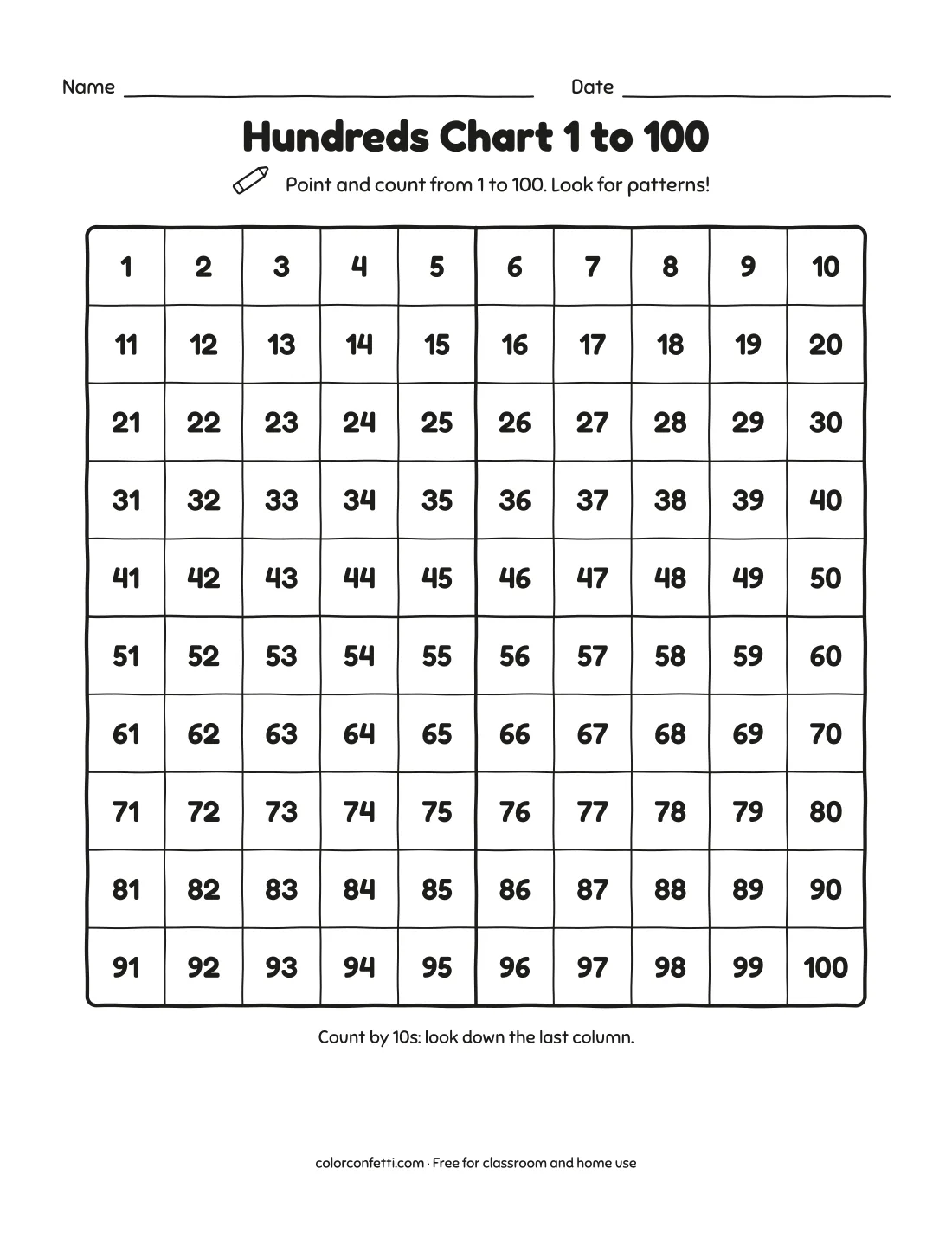
Hundreds Chart 1 to 100
Large boxes and clear numbers, 1 in the top left and 100 in the bottom right.

A hundreds chart is the number line folded into rows of ten. Move right and the number grows by one; move down and it grows by ten. Here are the charts for every stage, from the first counting lessons in kindergarten to the 120 chart in first grade.
ChartsMissing numbersPuzzles and gamesMystery pictures
PDF paper size:
Big boxes, dark numbers and no gray lines, so the charts stay readable on a copier.
Large boxes and clear numbers, 1 in the top left and 100 in the bottom right.
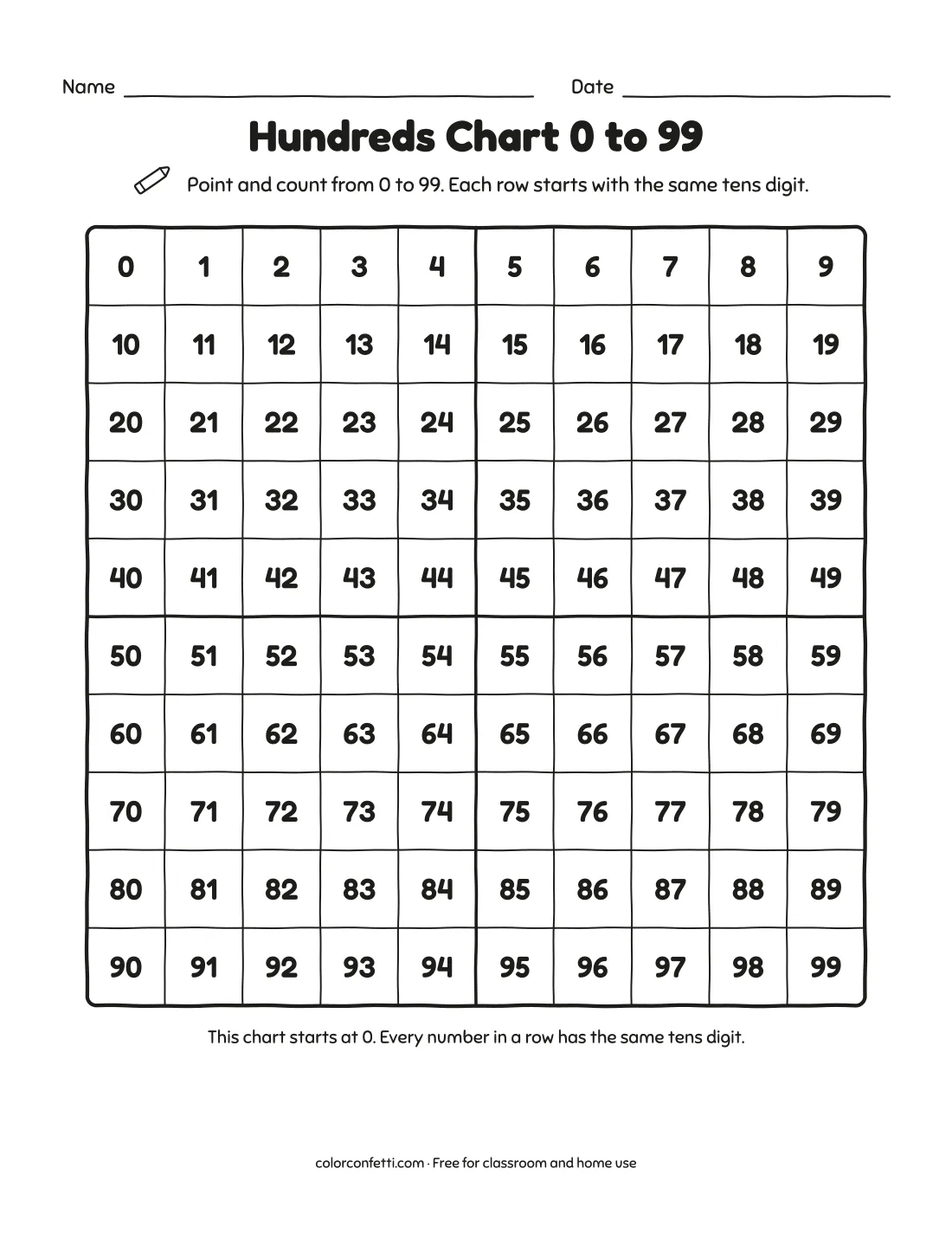
Starts at 0, so every row begins with the same tens digit. Many math programs prefer it.
Empty 10 x 10 grid for writing the numbers, coloring patterns or a mystery picture of your own.
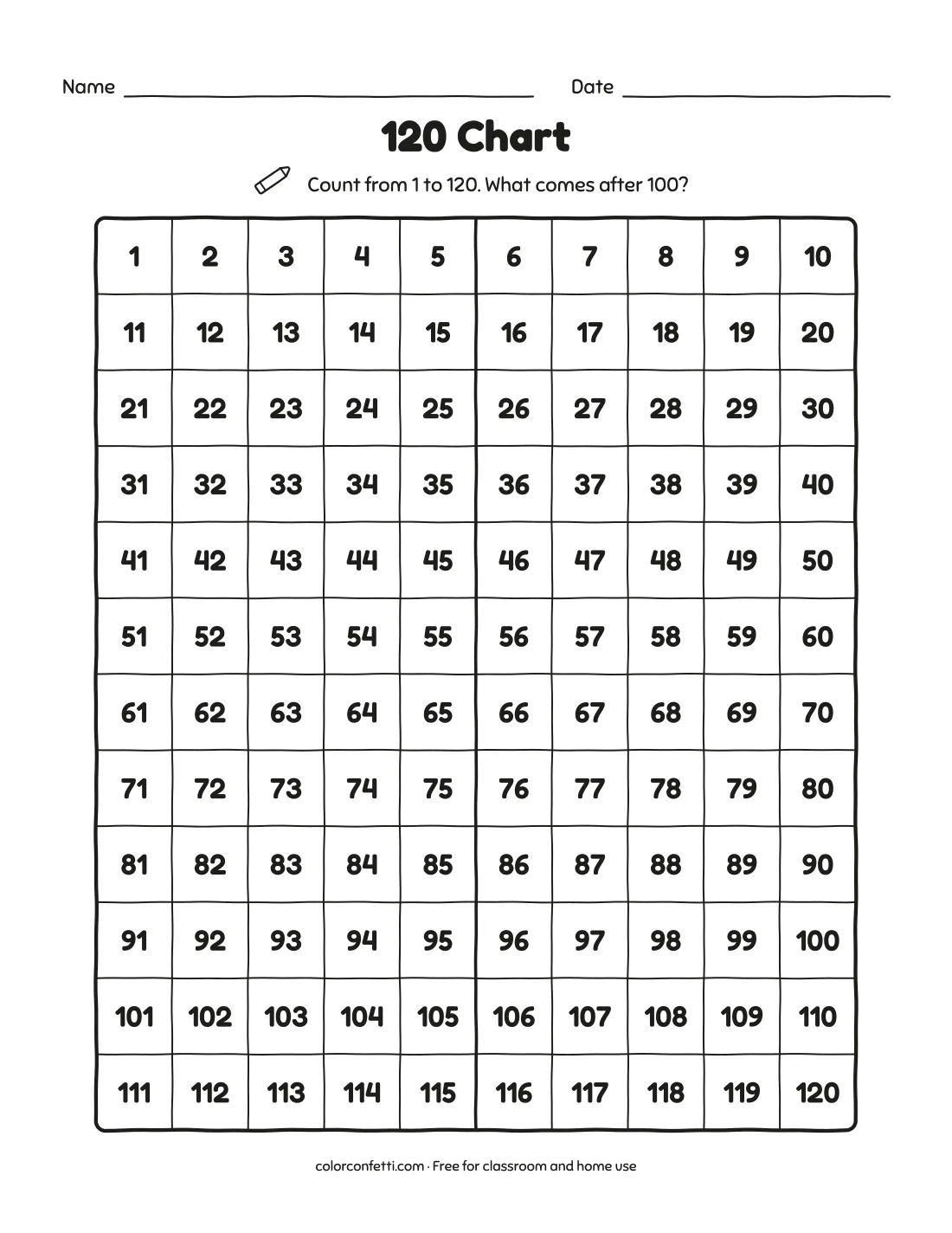
Twelve rows for first grade (counting to 120). The blank version is for writing the numbers.
Start with a few blanks, finish with a nearly empty chart. All levels share one answer key file.
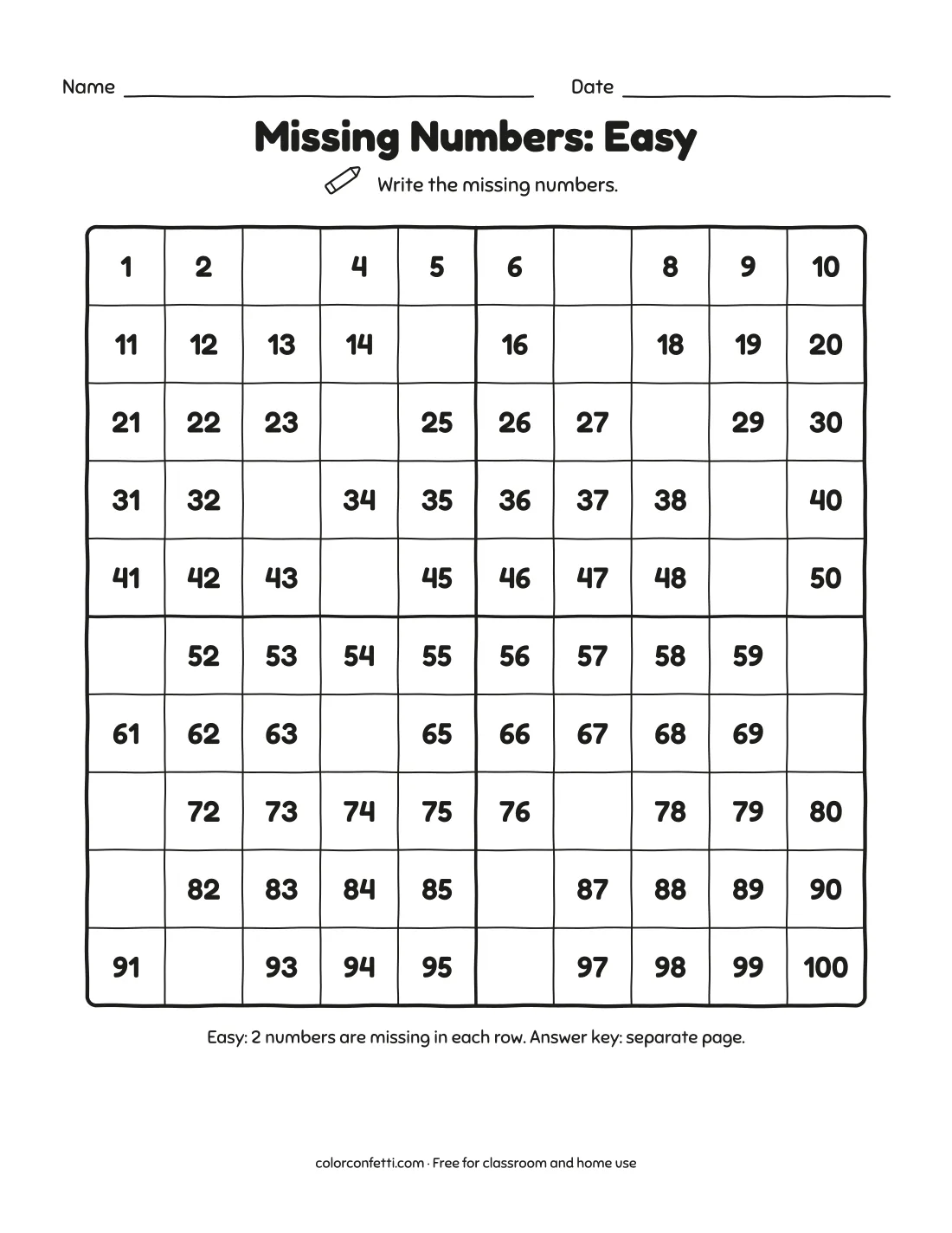
Four levels, from two blanks per row to a nearly empty chart. Answer keys on a separate page.
Hands-on ways to learn how the chart works: rebuild it, jump ten, race to 100.
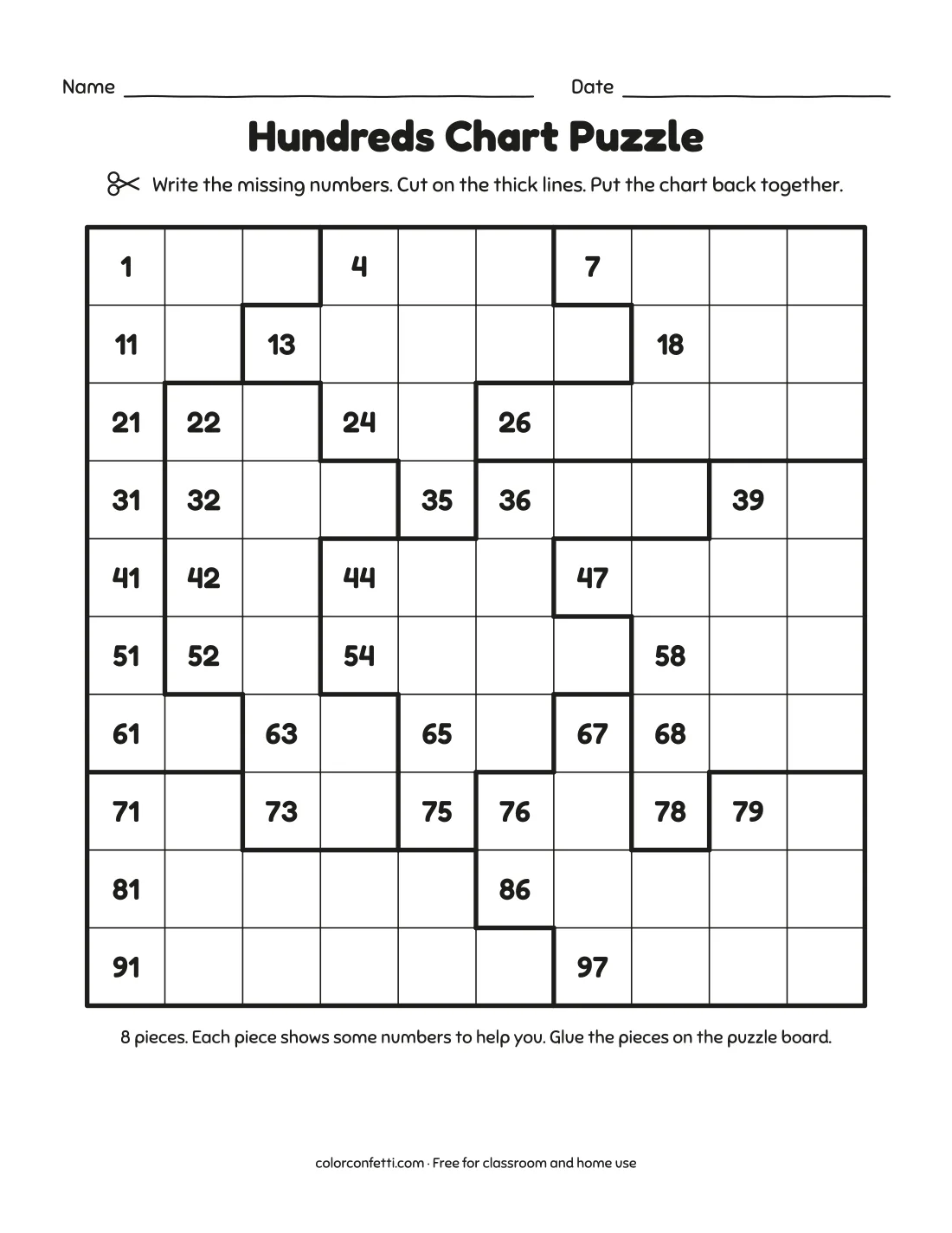
Cut the chart into pieces and rebuild it on the board. Thick cut lines, a few numbers left on each piece.
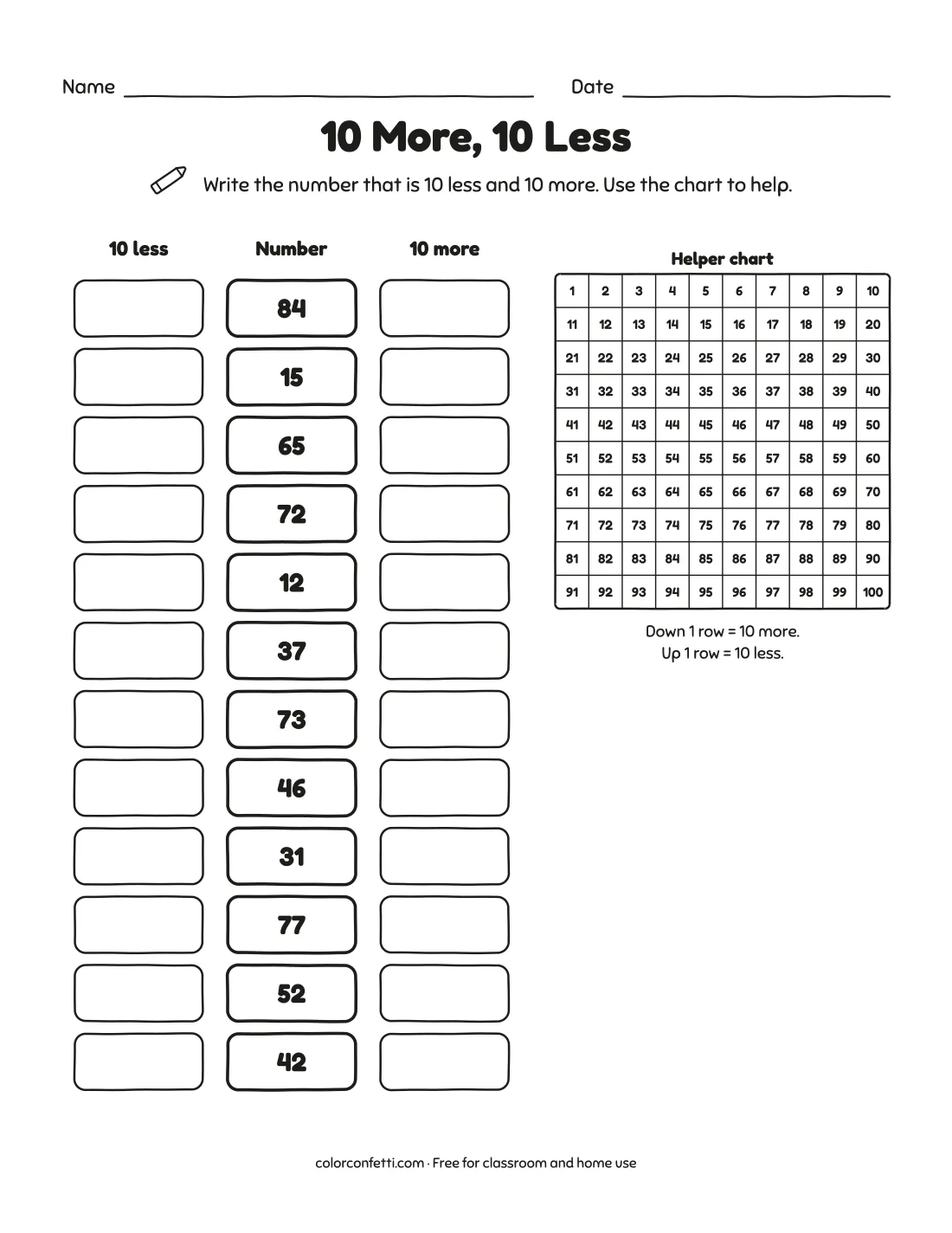
Find the number one row up and one row down. Answer key included.
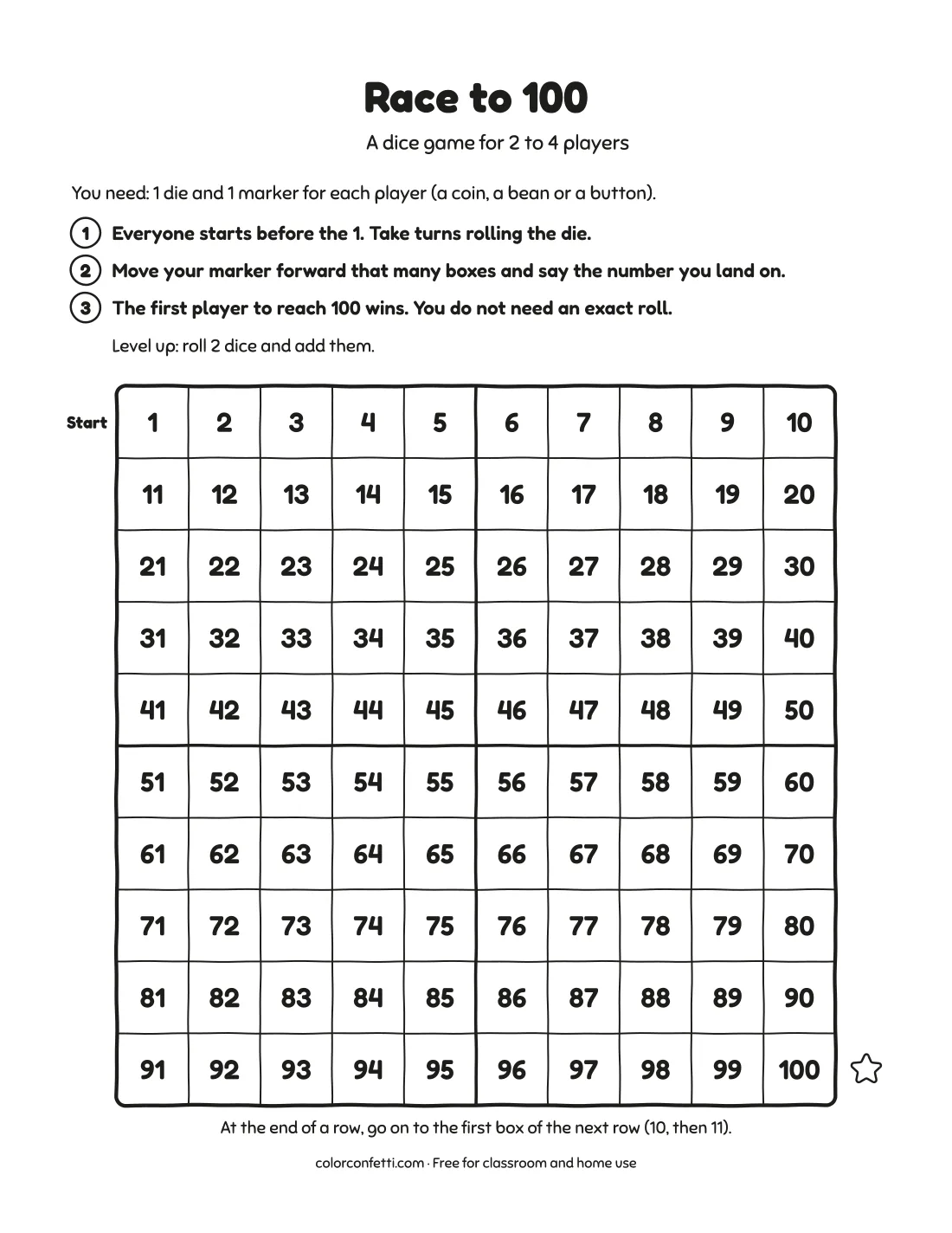
For 2 to 4 players with one die and a marker each. Roll, move, and the first to reach 100 wins (no exact roll needed). Level up: roll two dice and add.
Color the numbers in the key and a picture appears. Each picture comes in three levels with the same answer, so the whole class can work on it together: level 1 lists the numbers, level 2 uses "10 more" and "1 less" clues, level 3 uses addition and subtraction. Every key gives the color as a word, so it works with a black-and-white copier and for children with color blindness.
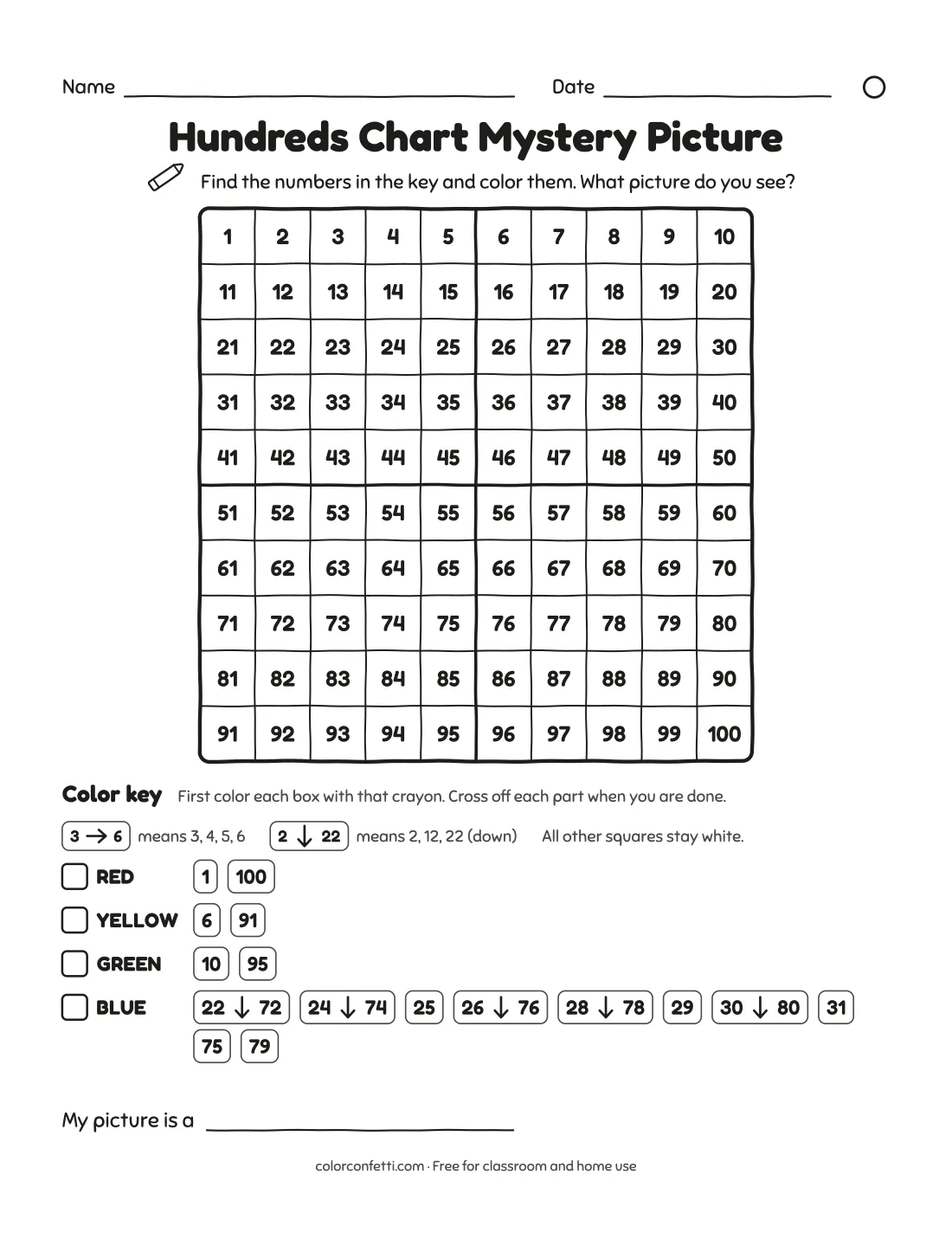
Color the boxes in the key to reveal the picture. Same picture on all three levels. Four colors.
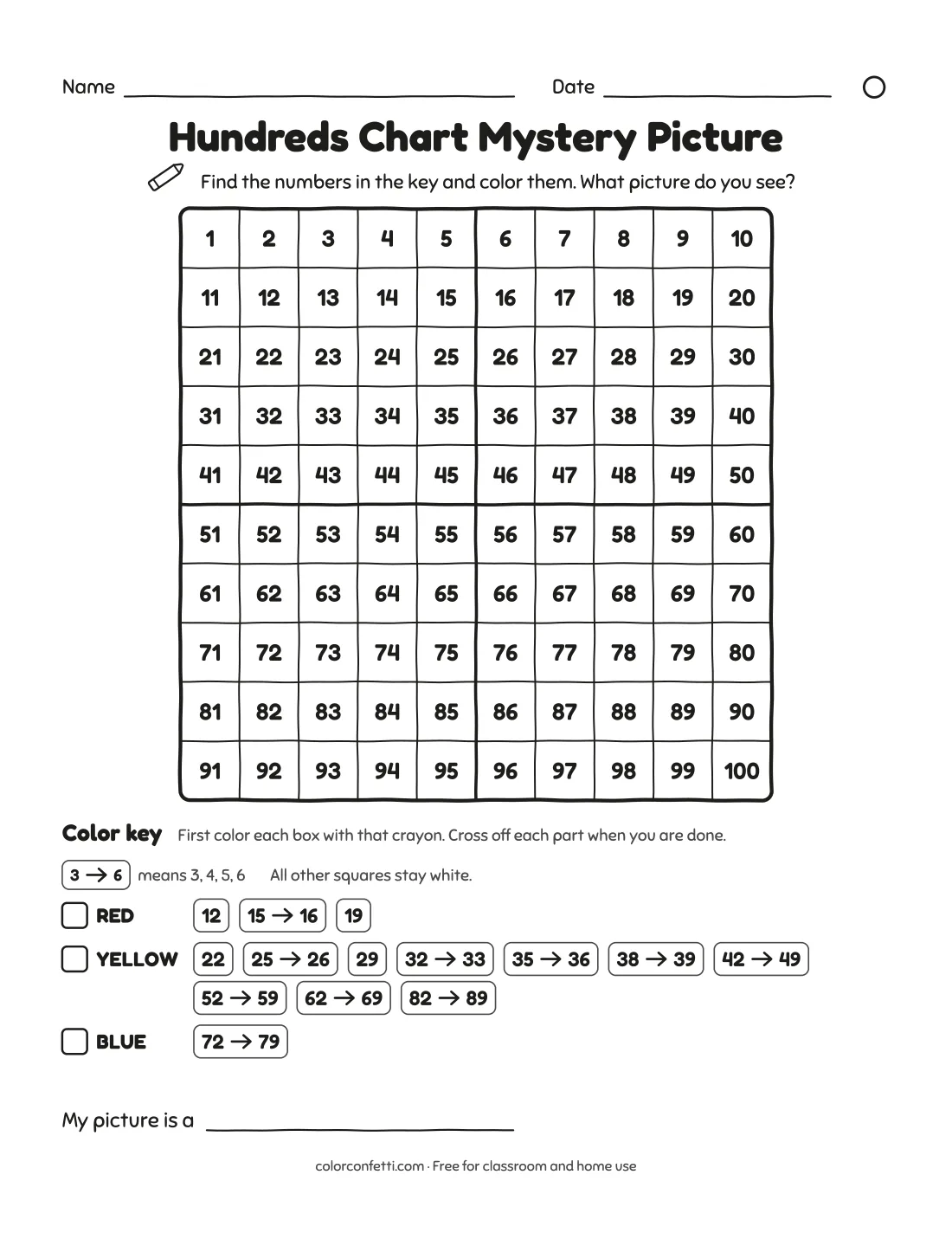
Color the boxes in the key to reveal the picture. Same picture on all three levels. Three colors.
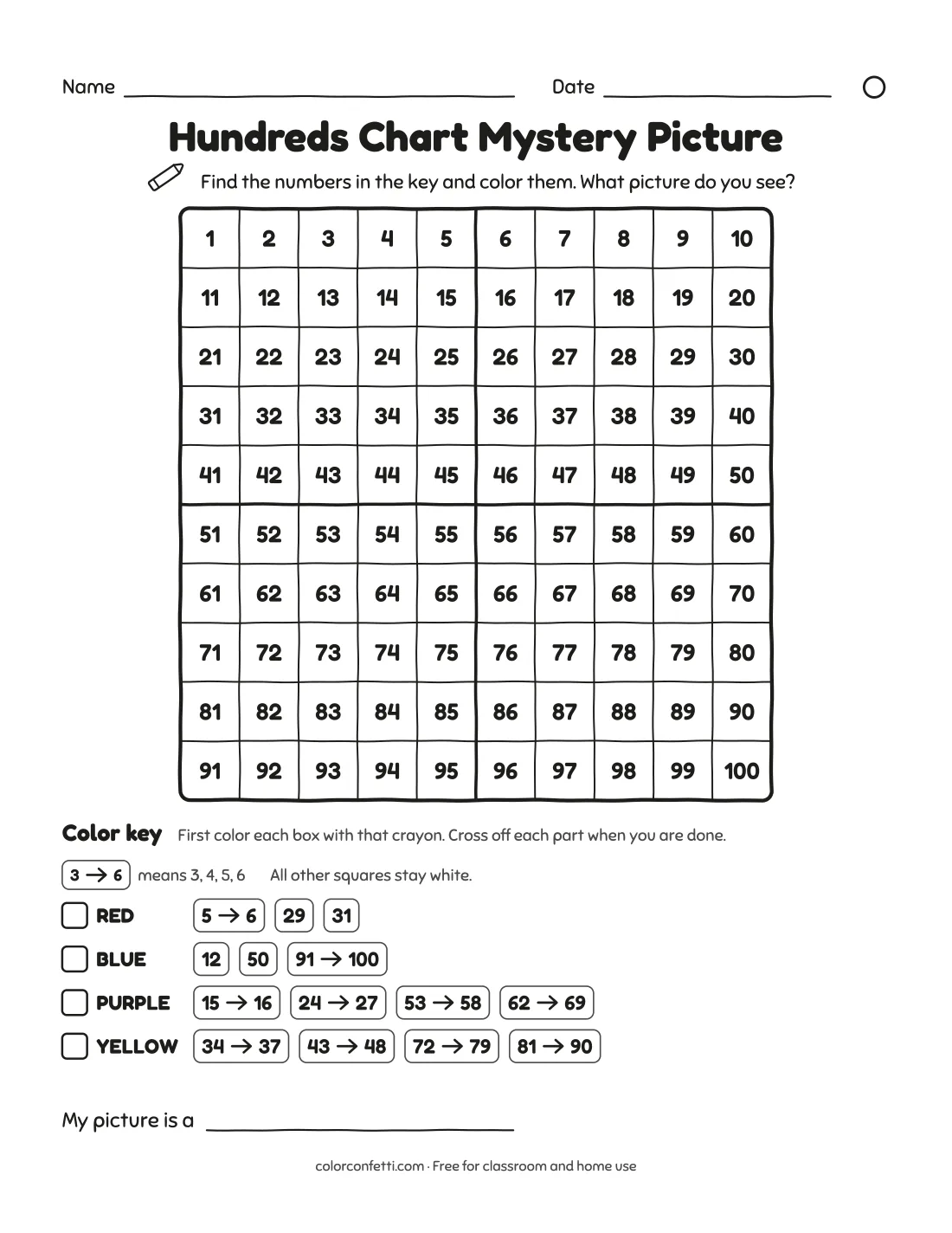
Color the boxes in the key to reveal the picture. Same picture on all three levels. Four colors.
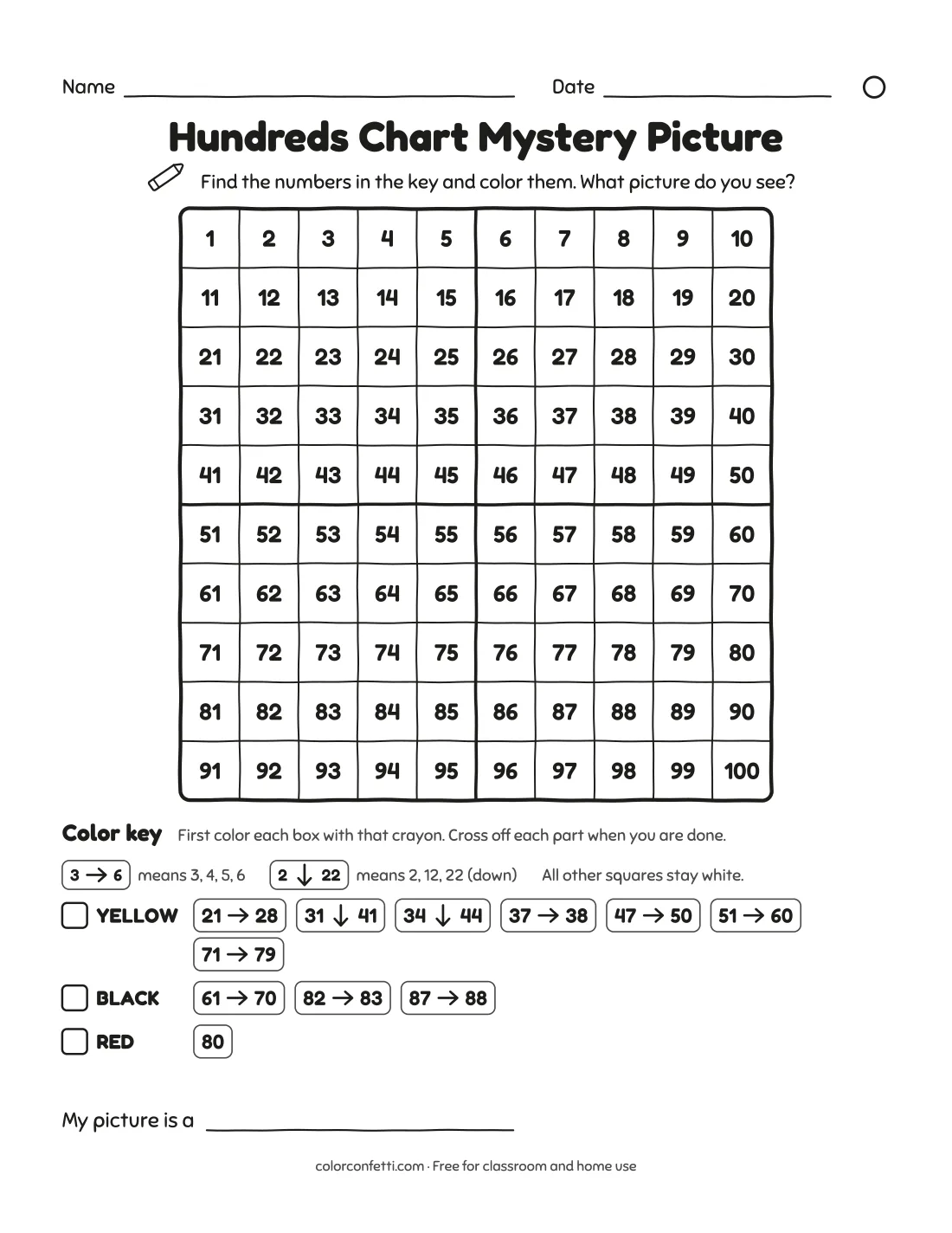
Color the boxes in the key to reveal the picture. Same picture on all three levels. Three colors.
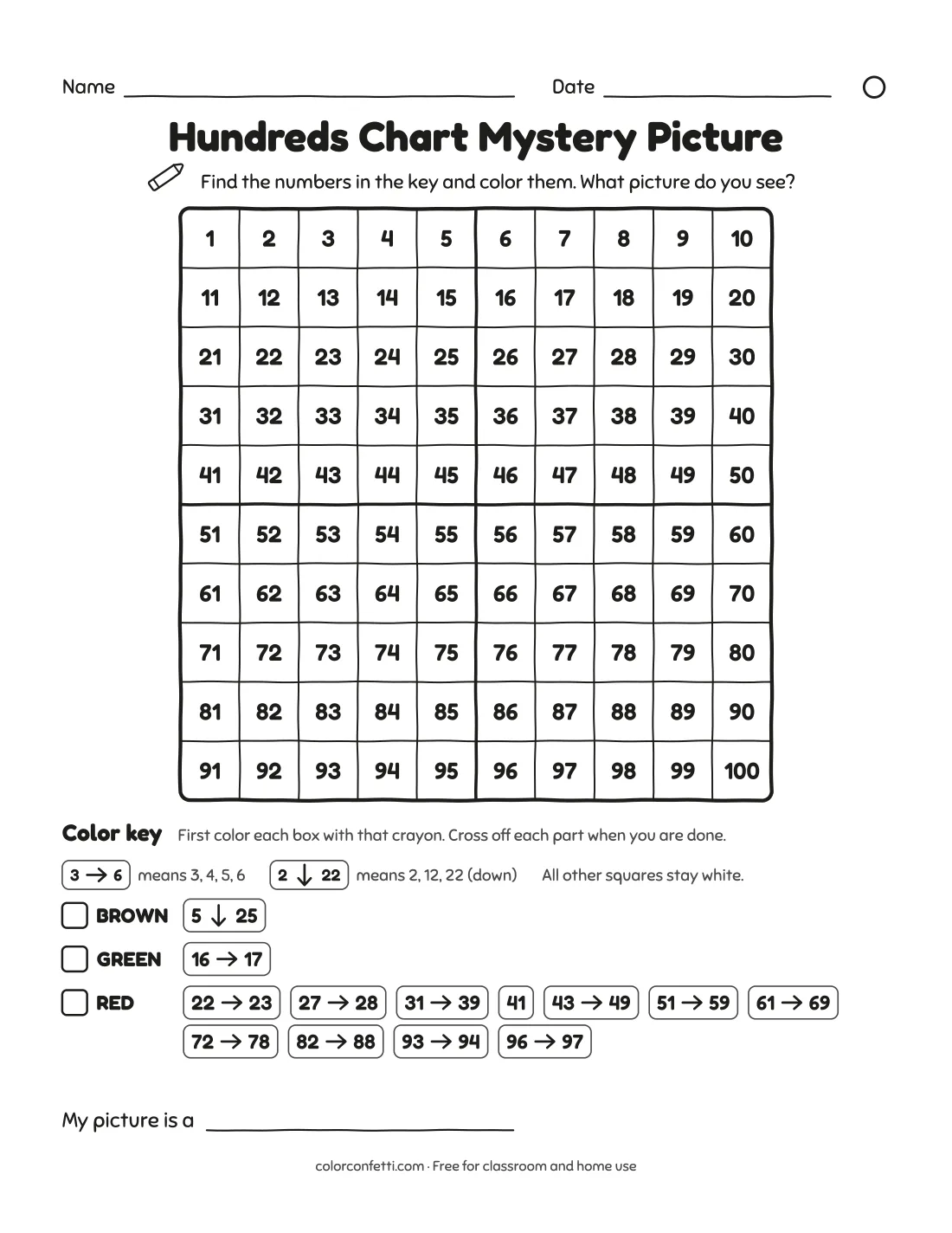
Color the boxes in the key to reveal the picture. Same picture on all three levels. Three colors.
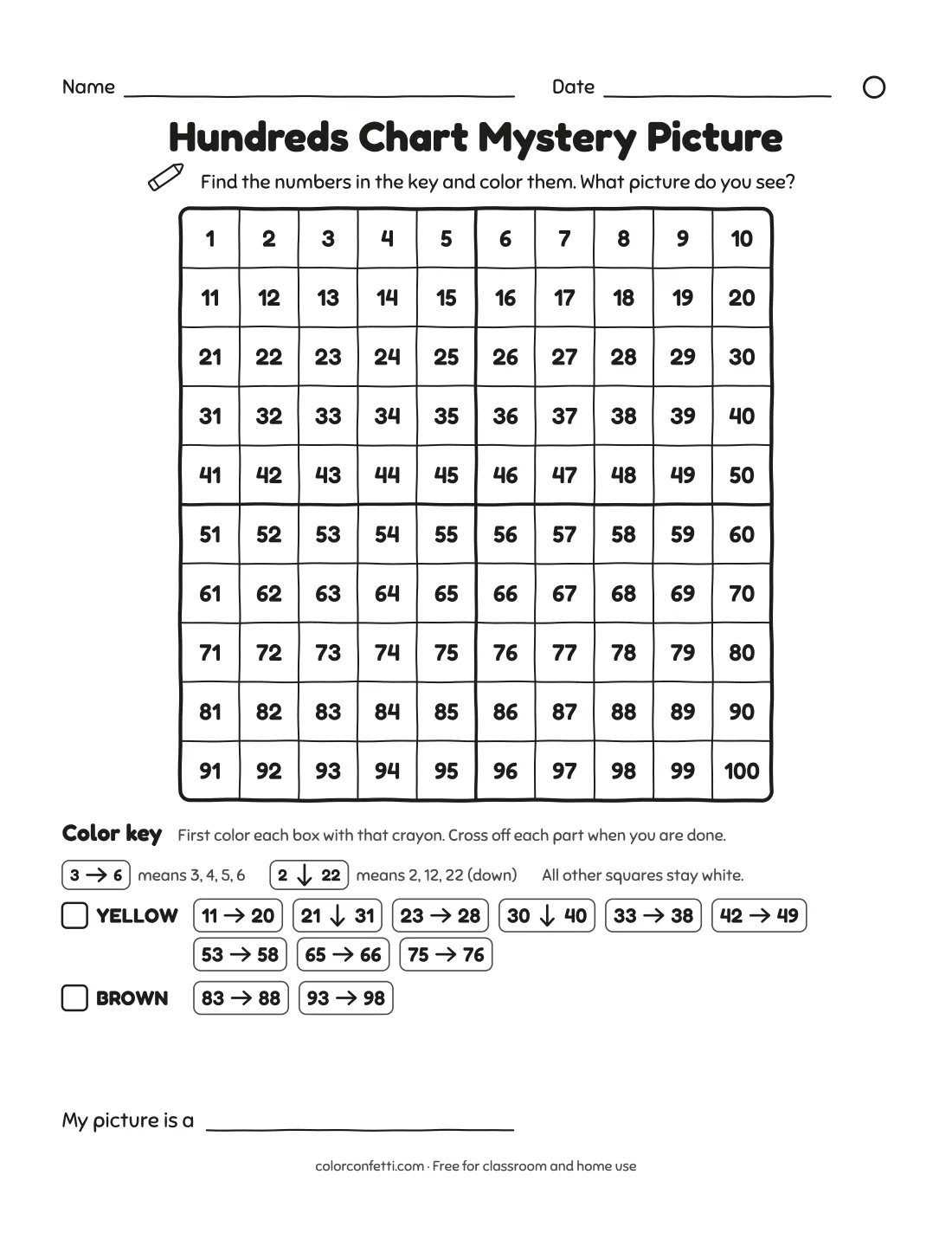
Color the boxes in the key to reveal the picture. Same picture on all three levels. Two colors.
For the 100th day, the class mural is a nice finish: six students, six charts, one big picture on the wall.
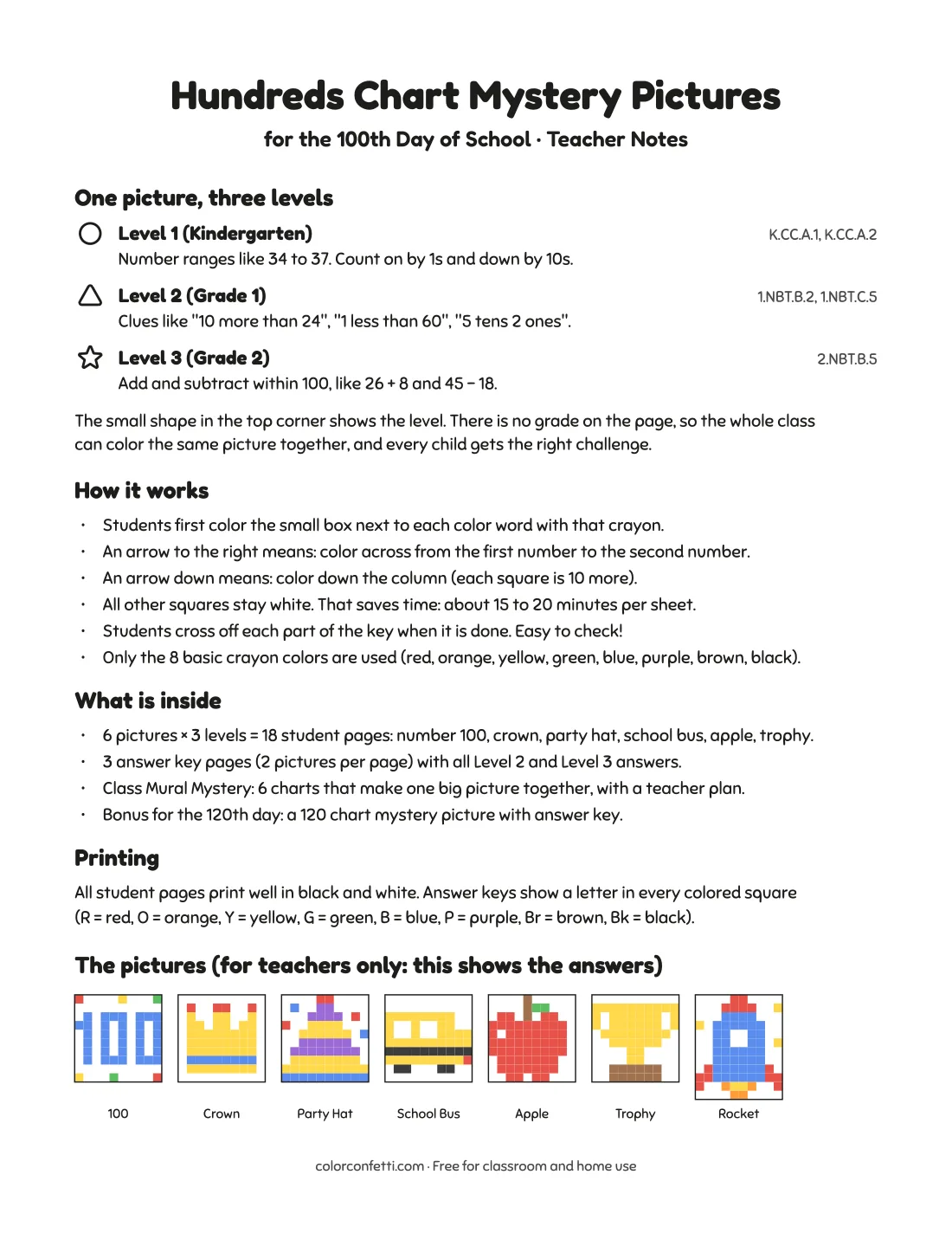
How the three levels work, which standards they practice, and small previews of every picture.
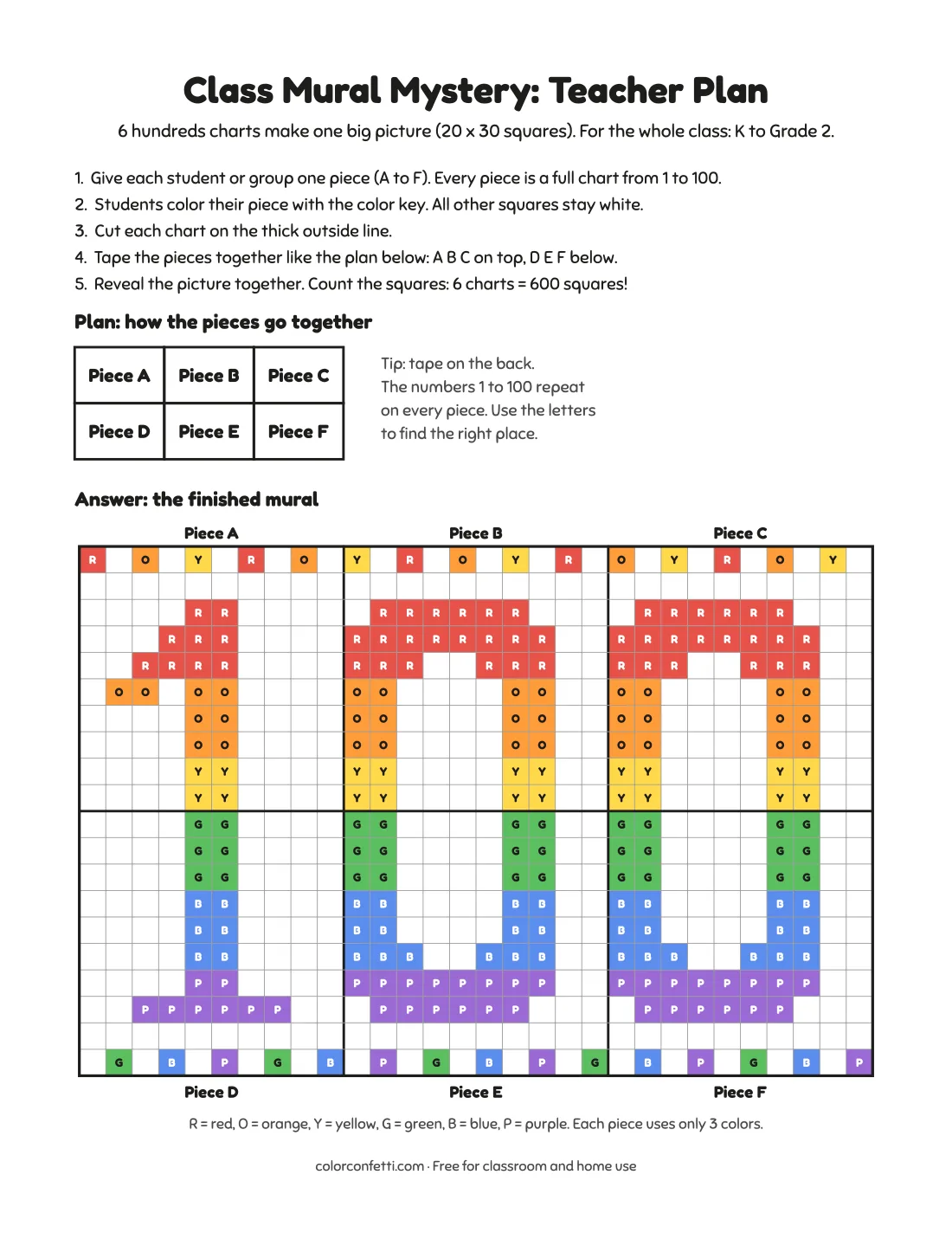
Six students each color one hundreds chart. Put the six pieces together and a big rainbow 100 appears. Includes the layout plan.
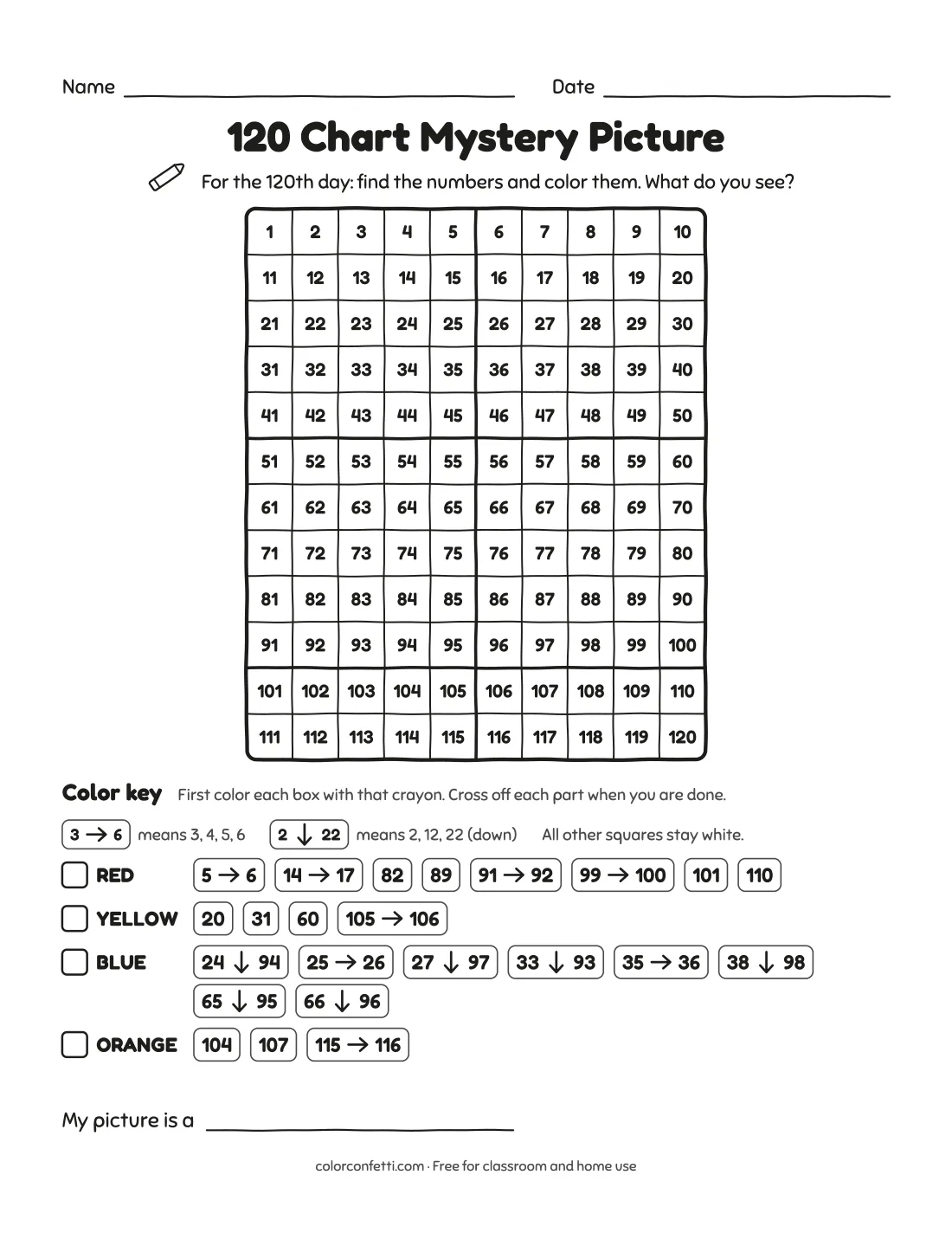
A bonus for the 120th day: a rocket on a 120 chart, with answer key.
A hundreds chart runs from 1 to 100. A 0–99 chart starts at 0, so every number in a row has the same tens digit (20 to 29 in one row). Use the one that matches your math program.
In first grade. The Common Core standard 1.NBT.A.1 asks first graders to count, read and write numbers to 120, so many classrooms switch to a 120 chart mid-year.
Children find each number from the key on the chart and color its box. When all the numbers are colored, a picture appears. Our sheets come in three levels with the same picture.
Yes. The missing numbers sheets, 10 more 10 less, the mystery pictures and the 120 chart picture all have answer keys.
Yes. All charts are black and white with dark lines. The mystery picture keys name every color as a word, so a black-and-white copy works too.
Celebrating the 100th day? See 100th day of school printables, crowns and certificates and the date calculator.
Free for classroom and home use. Share and copy with credit to Color Confetti (license: CC BY 4.0). No sign-up, no email.