
Food Chain & Ecosystem Coloring Pages
These printable science worksheets help students understand how energy moves through different environments. You will find simple linear diagrams, detailed food webs, and energy pyramids designed for classroom lessons or home study.
Food Chain Coloring Pages
Simple linear diagrams showing how energy transfers from plants to herbivores and predators.


Ocean and Water Food Chains
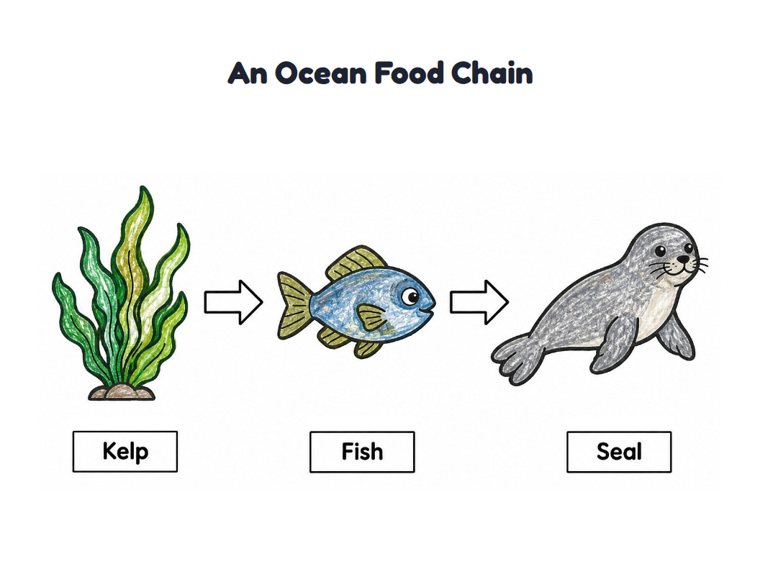
Marine ecosystems featuring producers like algae and apex predators of the sea.


Food Pyramids and Ecosystem Diagrams
Visual representations of trophic levels and how energy decreases as it moves up the pyramid.


More pages to explore
Related coloring pages on Color Confetti.


All 5 more: Fish (58), Shark (52), Plant (40), Owl (51) and Science (28).
Ready to print for home, preschool and classroom.
PDF paper size:
Using these pages in your nonprofit, library, hospital or at an event? We'd love to hear from you
Food Chain Worksheets
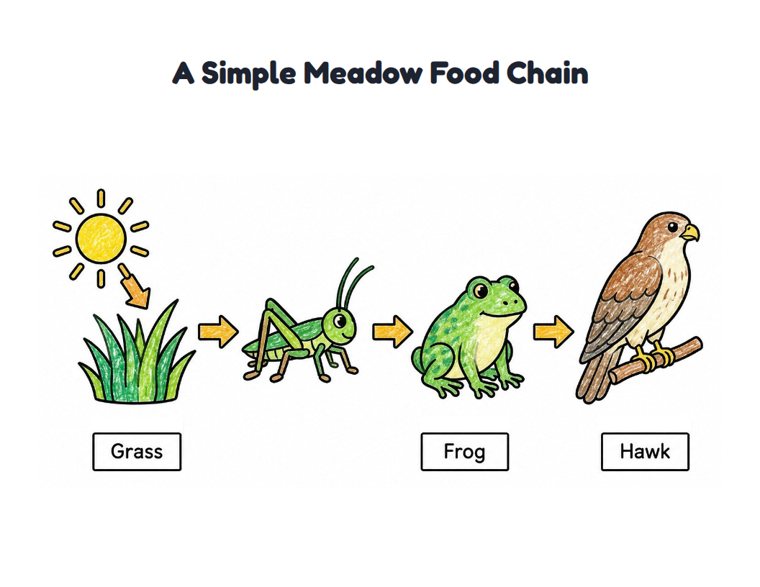
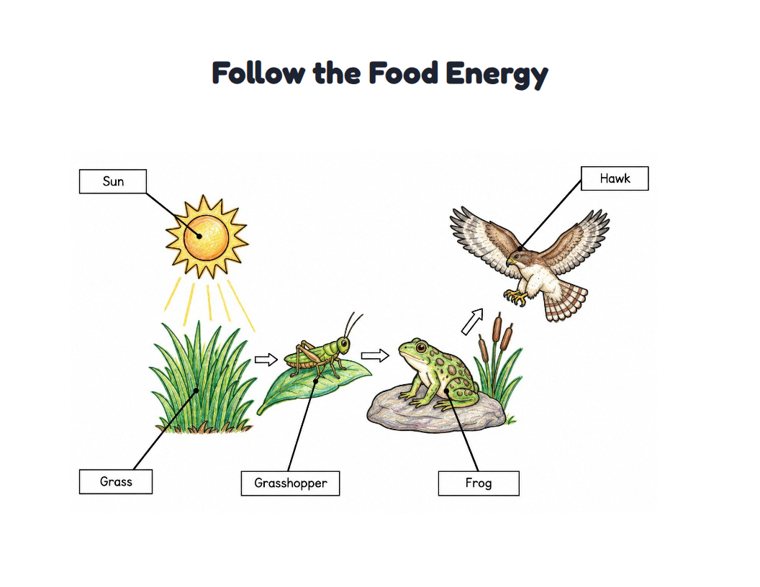
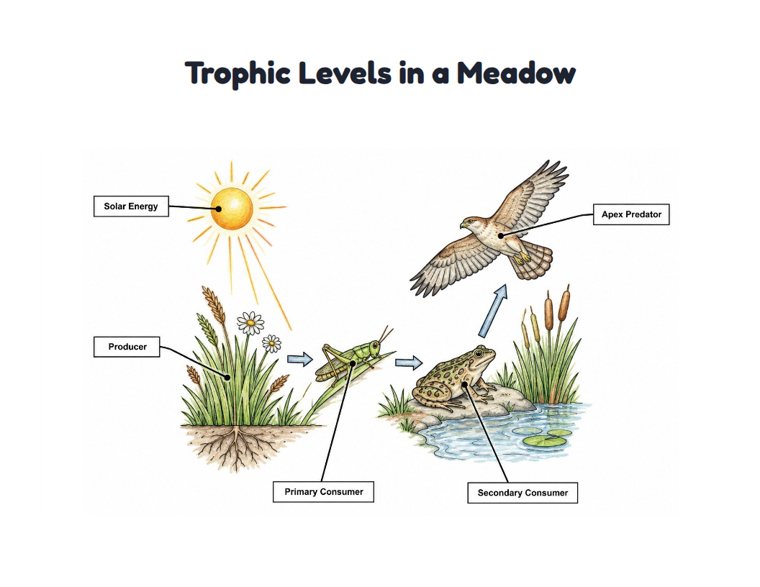
7 printable food chain worksheets with answer keys, from tracing first words in Pre-K to labeling and writing in grades 3–4. Every PDF has the worksheet, the answer key and a colored example. You can change the title and the words before printing.
Download all 7 worksheets as one PDF with answer keysMeadow Food Chain Sequence in 3 levels
More food chain worksheets
Understanding Energy Flow in Ecosystems
Teaching ecology starts with showing how living things rely on each other for survival. A basic food chain illustrates the direct path of energy from the sun to producers like grass or algae, and then to various consumers. Our linear diagrams make it easy for elementary students to follow the arrows and see exactly how energy moves through a habitat.
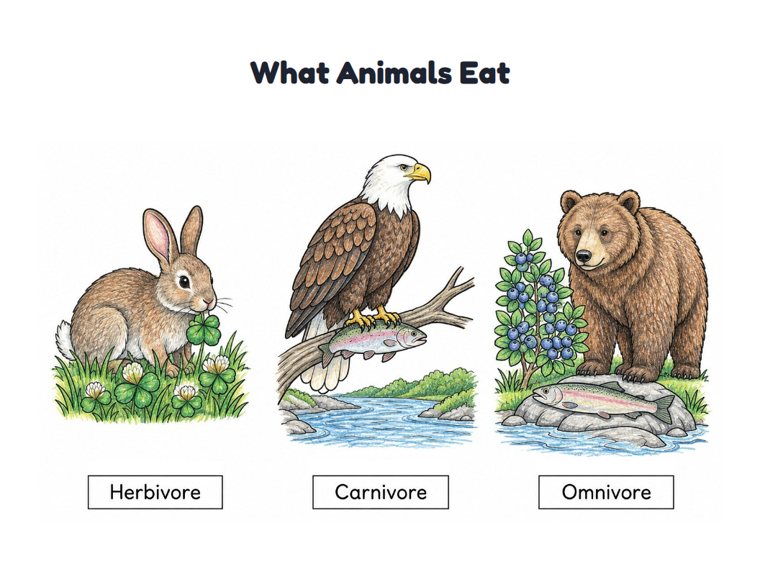
As students color the different animals and plants, they learn to identify herbivores, carnivores, and omnivores. Adding color to the directional arrows reinforces the concept of energy transfer in a visual, hands-on way.
Exploring Different Habitats
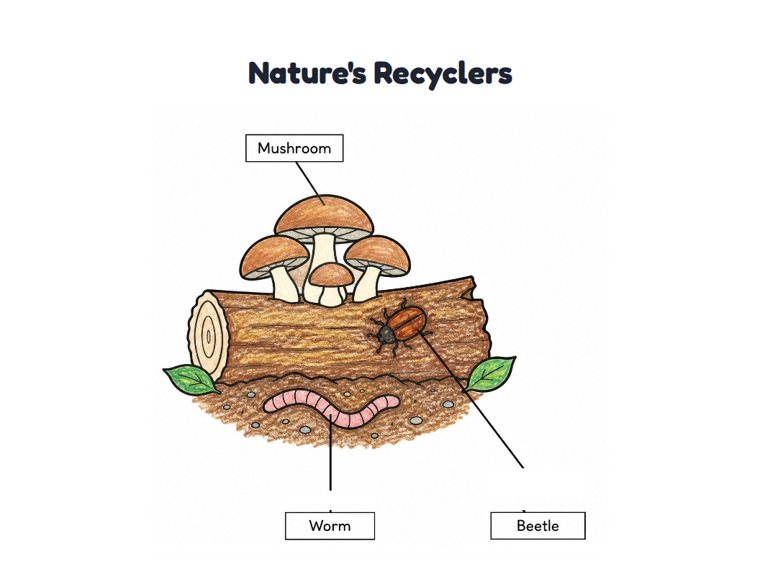
Every environment has its own unique balance of life and specific species that fill ecological roles. In our marine sections, you will find complex aquatic systems. Students can color the tiny phytoplankton that feed small fish, which are then hunted by a shark or a marine mammal.
Terrestrial habitats are also well represented. You can trace the energy from a simple green plant to an insect, and eventually to a larger predator like an owl or a woodland fox. Comparing these different habitats helps children see that the underlying rules of ecology apply everywhere on Earth.
Using Food Pyramids and Webs
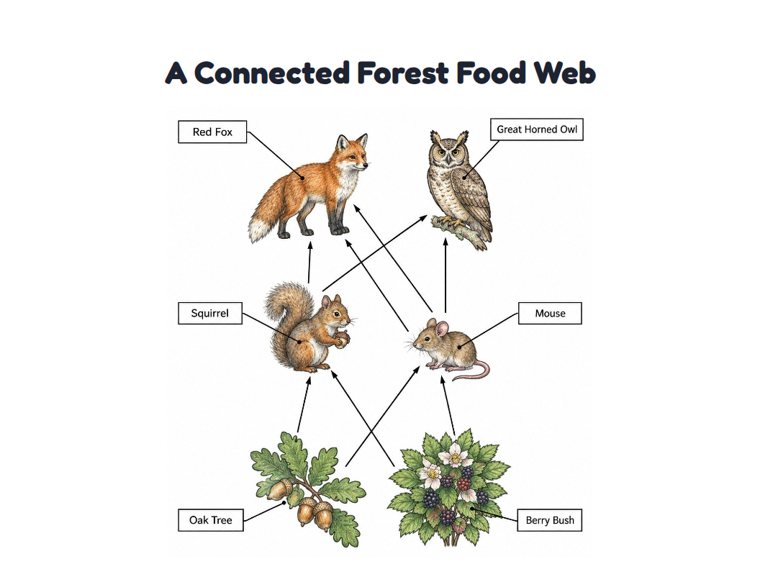
While a single chain is a good starting point for young learners, nature is usually much more complicated. A food web shows how multiple chains overlap and intersect within a single ecosystem.
These printable worksheets serve as a quiet, focused activity after a science lesson. They allow students to process complex ecological concepts at their own pace while practicing fine motor skills.
- Coloring different trophic levels in an energy pyramid shows why there are fewer apex predators than plants.
- Labeling primary, secondary, and tertiary consumers helps reinforce classroom science vocabulary.
- Tracing multiple interconnected paths in a web drawing demonstrates the importance of biodiversity.