
Free Michelangelo Coloring Pages
Explore the life of a master artist with these printable sheets. Students and adults can color scenes of Michelangelo carving marble statues, mixing pigments, and working on his famous Renaissance masterpieces.
Michelangelo Coloring Pages
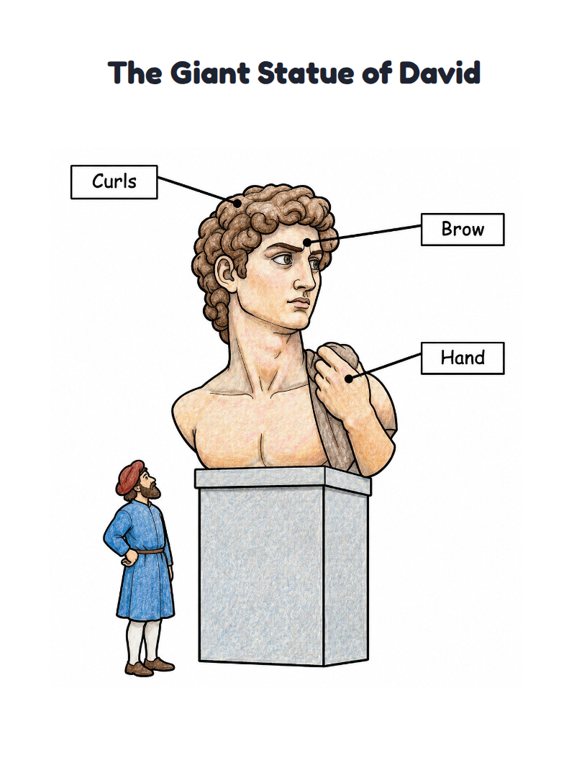
Color portraits of the master sculptor alongside his tools, the David bust, and a cute version of the Creation of Adam.


Michelangelo at Work on Renaissance Masterpieces
These scenes show the artist's daily work, from measuring marble in the quarry to preparing wet plaster for his massive frescoes.


More pages to explore
Related coloring pages on Color Confetti.


All 18 more: Art (36), Renaissance (26), Turtles (62), Ninja (14), Pizza (38), Skateboarding (16), Educational (29), Leonardo Da Vinci (25), Painter (18), Architect (18), Paint Palette (23), Italy (21), Rome (19), Mosaic (28), Stained Glass (33), Art Nouveau (26), Museum (23) and Rose Window (19).
Ready to print for home, preschool and classroom.
PDF paper size:
Using these pages in your nonprofit, library, hospital or at an event? We'd love to hear from you
Michelangelo Worksheets
5 printable michelangelo worksheets with answer keys, from tracing first words in Pre-K to labeling and writing in grades 3–4. Every PDF has the worksheet, the answer key and a colored example. You can change the title and the words before printing.
Download all 5 worksheets as one PDF with answer keys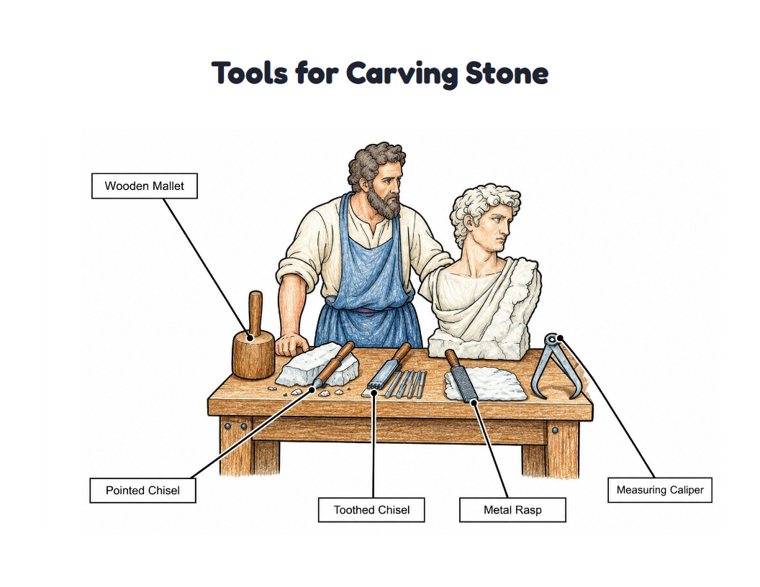
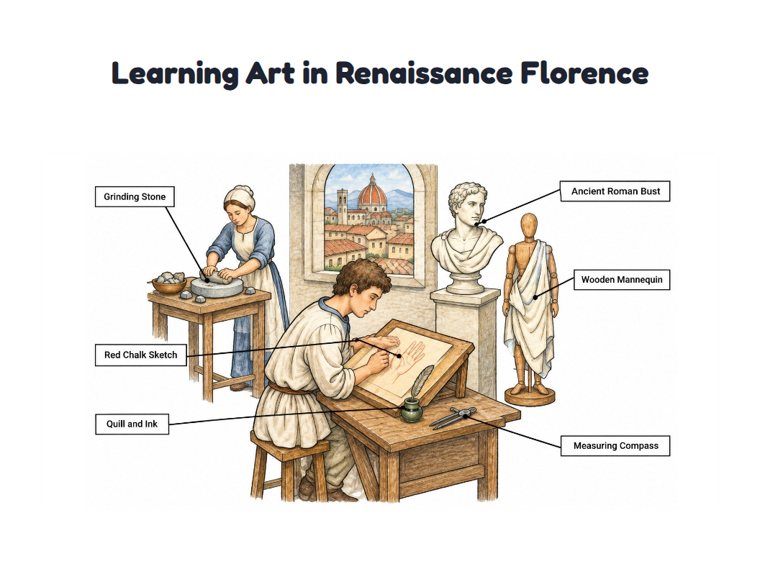
Bringing the Renaissance Workshop to Life
When coloring these scenes of the Italian master, you can explore the daily life of a 16th-century artist. Michelangelo Buonarroti considered himself a sculptor first, which is why many pages show him with a mallet and chisel. You will find him measuring stone from the famous Carrara quarry, studying human anatomy, and carving delicate features into solid marble.
Coloring Historical Art Techniques
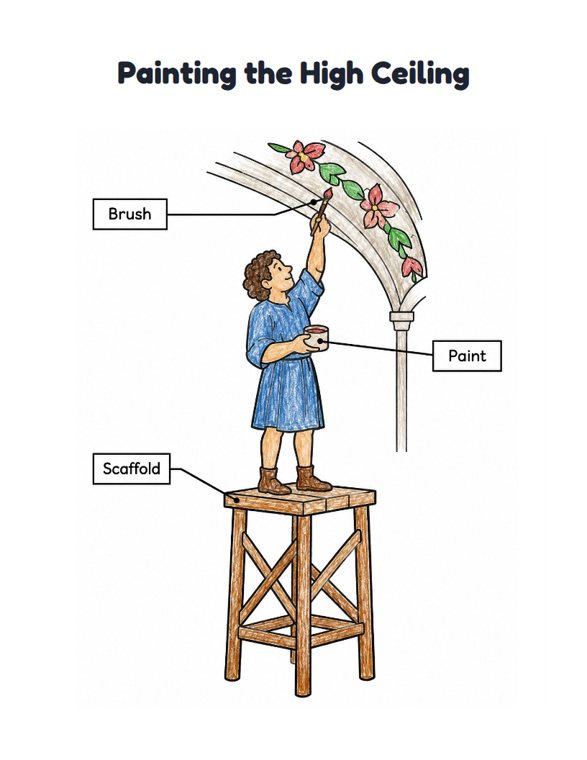
The illustrations capture different methods used by artists of the period. In the masterpieces section, you can color him preparing wet plaster for a fresco, the demanding technique he used for the Sistine Chapel ceiling.
- Use cool shades of gray and pale blue for the raw marble blocks and statues.
- Add warm earth tones like ochre, umber, and burnt sienna for his Florence workshop.
- Try fine-tipped pens for the intricate details of his architectural sketches and blueprints.
Educational Use for Art History
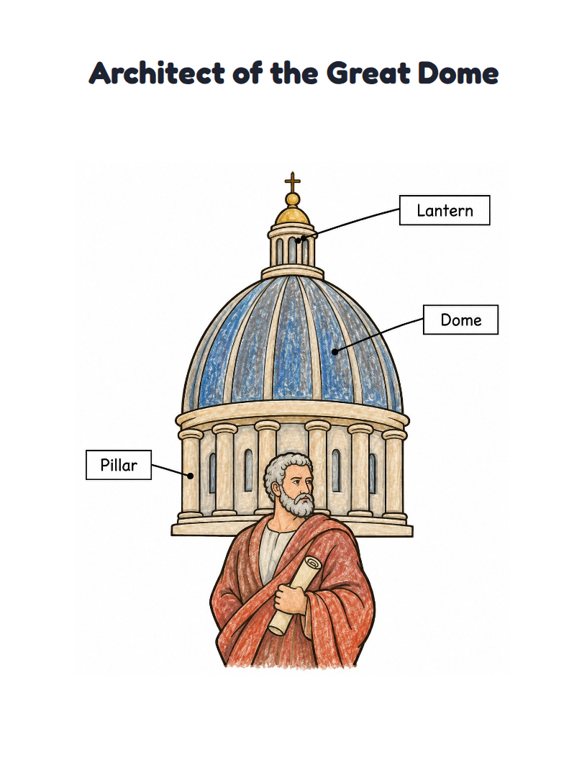
Teachers can use these sheets to introduce students to classical art and architecture. The pages showing him studying anatomy by candlelight or designing Saint Peter's Basilica help explain how much intense observation and structural planning went into his famous works. Coloring these historical scenes gives students a hands-on way to connect with art history.