
Free Village Coloring Pages
Discover charming rural settlements with these printable village scenes. This collection includes cozy cottages, traditional craftspeople, and simple designs suitable for young children, older students, and adults who enjoy coloring historical architecture.
Charming Village Coloring Pages
Color detailed cobblestone streets, thatched stone cottages, and quiet country bridges.
Download all 8 as one PDF with cover page


Traditional Village Life Coloring Pages
Illustrate daily life in a historical settlement by coloring blacksmiths, bakers, and bustling market stalls.
Download all 9 as one PDF with cover page


Simple Village Coloring Pages for Kids
These easy village scenes feature large outlines of cottages and windmills for younger children.
Download all 3 as one PDF with cover page


More pages to explore
Related coloring pages on Color Confetti.


All 14 more: Christmas Village (27), Medieval (32), Landscape (38), Garden (36), House (43), Mushroom (43), Fantasy (30), Cottage (22), Cabin (29), Neighborhood (13), Barns (28), Farm (48), Windmill (21) and Castle (34).
Ready to print for home, preschool and classroom.
PDF paper size:
Using these pages in your nonprofit, library, hospital or at an event? We'd love to hear from you
Village Worksheets
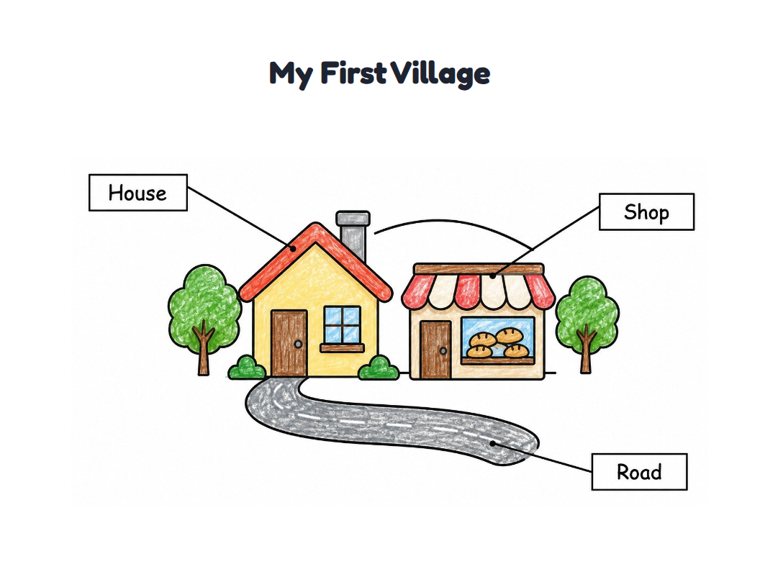
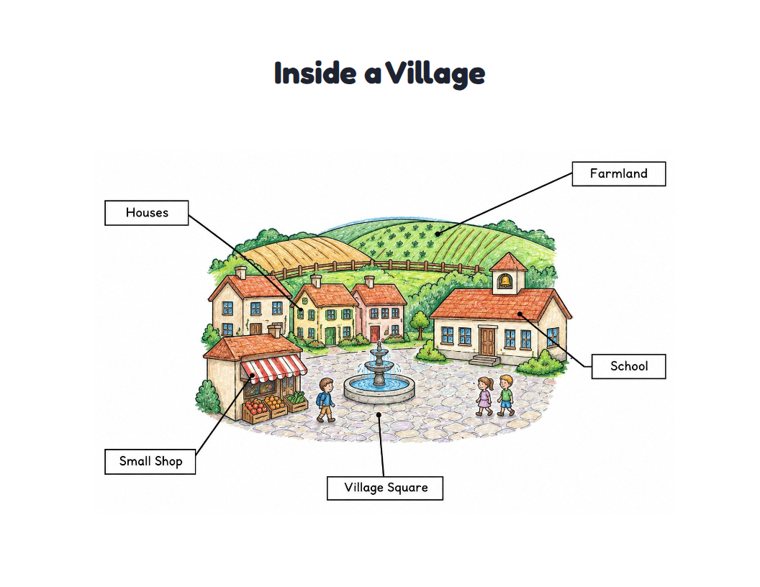
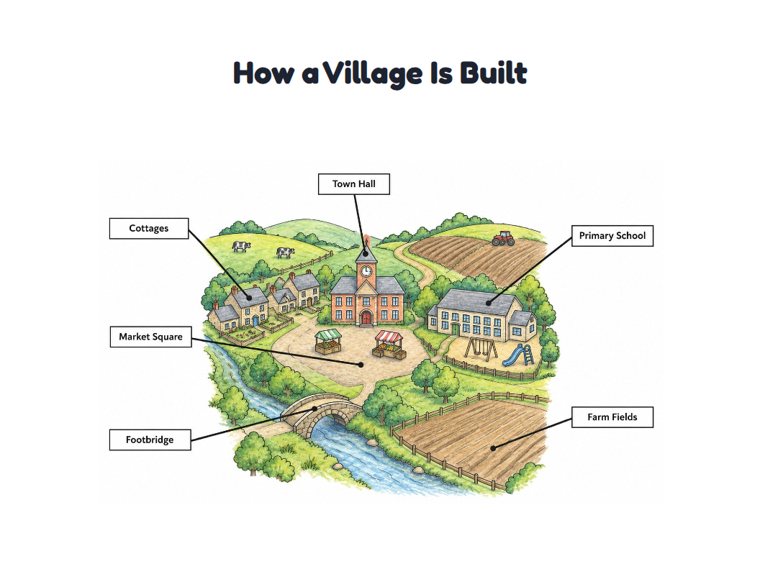
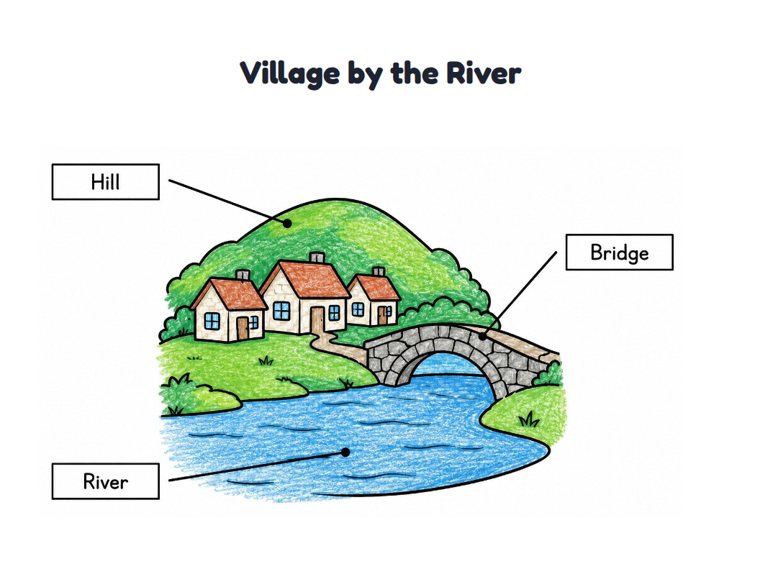
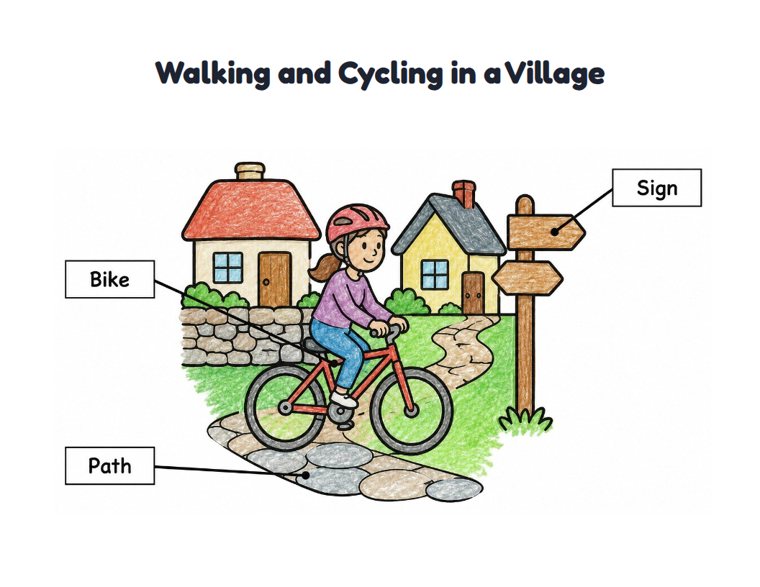
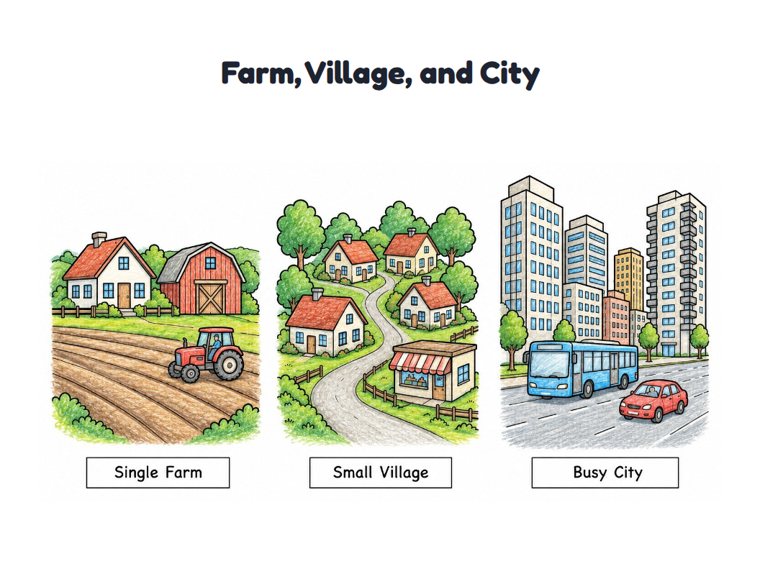
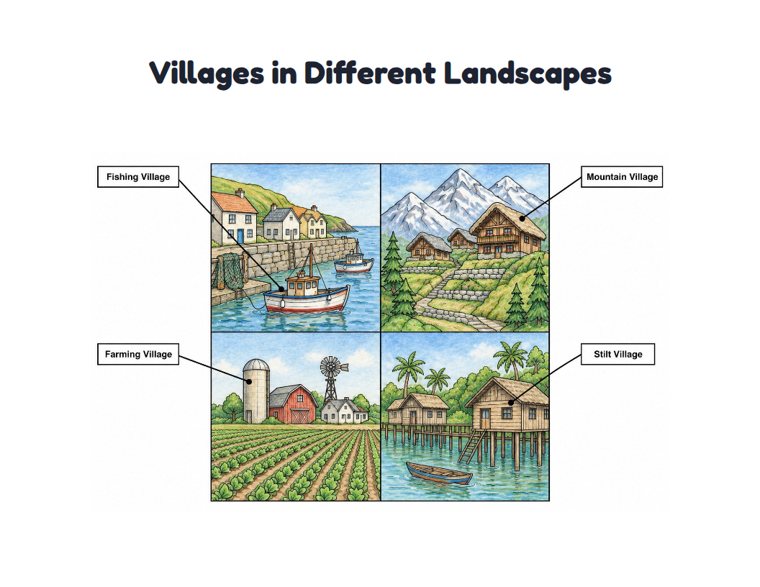
8 printable village worksheets with answer keys, from tracing first words in Pre-K to labeling and writing in grades 3–4. Every PDF has the worksheet, the answer key and a colored example. You can change the title and the words before printing.
Download all 8 worksheets as one PDF with answer keysParts of a Village in 3 levels
More village worksheets
Exploring Rural Architecture
When coloring these village scenes, you will notice distinct architectural details that define historical rural life. Many older settlements were built around a central village square, which often featured a communal well or fountain. Buildings like the thatched stone cottage were constructed using local materials, giving each region a unique appearance.
The presence of a hilltop bell tower served as both a timepiece and a warning system for the residents. Teachers can use these pages to explain how early communities functioned before modern conveniences. For a broader look at human settlements, you might contrast these quiet rural scenes with a bustling cityscape.
Traditional Trades and Crafts
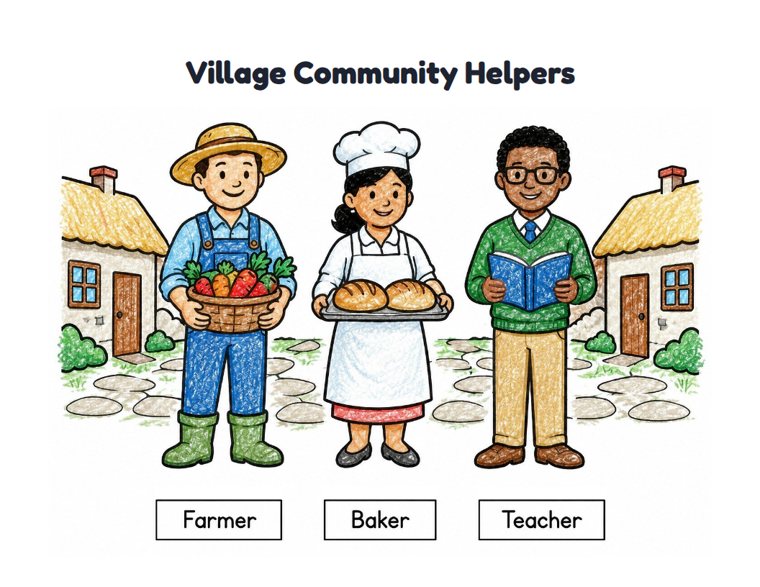
A self-sufficient community relied on skilled artisans. The traditional village life section highlights these essential workers. The blacksmith forged tools and horseshoes from iron, while the baker provided daily bread from a communal oven. You will also find a potter shaping clay in a courtyard and merchants selling fresh goods at a fruit stall.
Children also contributed by gardening or running errands to the local merchant. Discussing these trades helps students understand historical economies and daily routines. If you are exploring historical eras, a medieval fortress often relied on surrounding villages for these exact goods and services.
Easy Pages for Younger Kids
The simple village designs offer larger spaces and thicker lines for early learners. Children can color the windmill and barn without worrying about intricate architectural details. These pages work well for preschool units on communities or farm life.
Coloring Tips for Stonework and Landscapes
Blending is key for these environments when working with markers or colored pencils. Bringing a rural settlement to life requires a thoughtful approach to natural textures.
- Use varying shades of gray, brown, and muted blue for the cobblestone streets to make the stones look weathered and realistic.
- Layer greens and earthy yellows on the thatched roofs to mimic dried reeds and straw.
- Add soft watercolor washes to the background hills and stone bridges to create depth.
- For winter variations, add white gel pen highlights for snow, which pairs well with our holiday themes.