Free Wetland Ecosystem Coloring Pages
Explore the rich habitats of marshes and swamps with these wetland coloring pages. Teachers and parents can use these printable sheets to help children learn about freshwater ecosystems.
Wetland Coloring Pages
Detailed landscapes showing the diverse plant life and calm waters of freshwater marshes.
Download all 9 as one PDF with cover page


Wildlife of the Marsh and Pond
Line art of the birds, reptiles, and amphibians that thrive in wetland habitats.
Download all 8 as one PDF with cover page


Cypress Swamps and River Bayous
Atmospheric scenes featuring moss-draped trees and winding river bayous.
Download all 5 as one PDF with cover page


More pages to explore
Related coloring pages on Color Confetti.


All 17 more: National Park (18), Ecosystem (28), Wilderness (20), Frog (57), Nature (34), Landscape (38), Swamp (20), Alligator (35), American Alligator (23), Crocodile (45), Great Blue Heron (22), Whooping Crane (14), Crane (31), Duck (47), Dragonfly (39), Salamander (33) and Snapping Turtle (25).
Ready to print for home, preschool and classroom.
PDF paper size:
Using these pages in your nonprofit, library, hospital or at an event? We'd love to hear from you
Wetlands Worksheets
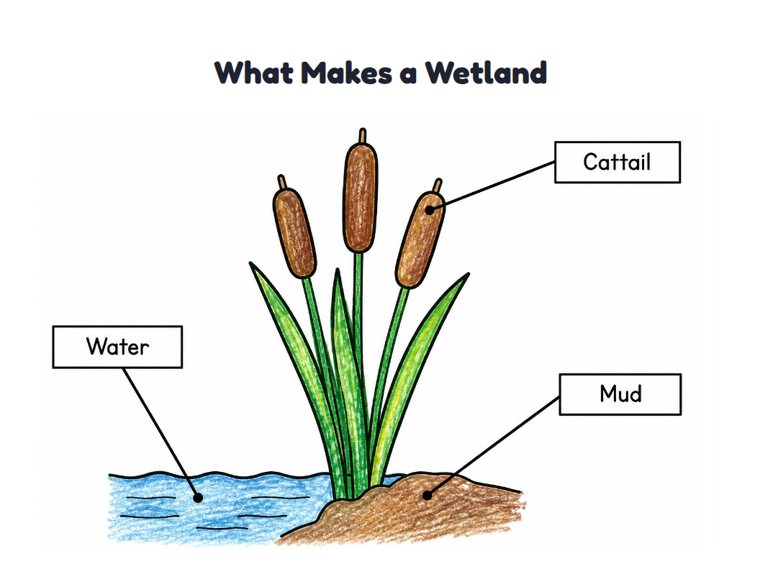
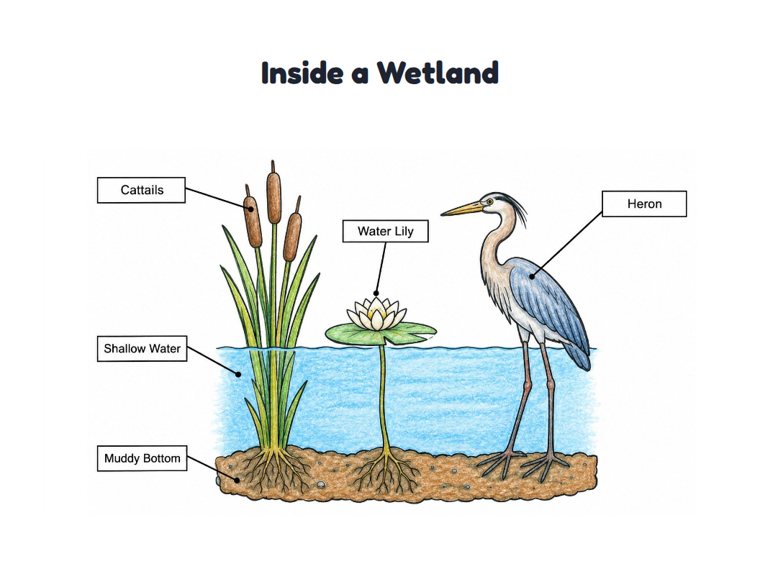
7 printable wetlands worksheets with answer keys, from tracing first words in Pre-K to labeling and writing in grades 3–4. Every PDF has the worksheet, the answer key and a colored example. You can change the title and the words before printing.
Download all 7 worksheets as one PDF with answer keysStructure of a Wetland in 2 levels
More wetlands worksheets
Understanding Wetland Ecosystems
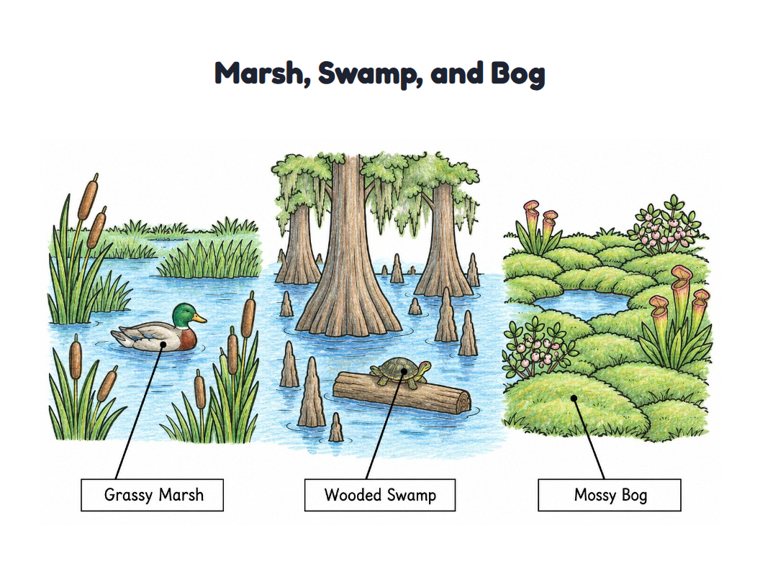
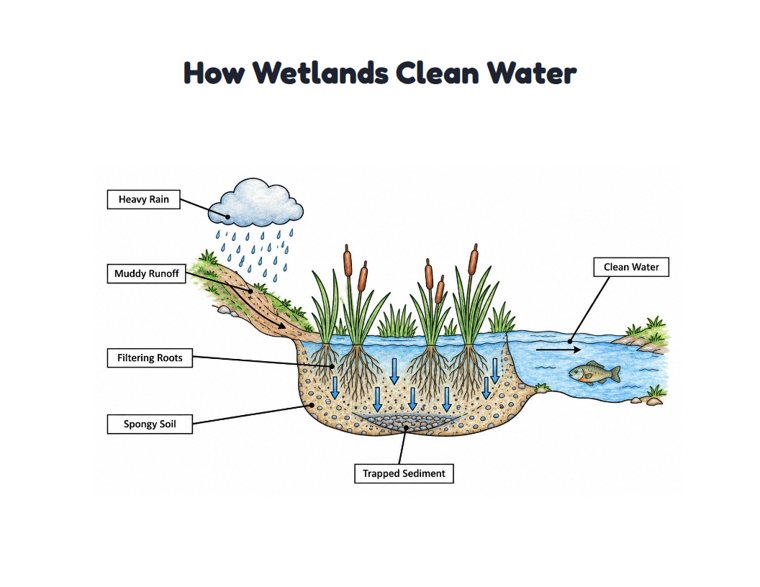
Wetlands are vital habitats that connect solid land and deep water. When coloring these pages, students can learn about the different types of wetlands, including freshwater marshes, bogs, and wooded swamps. These environments act as natural sponges, filtering water, preventing floods, and providing a crucial home for diverse wildlife.
You can pair these sheets with our ecosystem coloring pages to teach children about biodiversity, food webs, and the importance of protecting our natural wilderness.
Coloring the Flora and Fauna
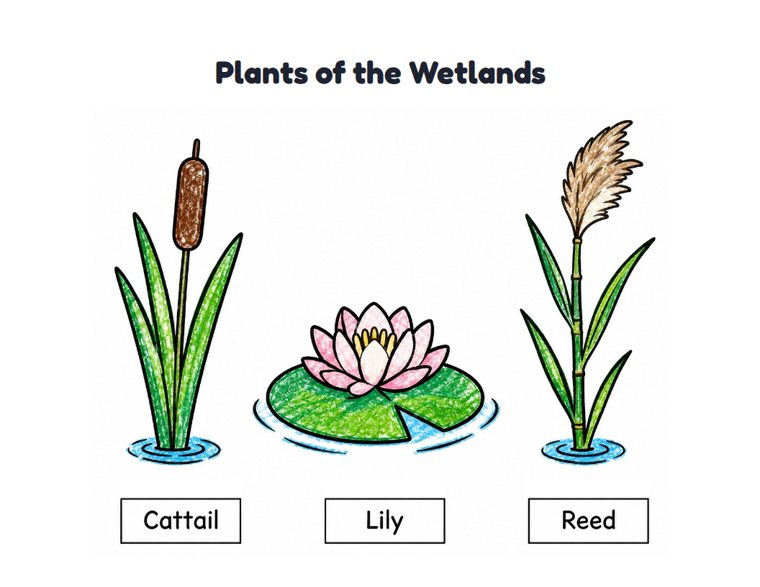
The plant life in a wetland offers unique coloring opportunities for both adults and children. Use varying shades of green, yellow, and brown for the tall grass, reeds, and cattails found in the marsh scenes. For the cypress swamps, try blending grays and muted greens to capture the hanging Spanish moss draped over the branches.
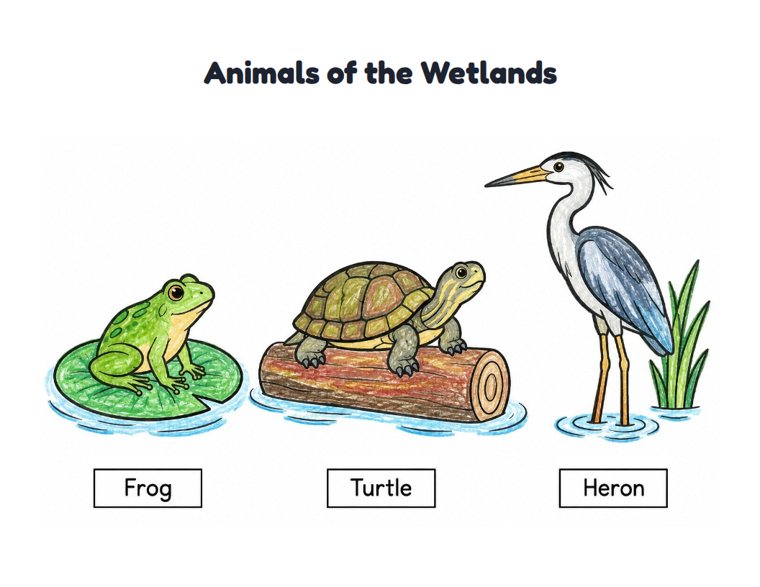
The animal residents add bright focal points to the murky waters. You can use vibrant greens for the frogs resting on lily pads, or soft blues and grays for the herons wading near the shore.
Ideas for Nature Lessons
These printables work well for biology units, environmental science classes, or quiet afternoon activities at home. Teachers can use the detailed illustrations to prompt discussions about the animals that rely on these unique habitats.
- Use the simple duck and turtle outlines for early learners practicing their fine motor skills and color recognition.
- Assign the detailed swamp landscapes to older students studying habitat conservation and the role of wetlands in the environment.
- Combine the alligator pages with our nature coloring sheets for a comprehensive wildlife project.
- Print the boardwalk scenes to inspire students before a field trip to a local national park or nature reserve.
Exploring Swamp Wildlife
The animals that live in these areas are specially adapted to wet environments. The wildlife section features creatures that rely on the water for hunting and shelter. Colorists can bring to life the textured scales of an alligator, the smooth fur of a river otter, or the delicate wings of a dragonfly.
Adding these pages to a landscape coloring collection helps illustrate how different species share the same environment and rely on the water to survive.