Printable Sadness Coloring Pages
Explore 18 coloring pages designed to help children and adults process feelings of sadness. From relatable emotions to comforting scenes, these printables offer a quiet, creative way to navigate difficult emotions at home or in the classroom.
Free Sadness Coloring Pages
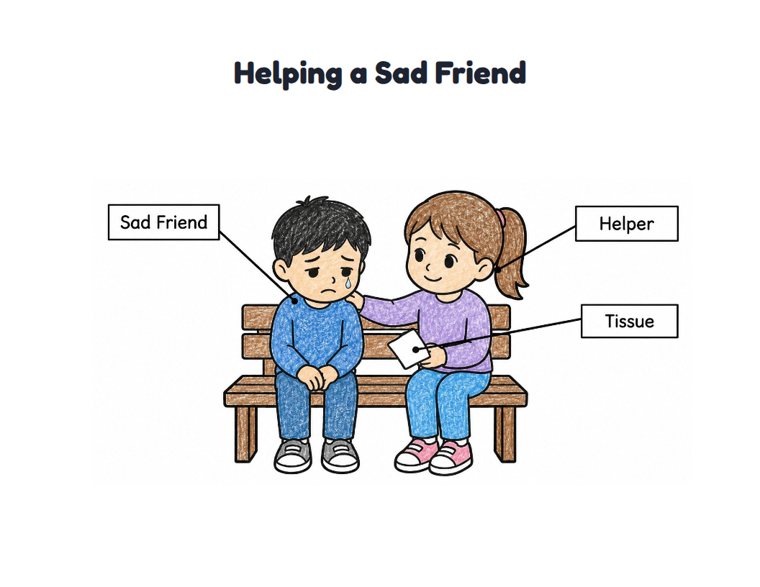
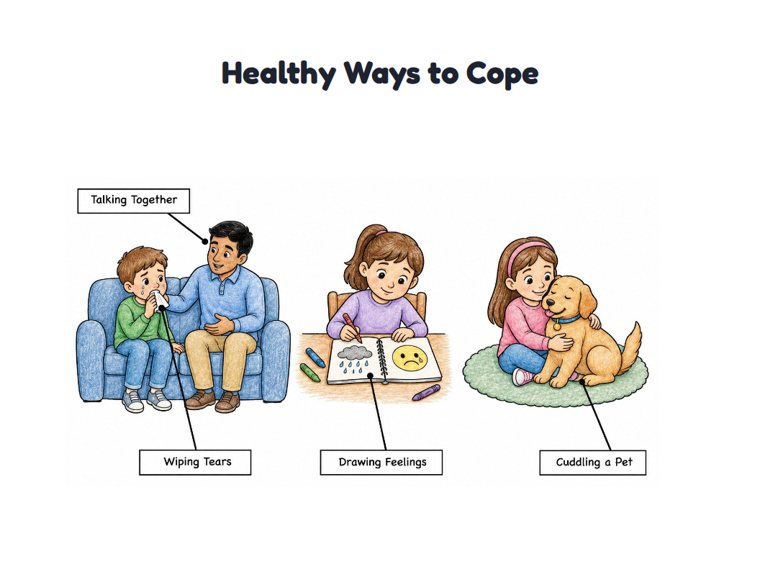
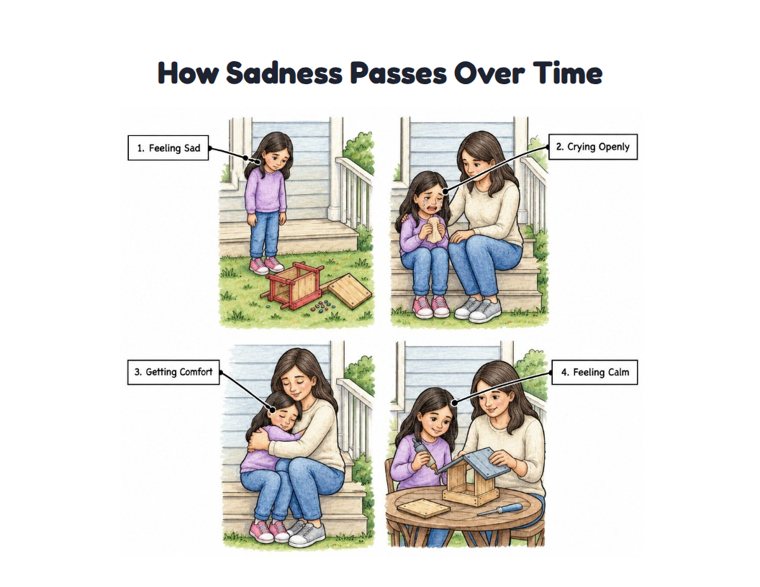
Relatable scenes of children experiencing and talking about sad emotions to help kids feel understood.


Rain Clouds, Emojis, and Comforting Moments
Expressive weather symbols and quiet moments of comfort that represent melancholy in a reassuring way.


More pages to explore
Related coloring pages on Color Confetti.


All 14 more: Empathy (23), Anger (15), Clouds (27), Sympathy (23), Educational (29), Grief (18), Joy (20), Sad Girl (20), Sad Aesthetic (19), Sad Anime (17), Rainy Day (30), Dark (26), Caring (16) and Self Control (19).
Ready to print for home, preschool and classroom.
PDF paper size:
Want to use these pages in your nonprofit, library, hospital or at an event? Contact us
Sadness Worksheets
6 printable sadness worksheets with answer keys, from tracing first words in Pre-K to labeling and writing in grades 3–4. Every PDF has the worksheet, the answer key and a colored example. You can change the title and the words before printing.
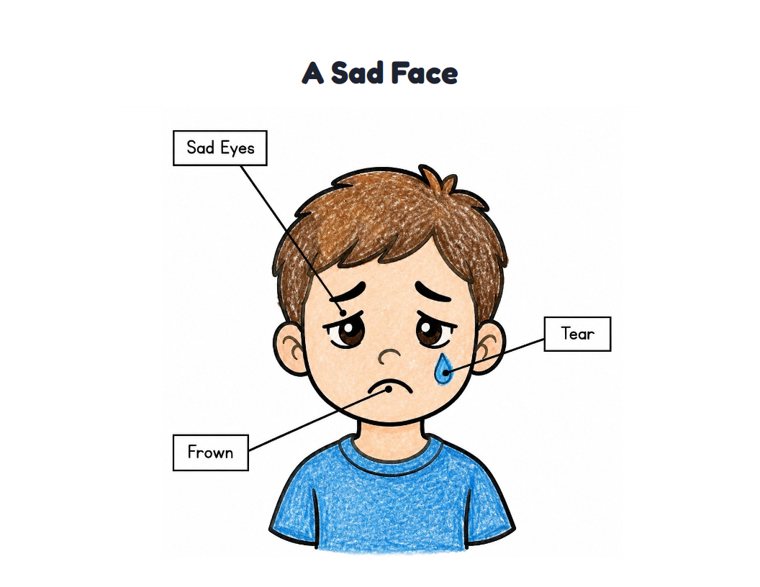
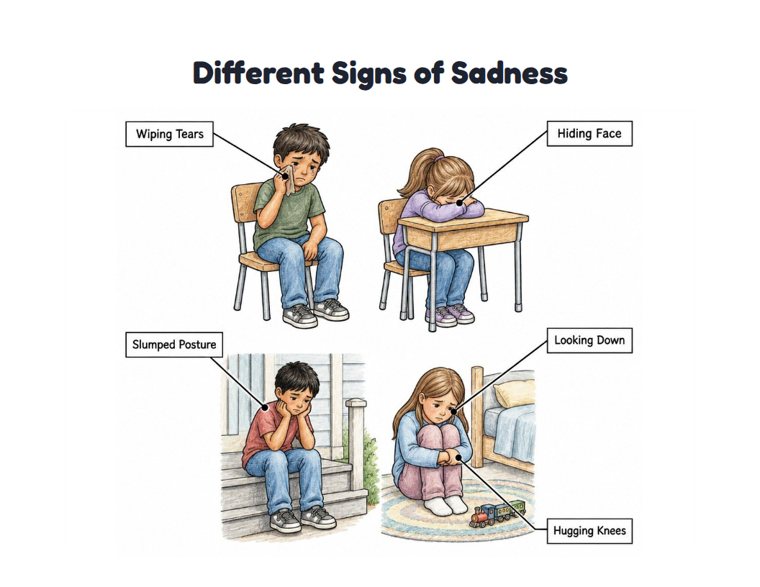
Download all 6 worksheets as one PDF with answer keysRecognizing Sadness in Face and Body in 2 levels
More sadness worksheets
Using Art for Emotional Regulation
Coloring provides a safe space for children to explore complex feelings. When kids work on scenes of sad feelings, they often open up about their own experiences. Engaging in art therapy activities allows them to project their internal state onto the paper, making big emotions feel more manageable.
Teachers and school counselors frequently use these visual tools during social-emotional learning sessions. Pairing sadness sheets with empathy coloring pages helps students understand how to support peers who are struggling. Adults also benefit from these pages as a mindfulness practice, using the quiet details of a weeping willow to ground themselves during stressful times.
Choosing Colors for Melancholy Themes
While people typically associate sadness with shades of blue and gray, colorists can use a wide palette to express this mood. Blending cool tones like muted purples, deep indigos, and soft silver creates a calming, reflective atmosphere on the page.
You can also introduce contrasting warm colors to represent hope or comfort. For example, when coloring the rain clouds and comforting moments, adding a bright yellow umbrella or a warm orange mug shows that sadness is temporary and comfort is always available.
Ideas for Parents and Educators
These printables work well as gentle conversation starters. Instead of asking a child directly why they are upset, you can color a page together and ask how someone in the picture might be feeling. Parents can keep a stack of these sheets in a calm-down kit for moments when a child feels overwhelmed.
- Create a feelings binder by combining these sheets with anger pages to cover different moods.
- Use the crying cloud pages alongside cloud printables to discuss how emotions change like the weather.
- Offer the comforting scenes to teach children how to show compassion to friends in need.
Questions
What colors represent sadness?
Cool colors like blue, gray, and muted purple are most commonly used to represent sadness. Darker shades often convey deeper grief, while lighter, washed-out blues can represent mild melancholy or feeling down.
Are coloring books beneficial for brain health?
Yes, coloring can lower stress and anxiety by relaxing the fear center of the brain. It also improves focus and motor skills, providing a meditative exercise that gives the mind a break from daily worries.