
Free Soil and Dirt Coloring Pages
These printable soil sheets help children learn about what happens underground. You will find educational diagrams of soil layers alongside simple garden scenes with roots, seeds, and earthworms for science lessons or home activities.
Printable Soil Coloring Pages
These sheets show the basics of garden dirt, featuring trowels, seed starter trays, and simple root systems.
Download all 7 as one PDF with cover page


Layers of Soil Cross Sections
Detailed cross sections help students identify the different geological horizons that make up the earth beneath our feet.
Download all 7 as one PDF with cover page


Life Inside the Soil
Explore the busy ecosystem underground with tunneling moles, busy ants, and growing vegetable roots.
Download all 5 as one PDF with cover page


More pages to explore
Related coloring pages on Color Confetti.


All 13 more: Earth Science (21), Layers Of The Earth (22), Fossil (25), Science (32), Sprout (20), Garden (36), Seeds (15), Plant (40), Worm (25), Gardener (16), Ecology (22), Rock And Mineral (17) and Nature (34).
Ready to print for home, preschool and classroom.
PDF paper size:
Using these pages in your nonprofit, library, hospital or at an event? We'd love to hear from you
Soil Worksheets
8 printable soil worksheets with answer keys, from tracing first words in Pre-K to labeling and writing in grades 3–4. Every PDF has the worksheet, the answer key and a colored example. You can change the title and the words before printing.
Download all 8 worksheets as one PDF with answer keysLayers of Soil in 3 levels
More soil worksheets
Teaching Earth Science with Soil Diagrams
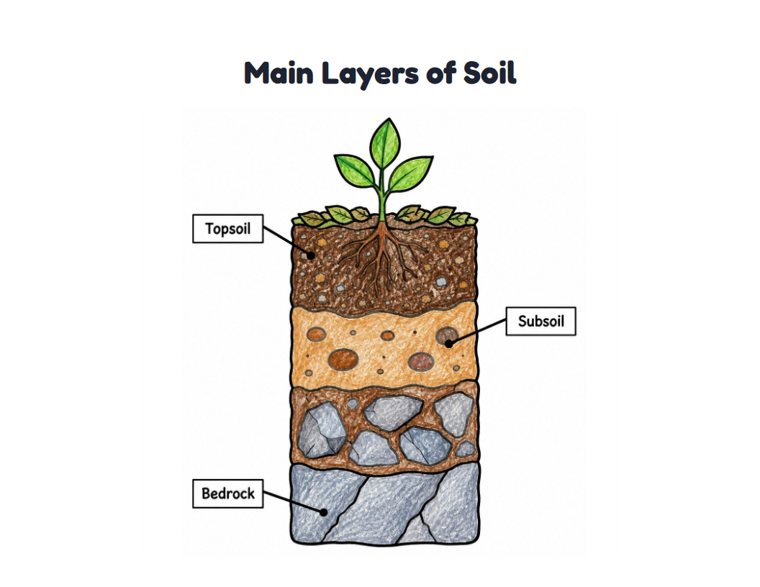
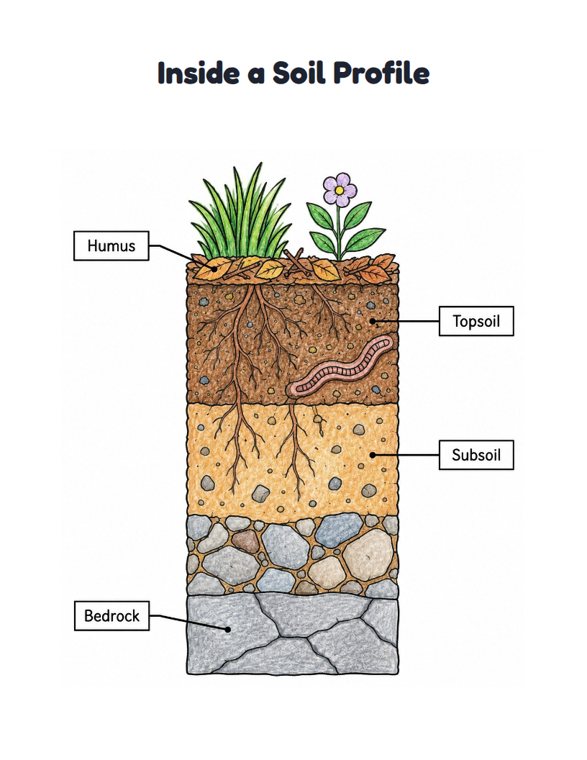
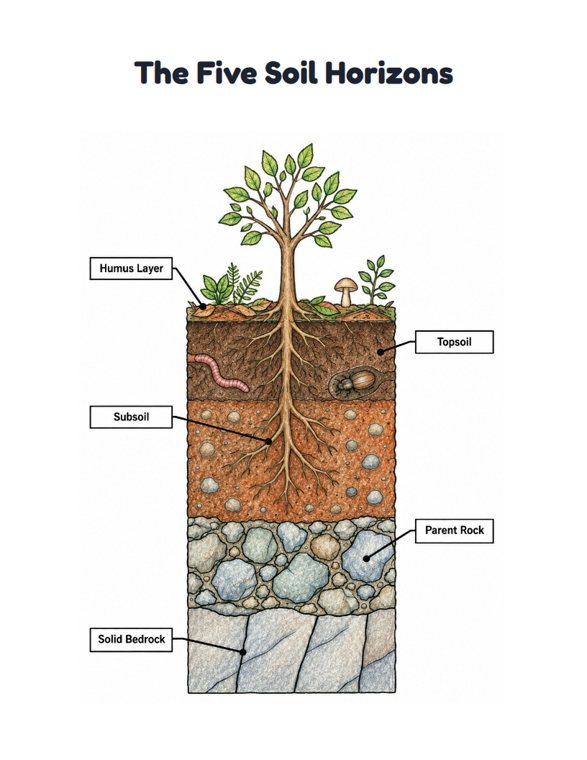
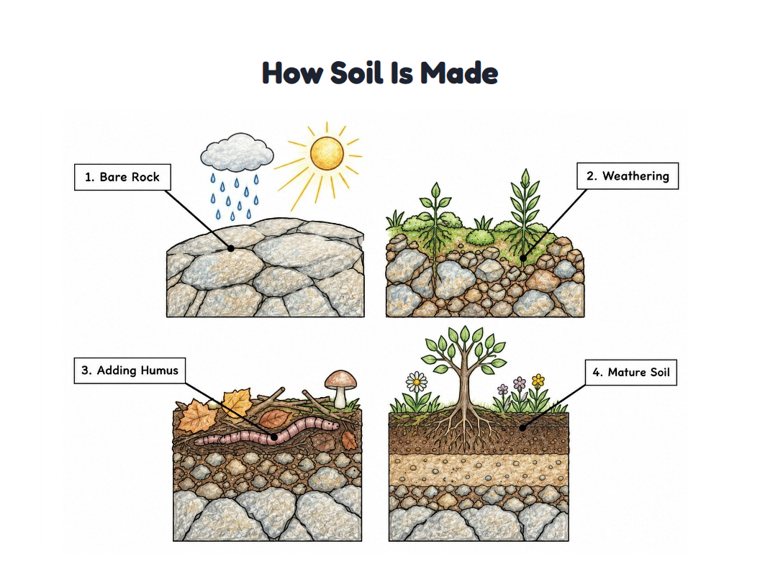
When students study earth science, understanding the ground beneath them is a core lesson. The layers of soil coloring pages provide clear visual aids for learning about the soil profile.
Children can color the distinct horizons, from the dark, nutrient-rich topsoil down to the solid bedrock. Teachers can ask older students to label the O, A, B, C, and R layers next to their colored sections. These diagrams work well as quiet activities after a hands-on dirt lab or as supplementary materials for a broader science curriculum.
Exploring the Underground Ecosystem
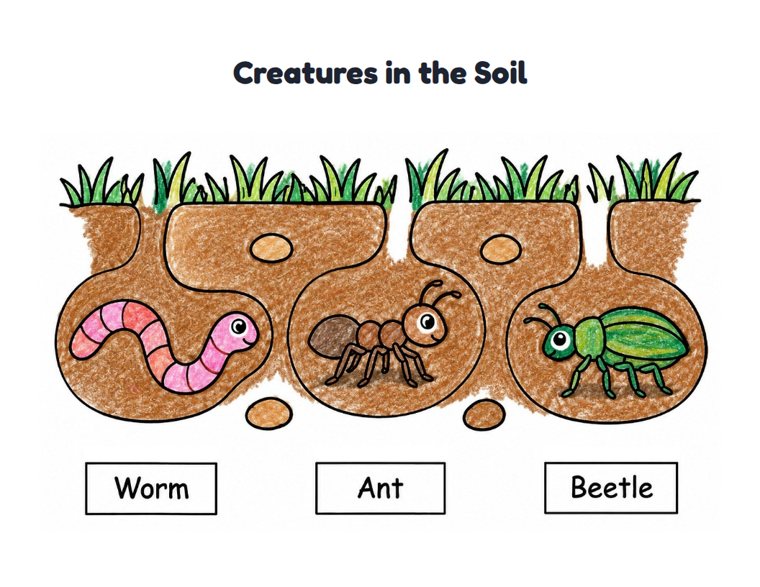
Soil is not just dirt; it is a living habitat. The pages showing life inside the soil illustrate how plants and animals rely on this environment. Students can see how a sprouting bean pushes its roots downward while earthworms aerate the surrounding dirt.
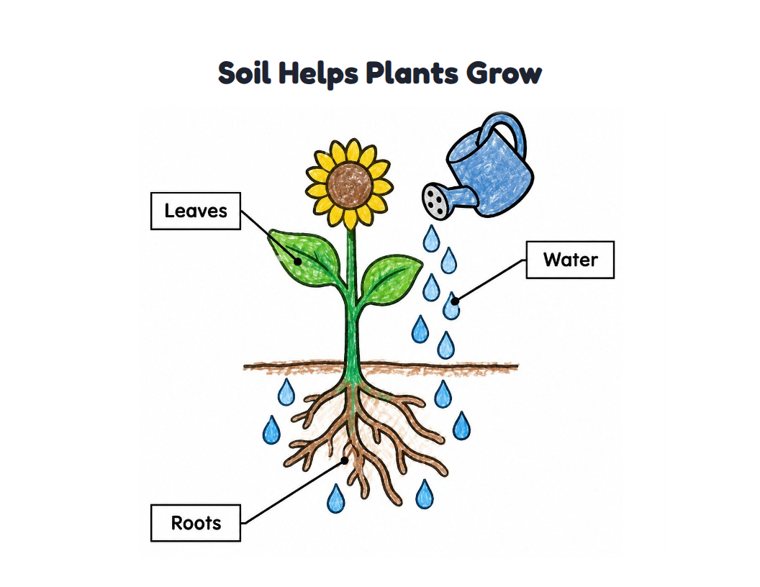
Coloring these intricate root systems helps kids visualize how plants anchor themselves and draw up water. This section highlights the symbiotic relationship between organic matter and the creatures that break it down.
- Earthworms and insects creating tunnels that let water and air reach plant roots.
- Vegetables like carrots and radishes developing their edible taproots in a deep garden bed.
- Small mammals like moles navigating the dark, subterranean world.
Coloring Tips for Dirt and Roots
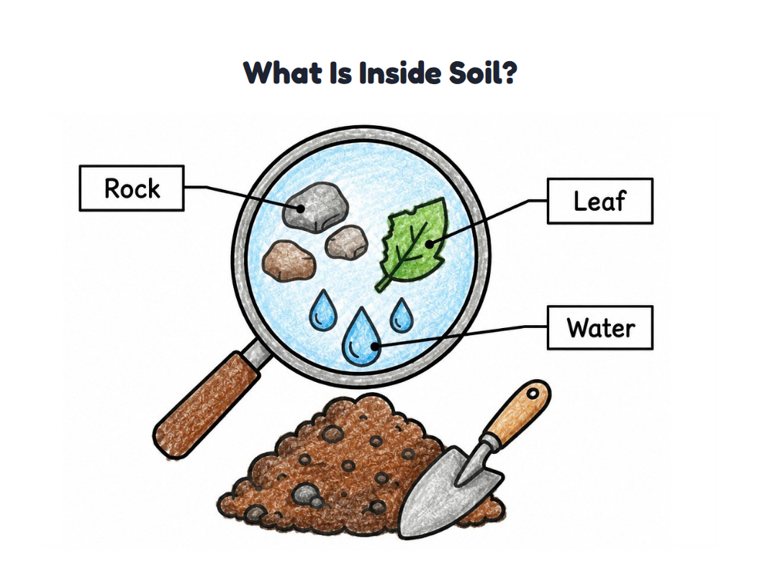
While dirt might seem like it only requires a single brown crayon, real soil is full of color variations. Encourage children to use a mix of colors to make their pictures realistic. The top layer often contains dark browns and blacks due to decomposing humus.
As they color deeper layers, they can switch to lighter tans, reds, and grays to represent clay and rocky subsoil. Adding small specks of white or gray can simulate minerals and small stones mixed into the earth. Bright green leaves and orange carrots will pop nicely against the earthy tones of the background.