
Printable Saturn Coloring Pages
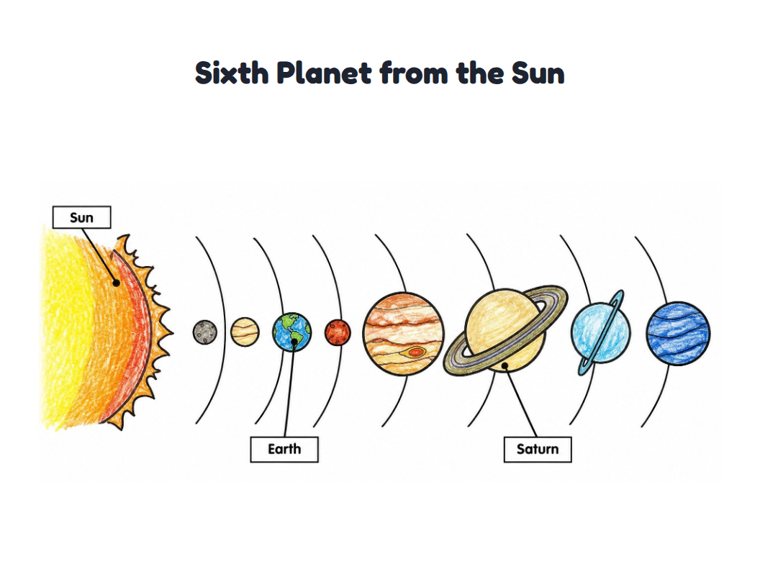
Explore the sixth planet from the sun with these printable sheets. You will find simple outlines of the ringed giant for young kids, detailed celestial scenes for adults, and historical rocket launches for science lessons.
Planet Saturn and Its Rings
Simple and fun outlines of the ringed planet, featuring smiling stars, space probes, and kids learning about astronomy.


Saturn V Rocket Launches
Detailed illustrations of the historic launch vehicles that carried astronauts toward the moon.


Realistic Views of Saturn
Accurate depictions of the gas giant, showcasing its swirling cloud bands, complex ring system, and orbiting moons.


More pages to explore
Related coloring pages on Color Confetti.


All 13 more: Galaxy Celestial (17), Space (38), Earth Science (21), Science (28), Moon (36), Jupiter (25), Uranus (25), Neptune (14), Astronaut (34), Pluto Planet (20), Venus (24), Mercury (18) and Earth (41).
Ready to print for home, preschool and classroom.
PDF paper size:
Using these pages in your nonprofit, library, hospital or at an event? We'd love to hear from you
Saturn Worksheets
7 printable saturn worksheets with answer keys, from tracing first words in Pre-K to labeling and writing in grades 3–4. Every PDF has the worksheet, the answer key and a colored example. You can change the title and the words before printing.
Download all 7 worksheets as one PDF with answer keysSaturn's Rings and Atmosphere in 3 levels
More saturn worksheets
Coloring the Gas Giant
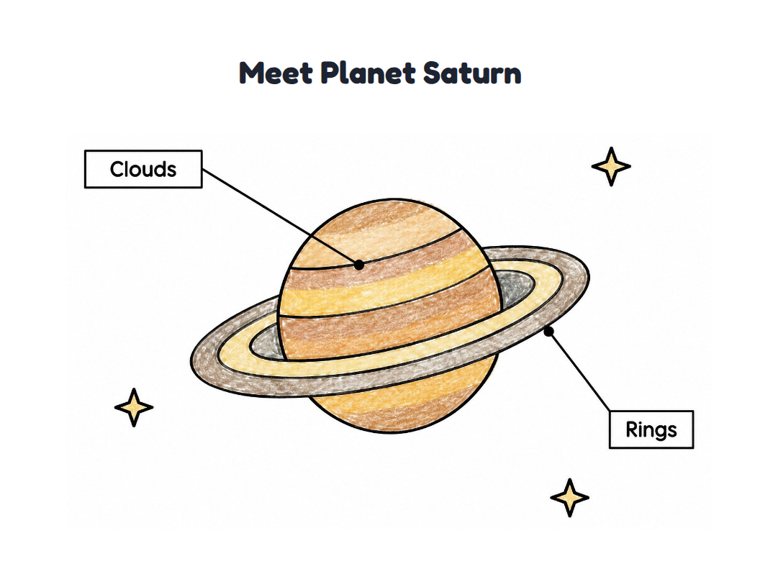
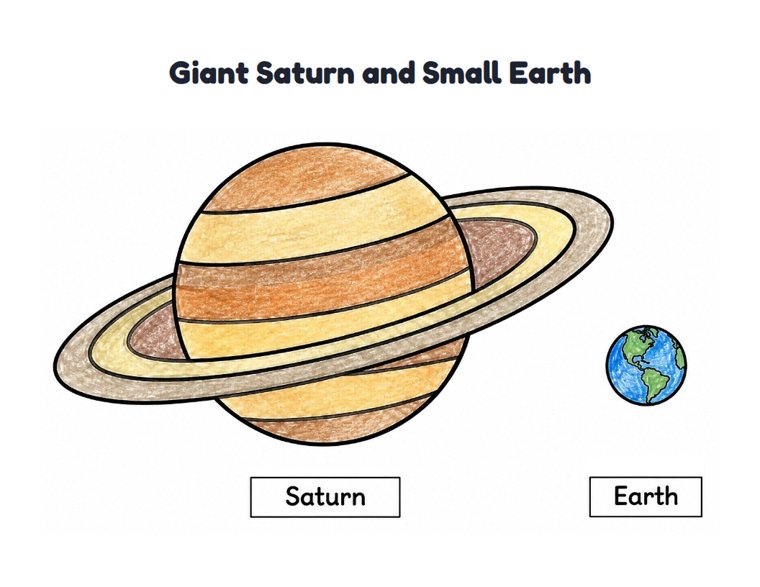
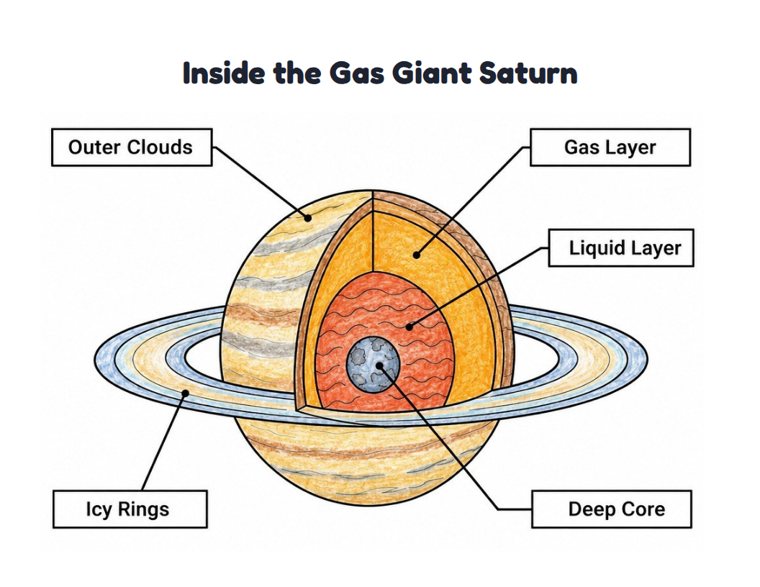
Saturn is famous for its massive ring system, made mostly of ice particles and rocky debris. When coloring these pages, you can use pale yellows, golds, and soft browns to represent the planet's actual appearance. The atmosphere is filled with ammonia crystals, which give the gas giant its muted, banded look.
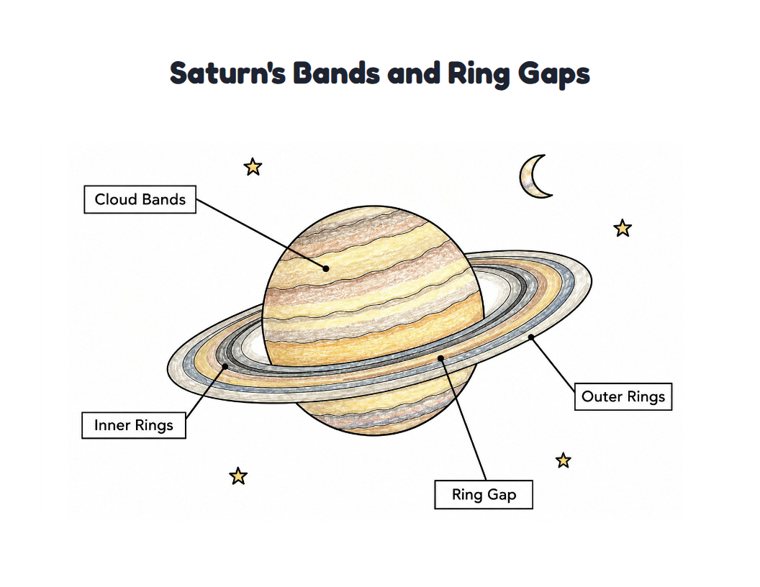
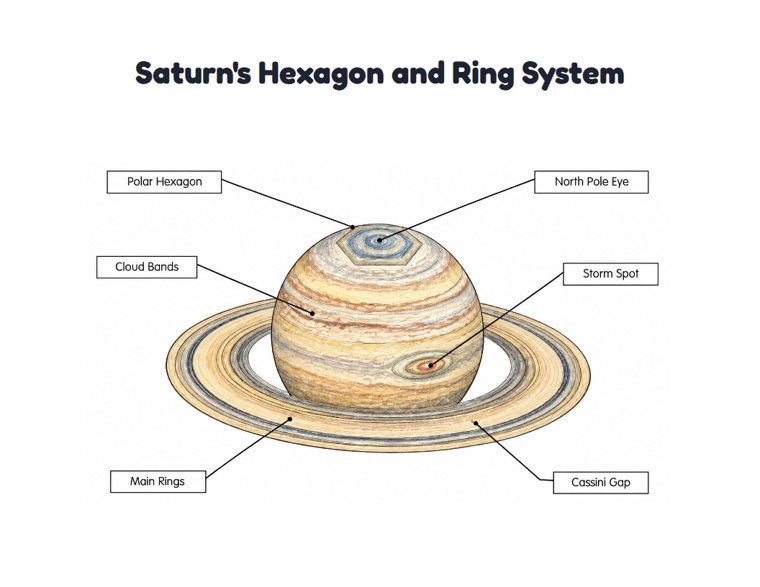
For the rings, try alternating light grays, whites, and icy blues to show the different layers and gaps. If you are working on the realistic views of Saturn, blending colored pencils can help recreate the smooth, swirling cloud patterns and the unique hexagon storm at its north pole. Adding a dark background with white gel pen stars makes the planet stand out beautifully.
The Mighty Saturn V Rocket
Beyond the planet itself, this collection includes the famous launch vehicles used during the Apollo program. The Saturn V remains the tallest and most powerful rocket ever flown. These pages show the rocket on the launch pad, stage separations in space, and astronauts preparing for their journey.
Coloring these mechanical giants is a great addition to any science lesson about space exploration. Most of the rocket was painted in stark black and white to help engineers track its motion through the sky, but you can add bright orange and red for the massive exhaust flames blasting from the engines.
Ideas for Science and Astronomy Lessons
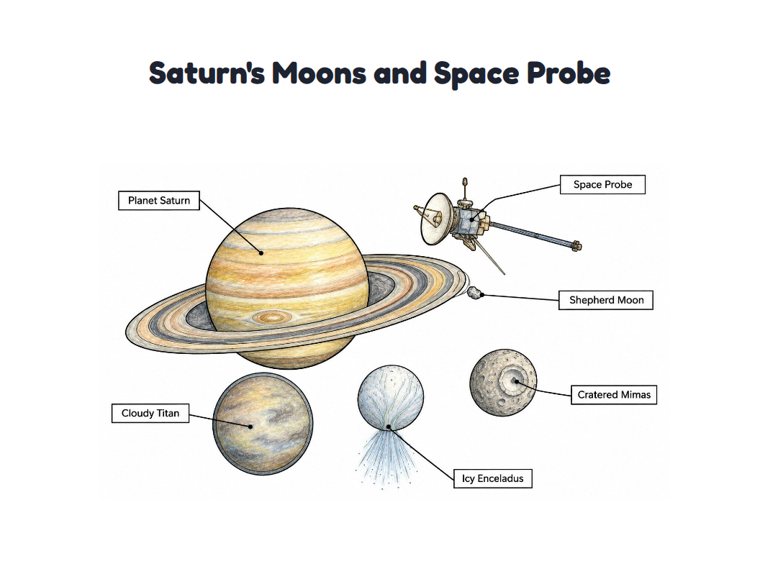
These printables work well for elementary and middle school classrooms studying the solar system. You can pair a simple planet outline with a diagram of the rocket to cover both natural astronomy and human spaceflight. Discussing how the Cassini spacecraft photographed these celestial bodies adds real-world context to the coloring activity.
- Use the sleepy baby Saturn or festive cartoon designs for preschool crafts.
- Print the telescope and space probe scenes to discuss how we study distant planets.
- Combine these sheets with moon coloring pages to create a complete Apollo mission storyboard.
- Challenge older students to color the moons Enceladus and Titan orbiting the planet.
Questions
What is Saturn's actual color?
Saturn appears as a pale yellow or golden-brown planet. This color comes from ammonia crystals in its upper atmosphere, while deeper cloud layers contain water and ammonium hydrosulfide that create subtle bands of orange and beige.
What is Saturn color for kids?
When teaching kids about the planets, Saturn is usually colored yellow or light orange. The rings are often drawn in gray, white, or light blue to represent the ice and rock they are made of.
How will Saturn look in 2026?
In 2025 and 2026, Saturn's rings will appear edge-on from Earth's perspective. Because the rings are so thin, they will seem to disappear completely when viewed through telescopes, leaving only the spherical gas giant visible.