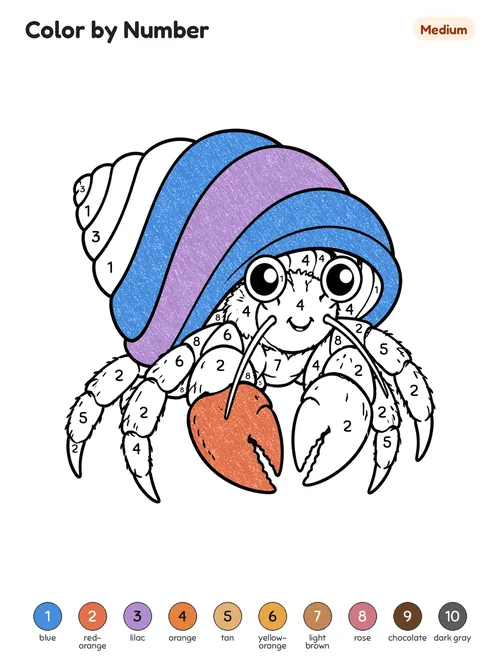
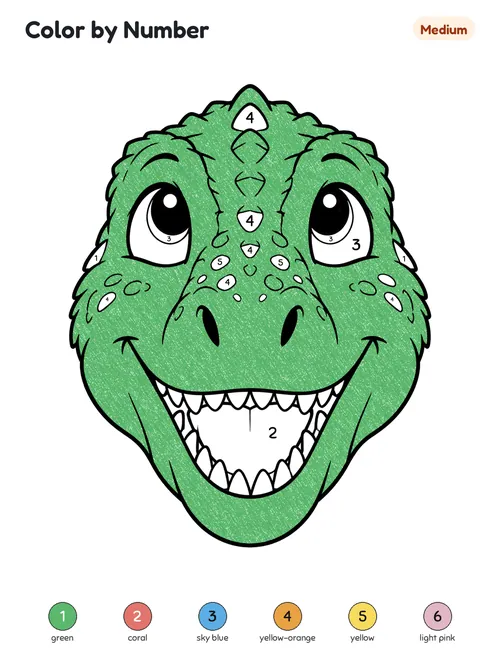
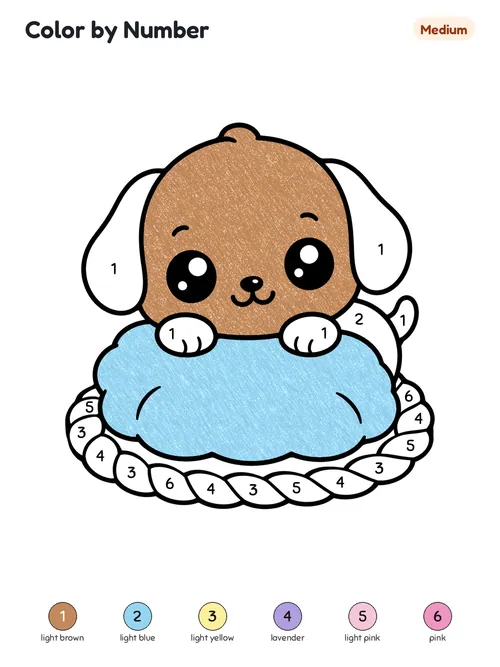
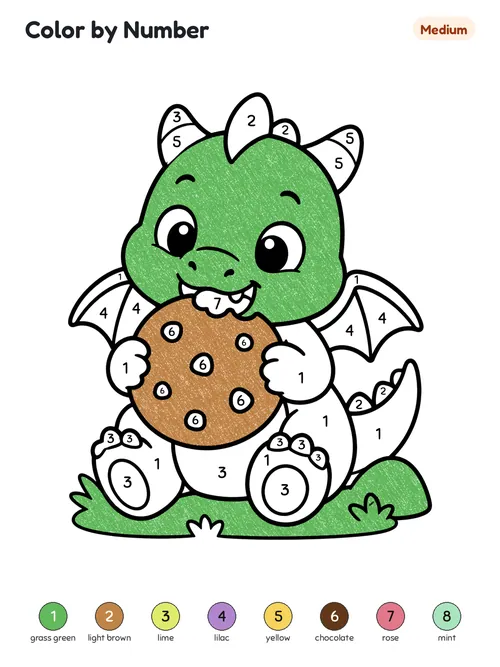
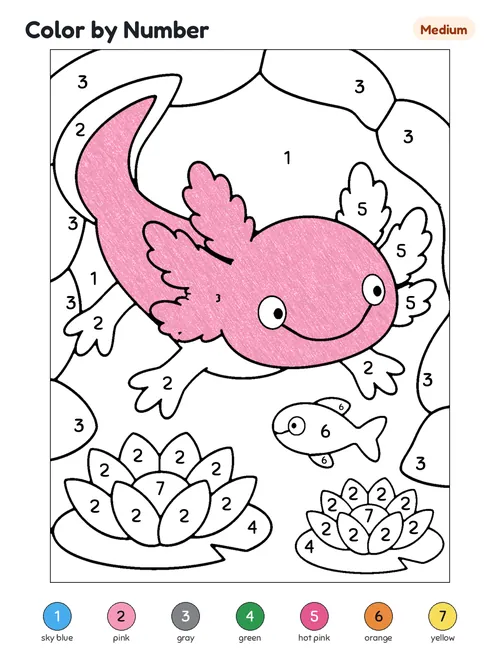
Axolotl color by number pages
Feathery gills make this aquatic Mexican salamander unmistakable. This set includes 26 axolotl color by number pages: 8 easy pages for preschool with bold lines, 13 medium pages, 1 challenge page, and 4 advanced pages for teens and adults.
PDF paper size:
Easy 8 pages · ages 3 to 6
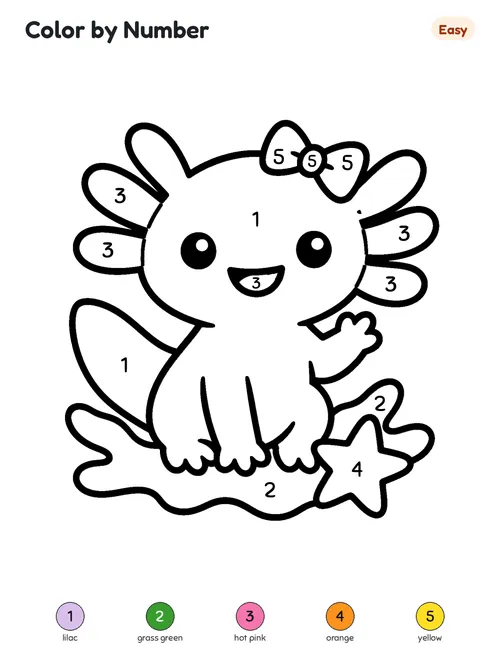

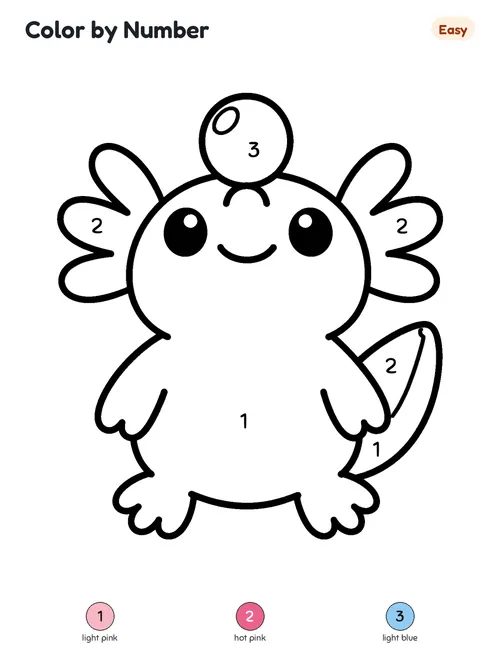


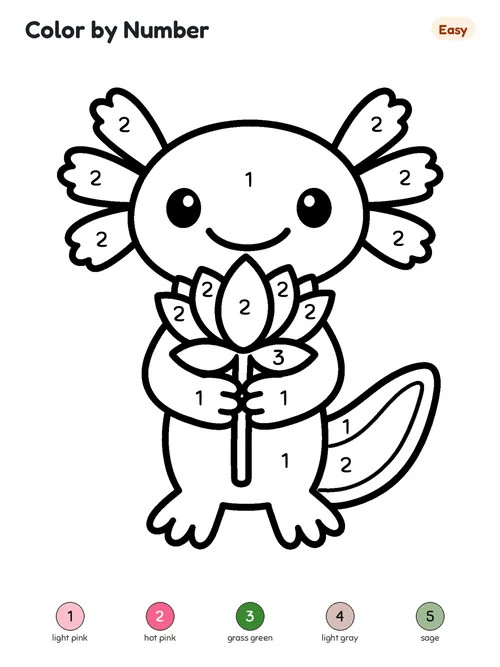

Medium 13 pages · ages 5 to 8


Challenge 1 page · ages 7 and up


Advanced 4 pages · teens and adults


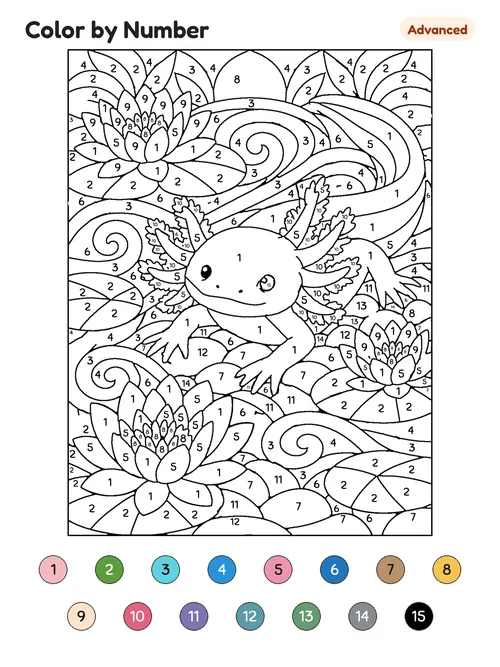


Wild olive or pet pink at the coloring table
An axolotl spends its entire life underwater with feathery gills, wearing brown or olive shades in the wild or pink and white as a pet. Comparing two color plans shows the range here. Beginners match a pink lotus and wide, simple shapes on the swimming axolotl with flower page, while patient colorists shade floating water plants and sunlit prism shapes on the stained glass swimming axolotl design.
Every page downloads as a free printable PDF with a numbered color key and matching swatches. Trace the gills first to spot tight color changes. Once the frilly edges are done, the smooth body fills in fast. Kids who want to mix wild brown shades without numbers can switch to our axolotl coloring pages anytime.
Turning amphibian science into calm coloring time
Axolotls fascinate students because they can regrow lost limbs and never leave the water as adults. Quiet coloring extends that amphibian science talk naturally while hands shade underwater scenes and feathery gills. Anyone still building number skills can also start with our easy preschool pages for bold lines and simple shapes.
Light pressure keeps pink and pale shades clean without smudging dark lines. Save wide water backgrounds for last so hands never smear fresh crayon or pencil pigment. Sharp pencils make tiny gill frills easy to shade, a habit that carries over well to our detailed adult pages.
Questions about Axolotl color by number
Why do axolotls have feathery frills on the sides of their heads?
Those tufts are external gills that gather oxygen underwater. Unlike most salamanders, an axolotl never loses its gills or moves onto land as an adult. Breathing through them lets it stay submerged among river stones and water plants.
How can kids keep pale pink axolotl bodies from blending into blue water backgrounds?
Color the pale pink body first before adding blue water around it. Light strokes stop blue wax from smudging pale skin. Sharp colored pencils also keep crisp contrast where thin feathery gills and curved tails meet water plants.
How can these axolotl sheets support a lesson on Mexican wildlife or limb regeneration?
Hand out a sheet after reading about Mexican amphibians to review feathery gills and regrowing limbs. Comparing wild olive camouflage with pink pet varieties sparks lively class talk. Finished pages make cheerful covers for animal report folders.