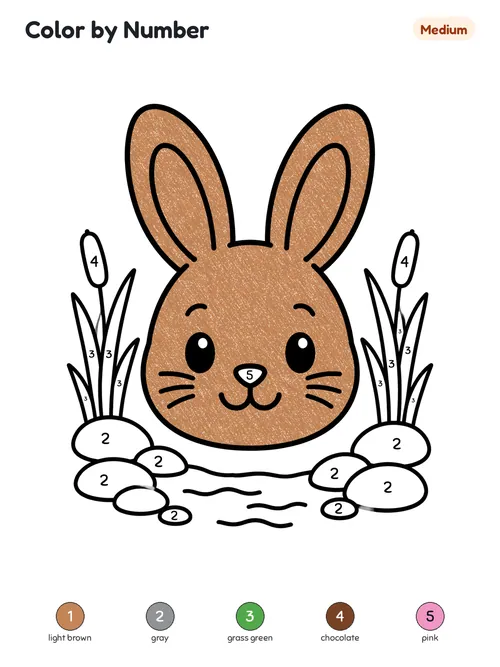
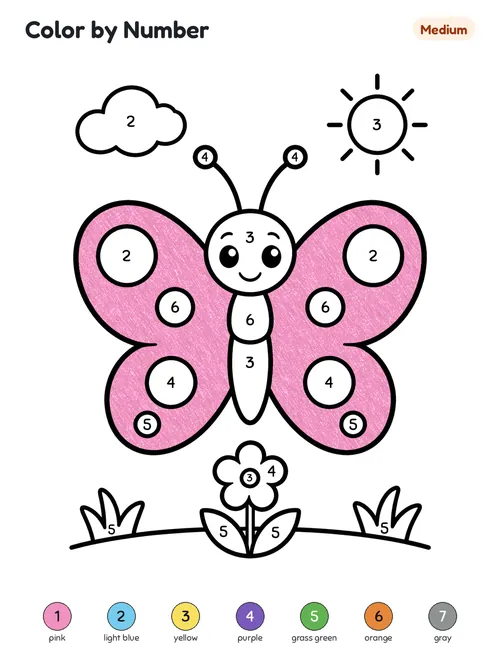
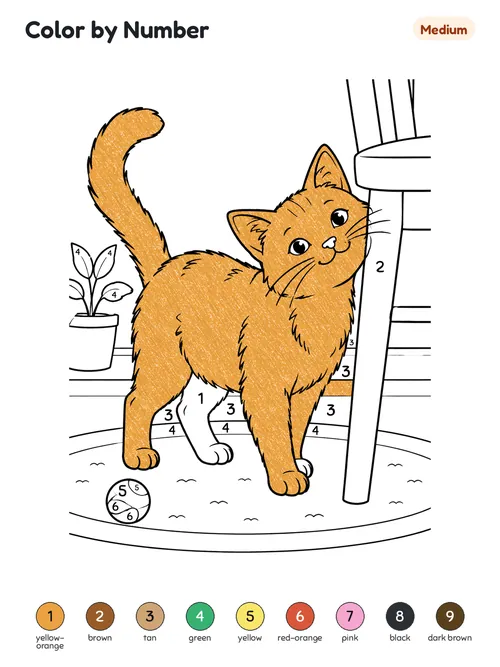
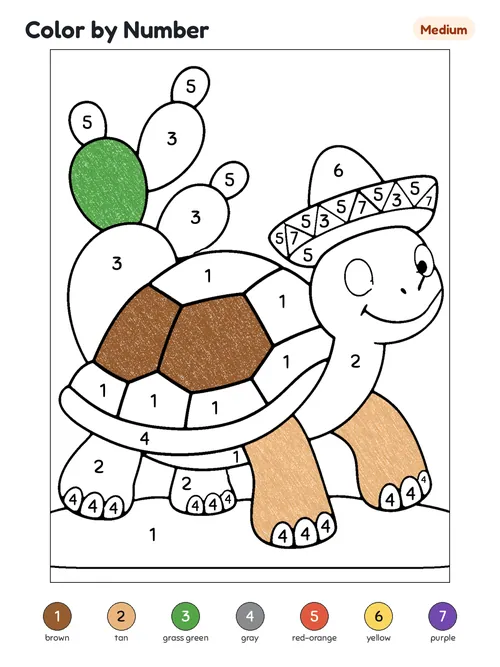
Frog color by number pages
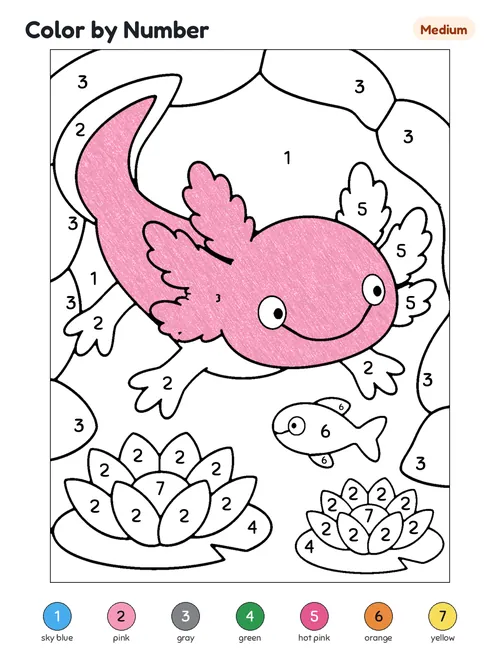
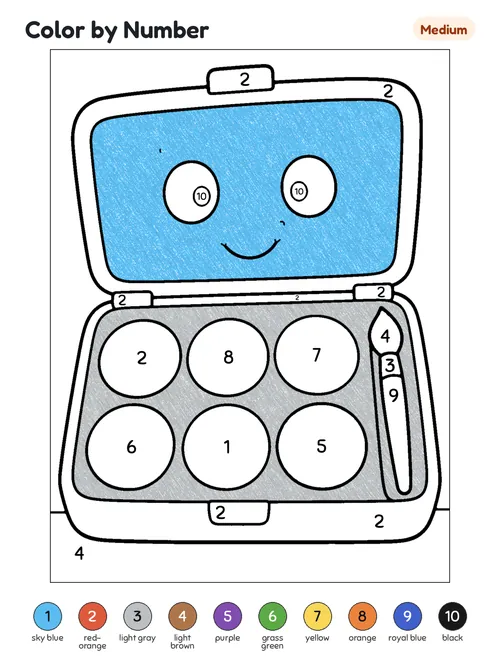
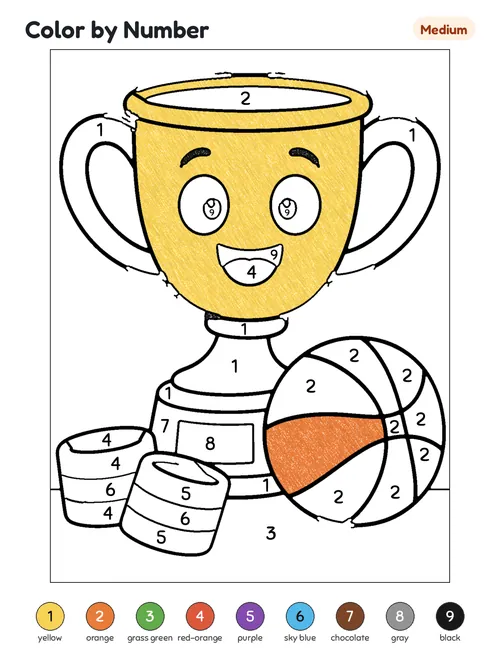
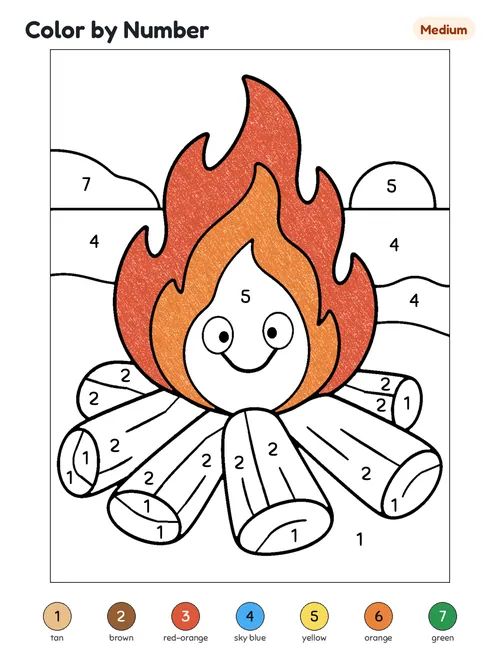
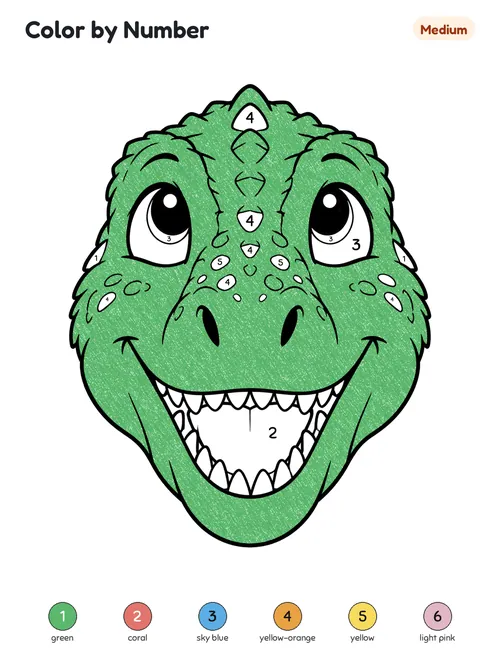
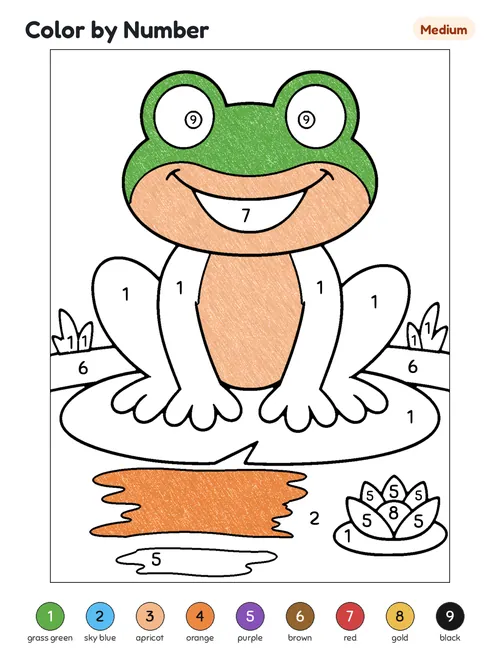
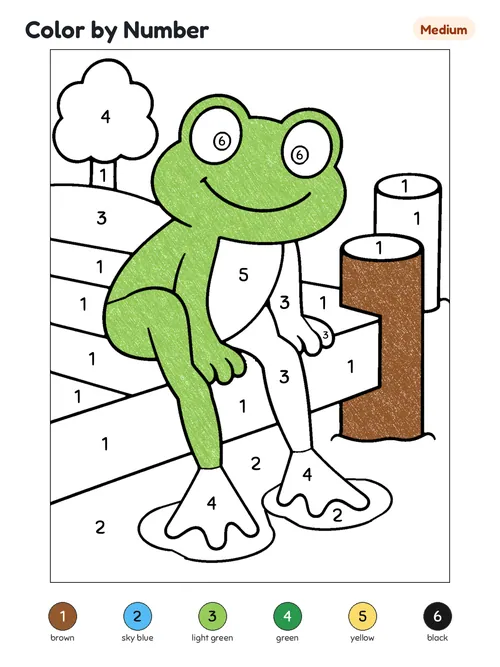
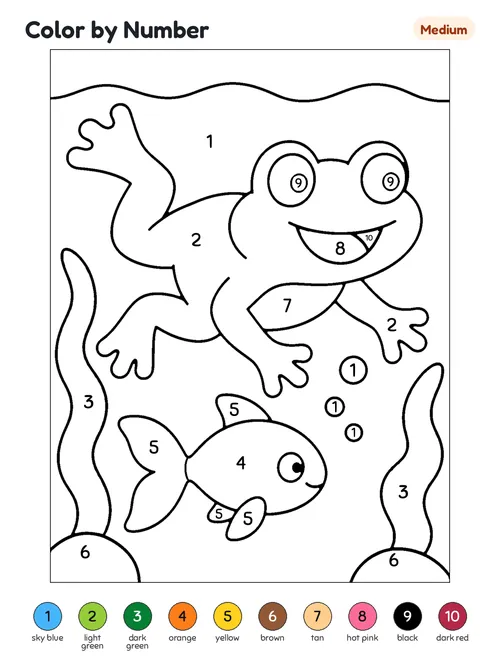
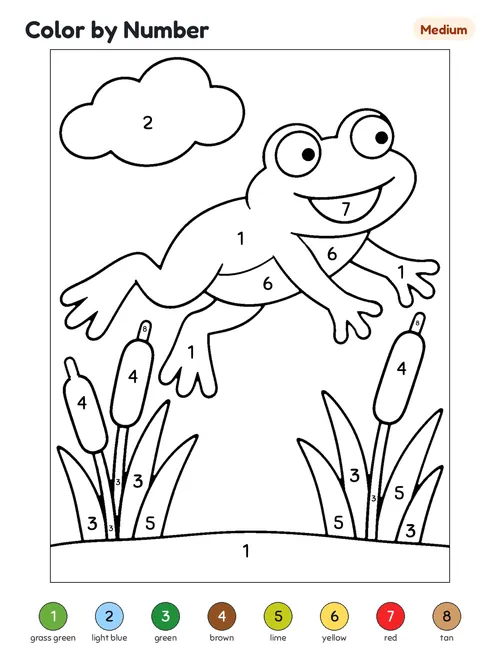
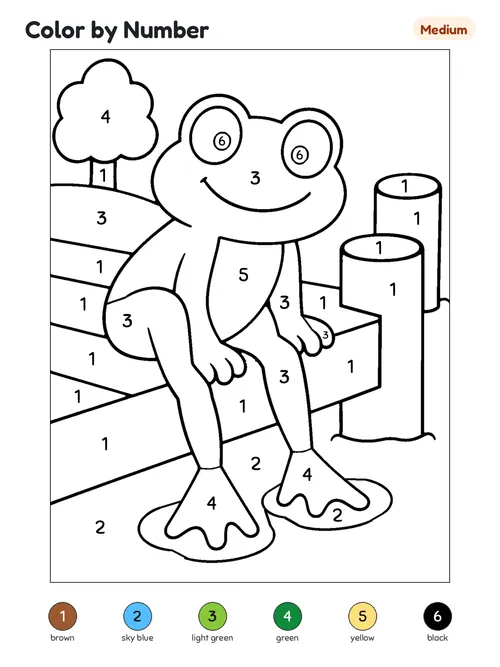
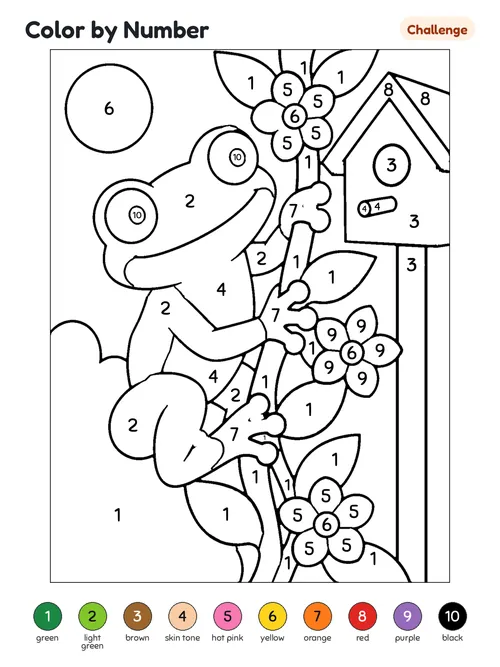
Spring pond life and bumpy garden toads fill these 24 frog color by number pages: 9 easy pages for preschool with bold lines, 8 medium pages, 3 challenge pages, and 4 advanced pages for teens and adults.
PDF paper size:
Easy 9 pages · ages 3 to 6
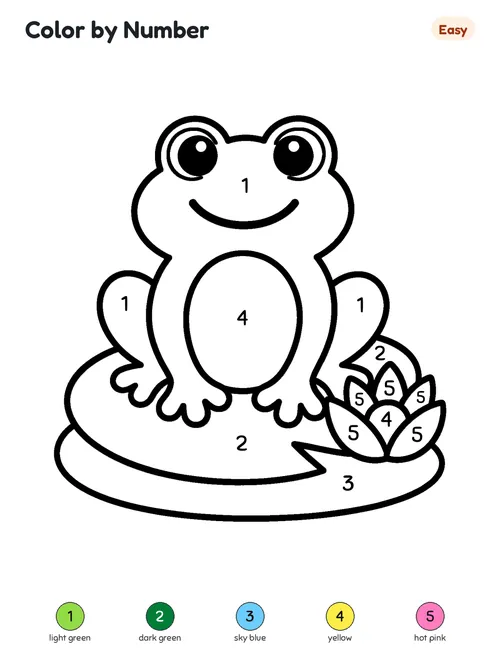

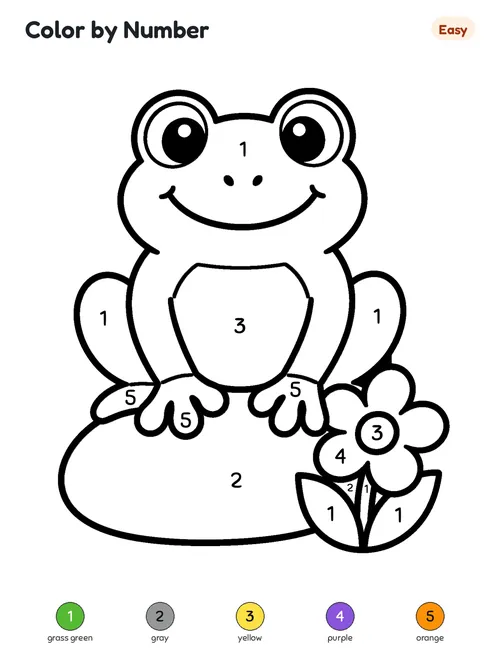


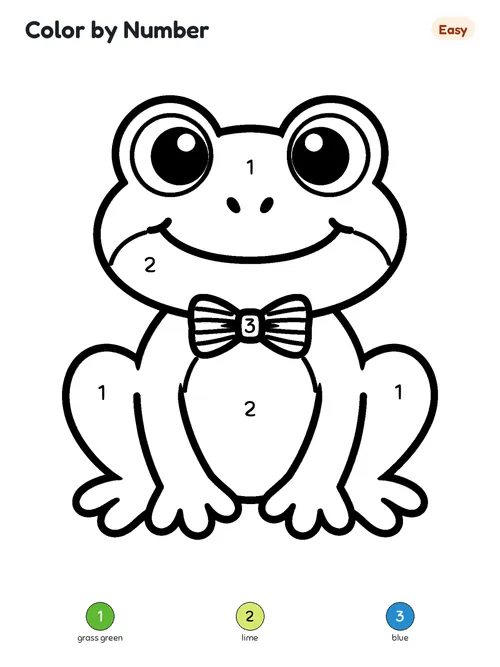

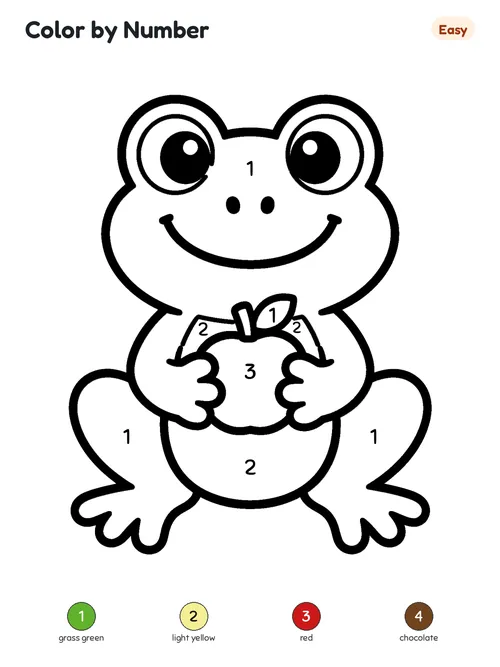

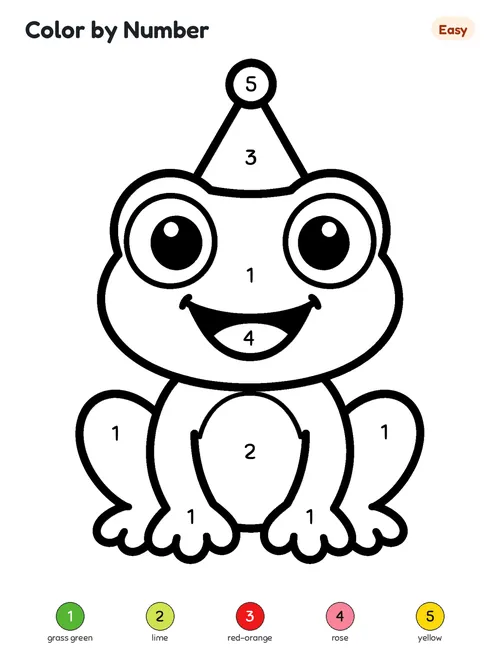


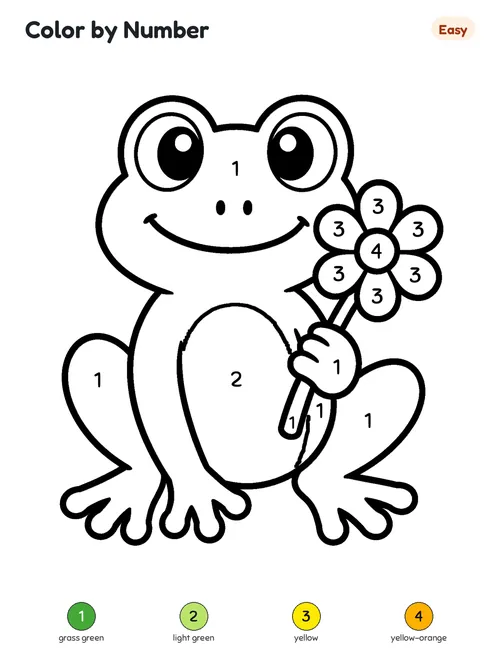

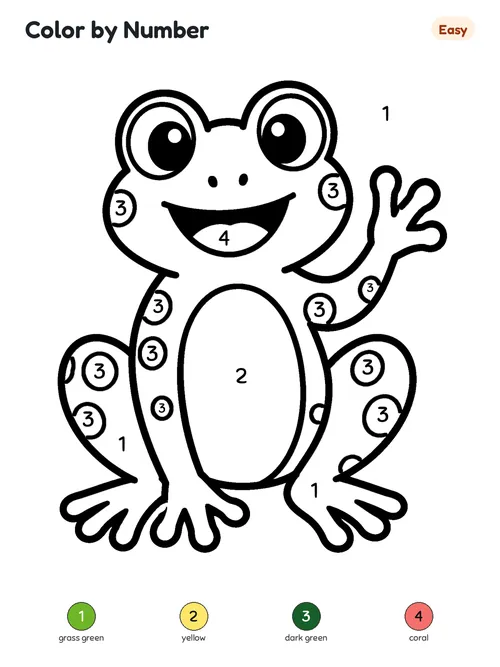

Medium 8 pages · ages 5 to 8






Challenge 3 pages · ages 7 and up
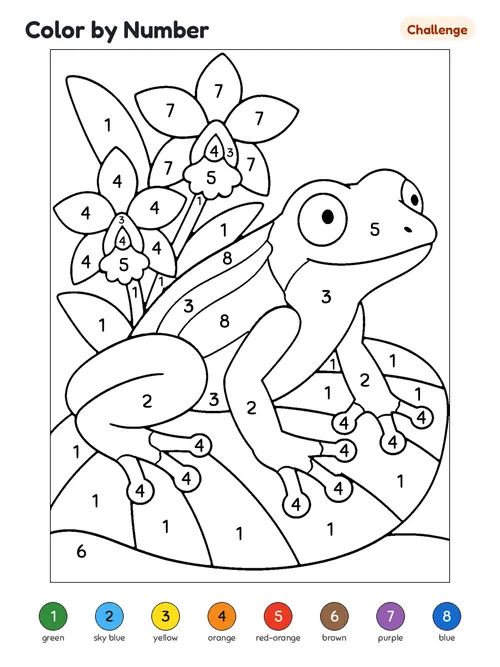



Advanced 4 pages · teens and adults


Frogs and toads in pond habitats
Most children lump frogs and toads together at first. Frogs keep smooth skin near ponds and streams, while toads carry drier, bumpy skin through shady gardens and woodland paths. Coloring both animals helps kids spot habitat clues like lily pads, river rocks, and damp forest floors.
Two pages in the set follow very different color plans. Beginners can start with the toad in acorn shell page, where a cracked brown shell and wide eyes use earthy browns for a nice break from green. Patient colorists can try the bullfrog among koi and lotus design instead, where many shades of green fill the frog and lily pad beside swirling water.
Handling many shades of green
Frog pages pack many greens onto one sheet. Each free printable PDF includes a color key with matching swatches and color names. Have kids test greens on scrap paper first so olive, moss, and lime tones never blur together.
Colored pencils beat thick markers once spaces shrink. Sharp points make it easier to shade tiny details cleanly so lighter and darker greens stay crisp beside reeds and lily pads. Extra intricate scenes also wait on our adult color by number pages.
Using frog pages in a spring science unit
Spring brings amphibian life cycles into the classroom. After tracing each stage from egg to tadpole, froglet, and frog, teachers can use frog color by number worksheets to reinforce pond vocabulary. Have kids write one pond fact on the back to turn quiet seatwork into review.
Some children finish early and want wild frog patterns. Pair a color by number frog sheet with our frog coloring pages so students can invent their own colors afterward. At home, younger siblings can work on easy preschool pages beside them.
Questions about Frog color by number
How can kids tell a frog from a toad in nature and drawings?
Frogs usually have smooth, moist skin and long back legs built for leaping near ponds. Toads have drier, bumpy skin with shorter legs and spend more time in gardens or woods. Comparing smooth pond frogs beside bumpy garden toads helps children remember the difference.
How do you keep many shades of green from blending together on a frog page?
Line up every green crayon or colored pencil from pale yellow-green to dark pine before starting. Swatch each shade on scrap paper so kids see the contrast clearly. Lighter pressure on the frog and firmer strokes on reeds or lily pads keep shapes crisp.
How can a spring frog life cycle lesson use these pond scenes?
Teach the stages from egg to tadpole, froglet, and adult frog during a spring science lesson. Afterward, let students color pond habitats with reeds, rocks, and lily pads. Hanging finished frogs beside a class life cycle chart turns the pages into a wall display.