Elephant Color by Number Pages
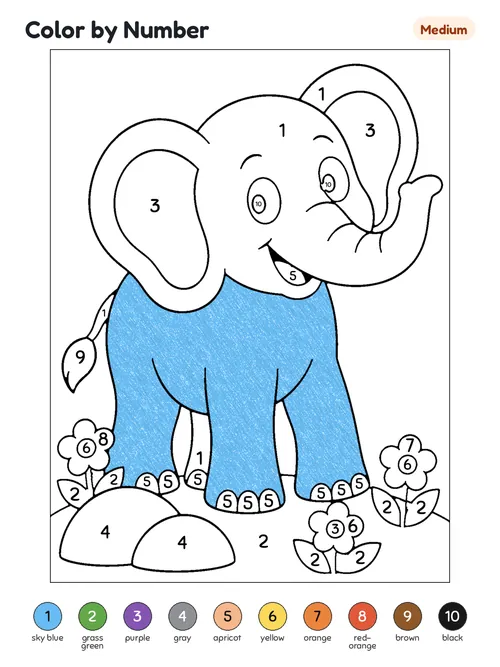
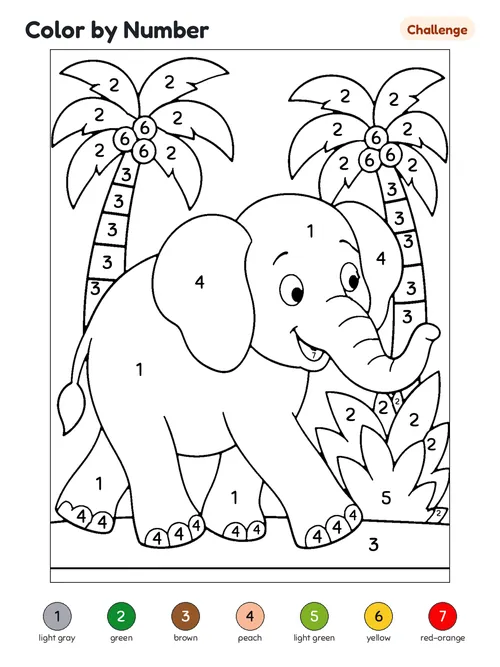
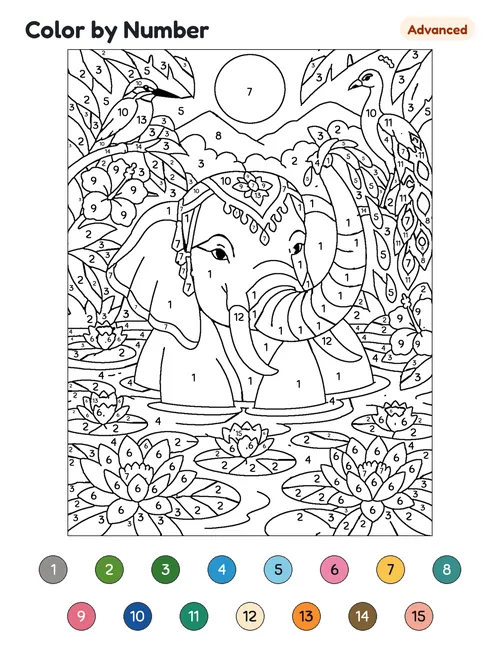
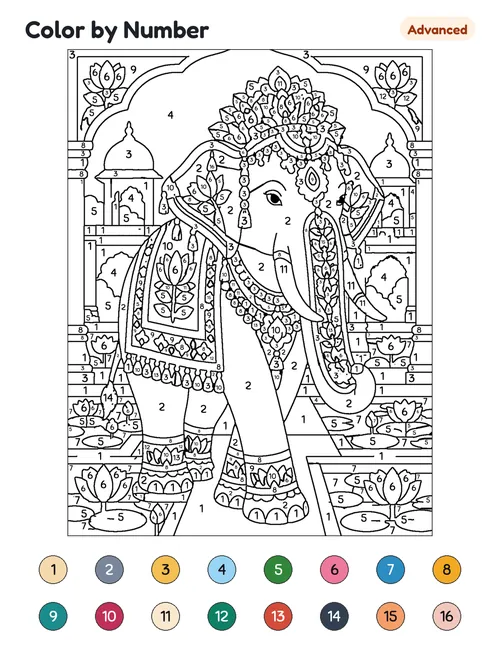
Earth's largest land animals star on these sheets. Pick from 25 elephant color by number pages: 6 easy pages for preschool with bold lines, 11 medium pages, 4 challenge pages, and 4 advanced pages for teens and adults.
PDF paper size:
Easy 6 pages · ages 3 to 6
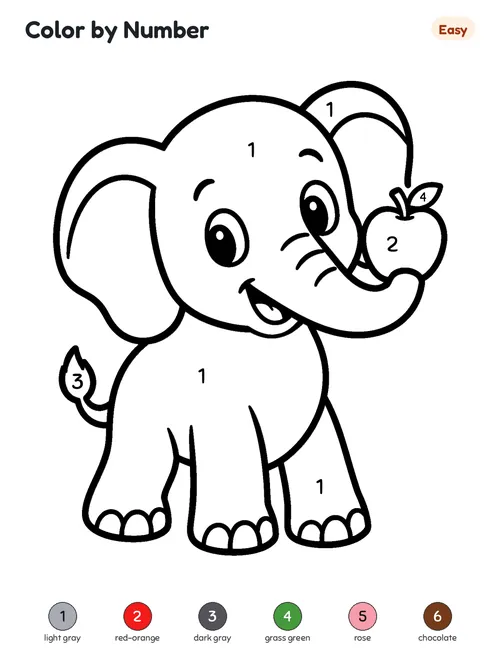

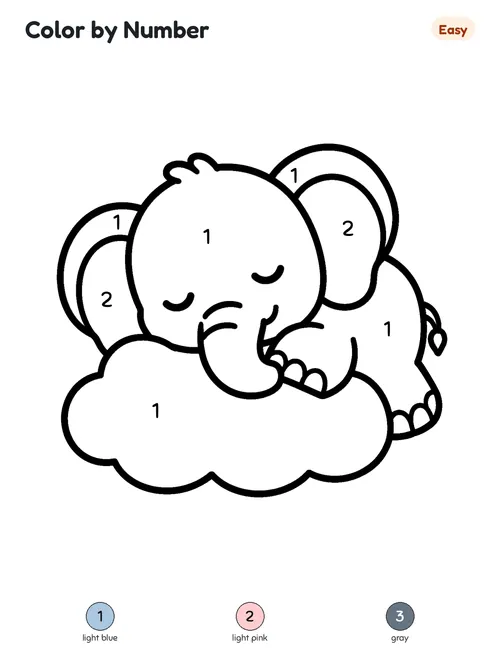

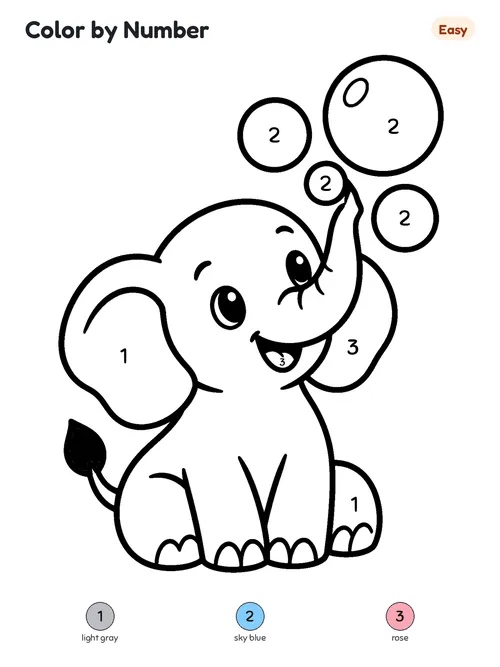


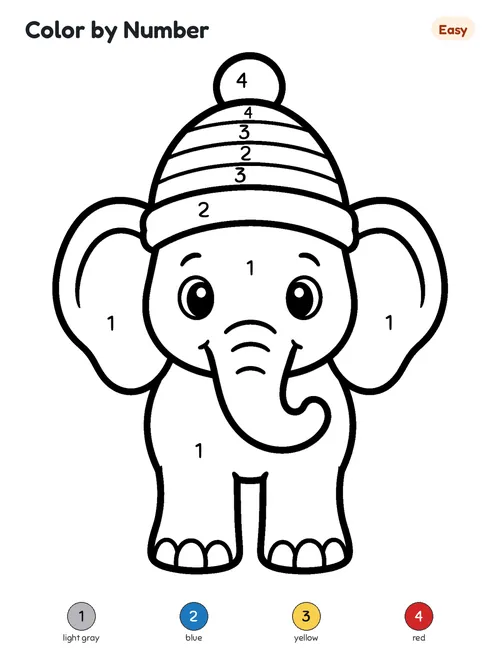


Medium 11 pages · ages 5 to 8





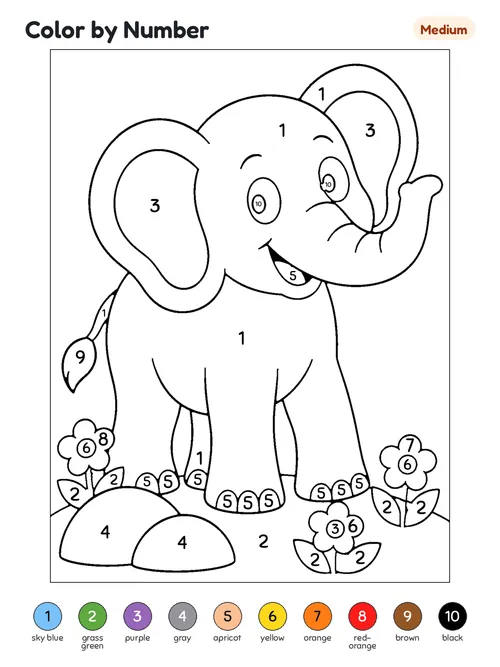

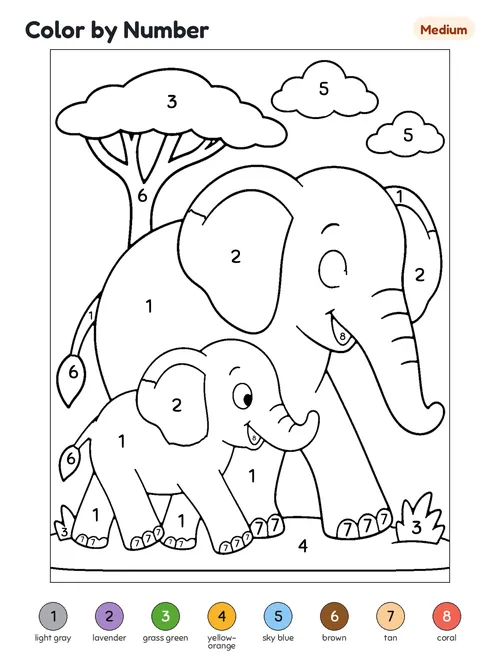

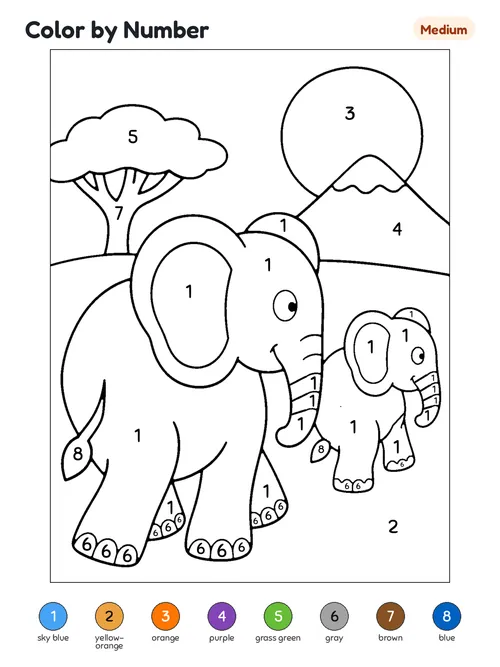

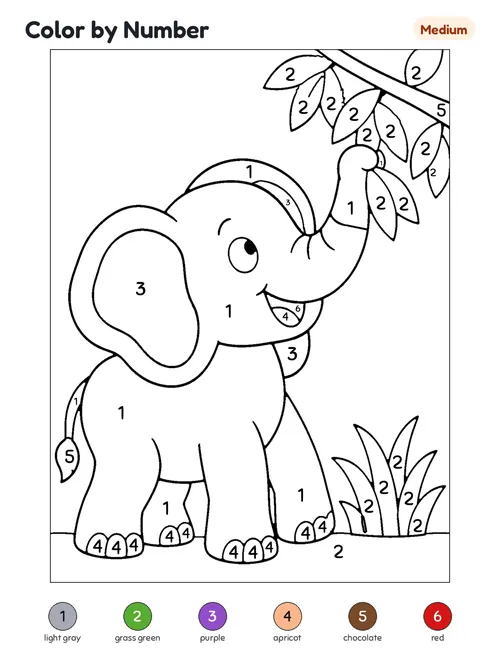


Challenge 4 pages · ages 7 and up




Advanced 4 pages · teens and adults




More Elephant coloring pages →
Trunks, herds, and giant land animals
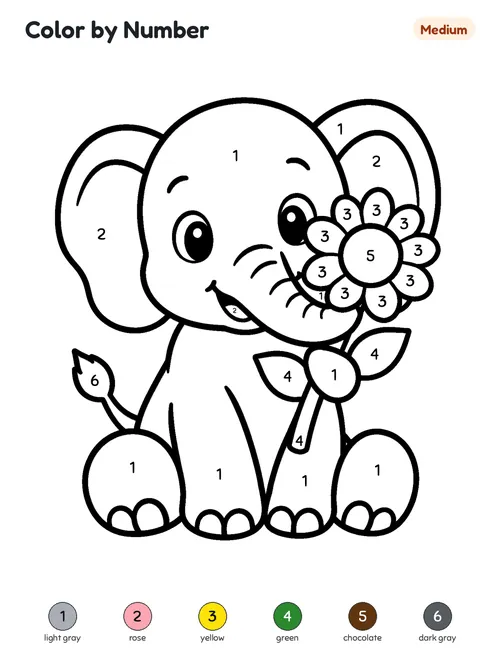
Elephants are the largest animals on land. Their trunks handle breathing, drinking, and lifting food without ever needing hands. On the baby elephant with sunflower page, a sitting calf holds a bright yellow bloom, offering a friendly color by number elephant starter for young learners.
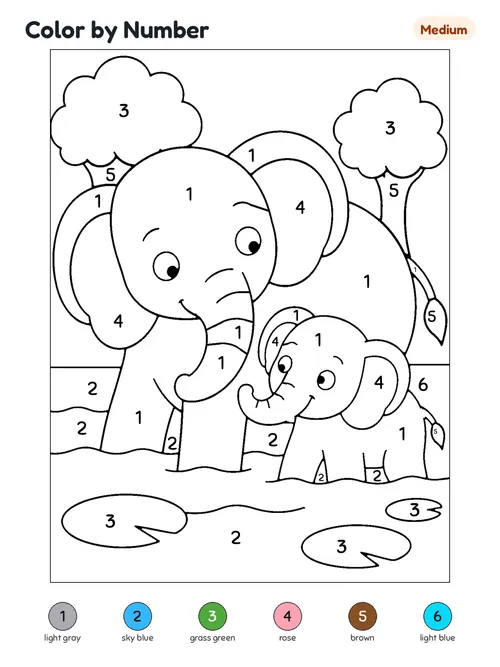
Wild elephant herds stick closely together. Usually, older females lead each herd while mothers guide their calves toward water and shade. Teachers often pair these sheets with animal family stories, or send younger kids to our easy preschool pages for extra practice.
African and Asian elephants side by side
Ear size separates the two main elephant species. African elephants have bigger ears than Asian elephants, which helps release heat in warm climates. Working on the decorated Asian elephant lets students spot smaller ears alongside palm fronds and a floral blanket.
Each free printable PDF downloads quickly, and a teacher answer key version is available. Open-ended coloring works well after a guided sheet. Once kids finish matching numbers, our regular elephant coloring pages let them invent their own savanna or jungle backgrounds.
Making shades of gray feel lively
Flat gray can make large animals look dull. Layer warm and cool grays by adding light blue or soft brown beside silver pencils for natural skin wrinkles. Bright surroundings like leafy branches, sunset skies, or blue water also help neutral gray tones pop off the paper.
Accent colors make complex elephant scenes shine. The ornate palace elephant pairs soft gray skin with intricate floral headwear, palace archways, and calm lotus ponds. Older colorists who like fine-line shading can also try our advanced adult pages.
Questions about Elephant color by number
How can you tell an African elephant from an Asian elephant?
Ear size gives the quickest clue. African elephants have much larger ears shaped roughly like the African continent, while Asian elephants have smaller, rounder ears. Their backs differ too, with Asian elephants showing a gentler dome along the spine and forehead.
How do you keep a gray elephant from looking flat on the page?
Small value shifts make a big difference. Use light pressure across the forehead and outer ears, then press harder inside trunk folds and under the belly. Tinting shadows with soft blue or warm brown keeps gray skin looking textured rather than dull.
How do elephant sheets work in a lesson on animal herds and habitats?
Start with a short talk about elephant habitats. Students can color a savanna or river sheet, then label the trunk, ears, and feet along the margin. Hanging finished sheets together creates a herd display that reinforces how older females guide family groups.