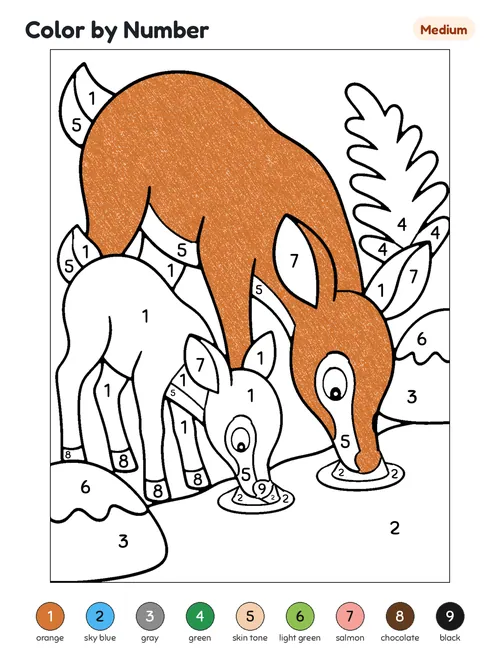
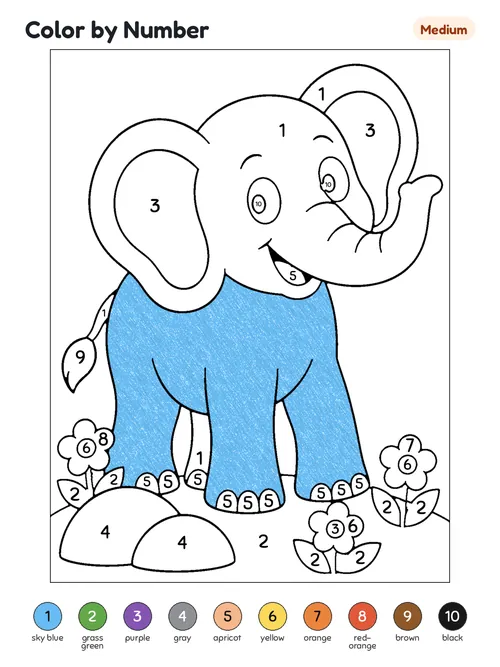
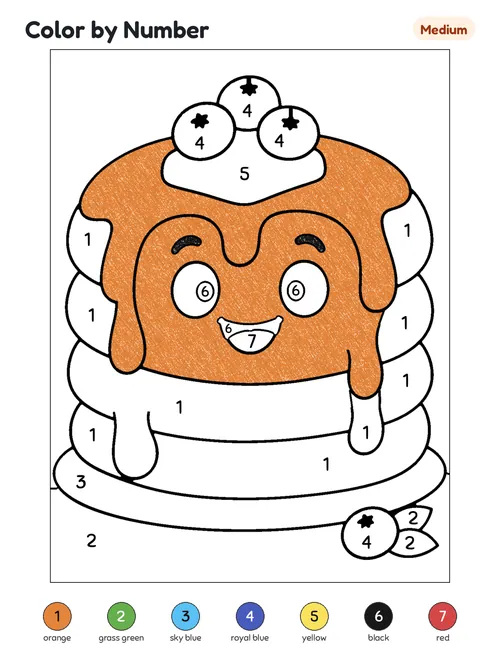
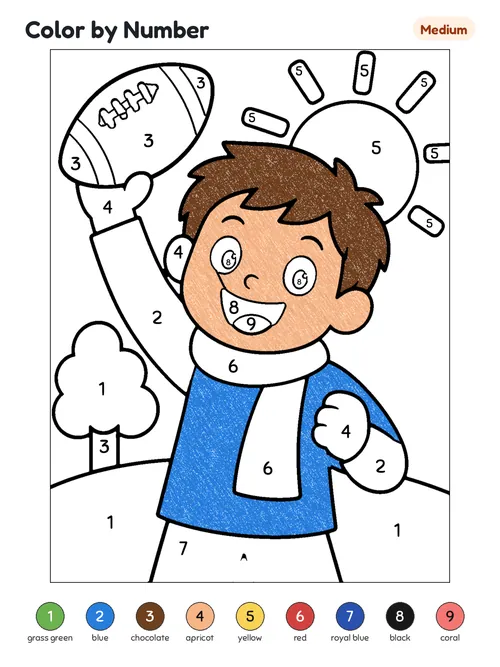
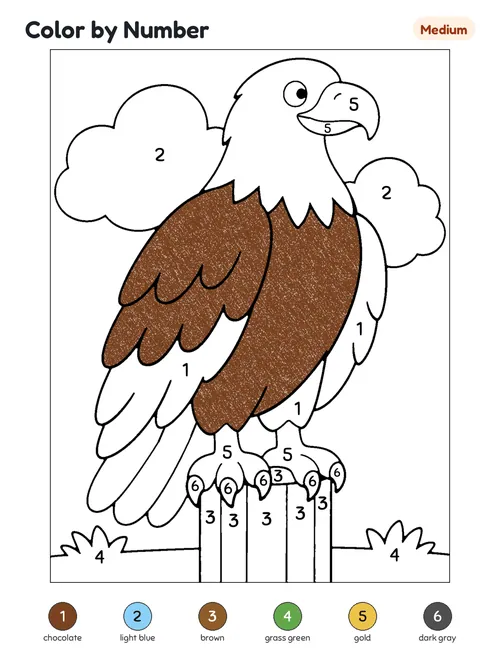
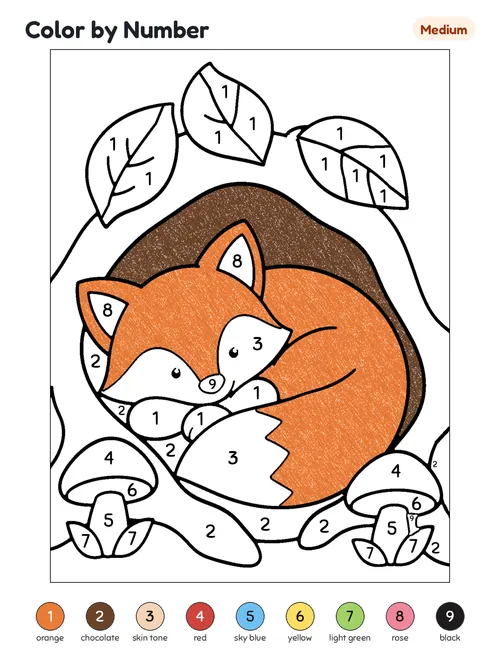
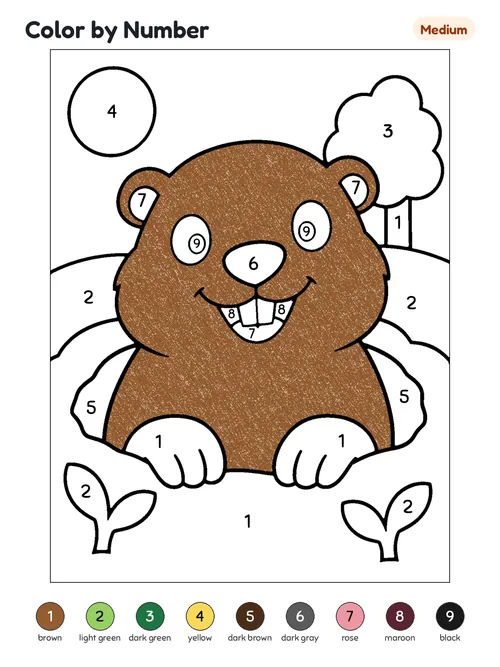
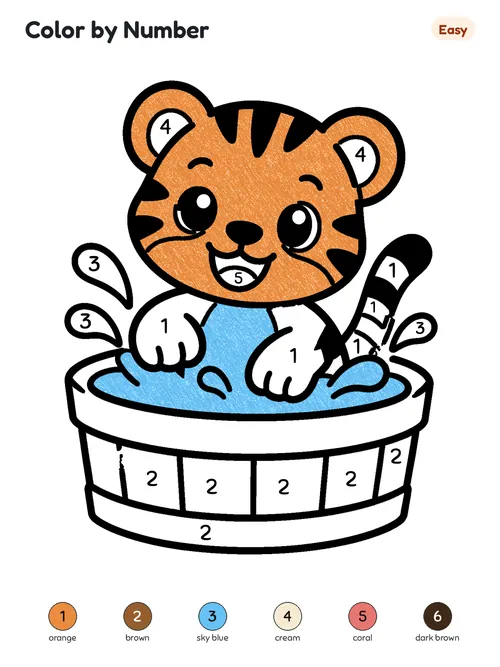
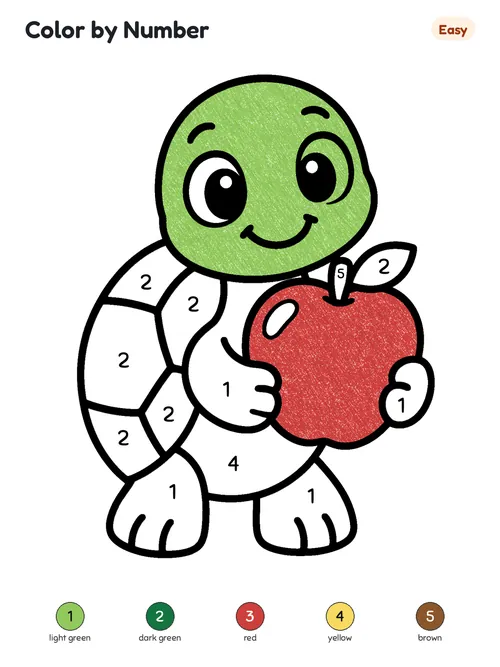
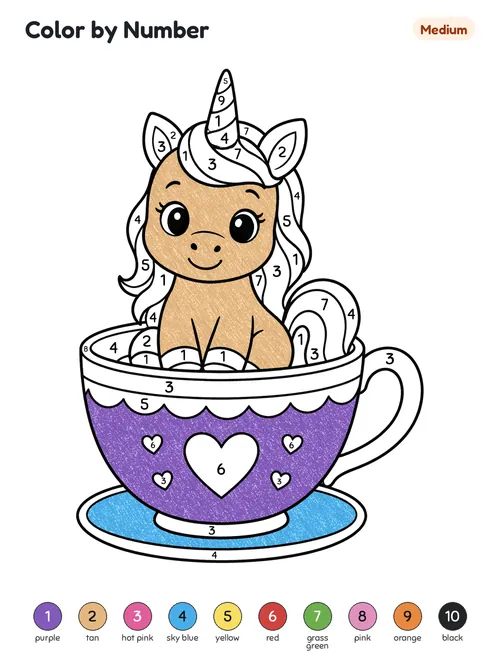
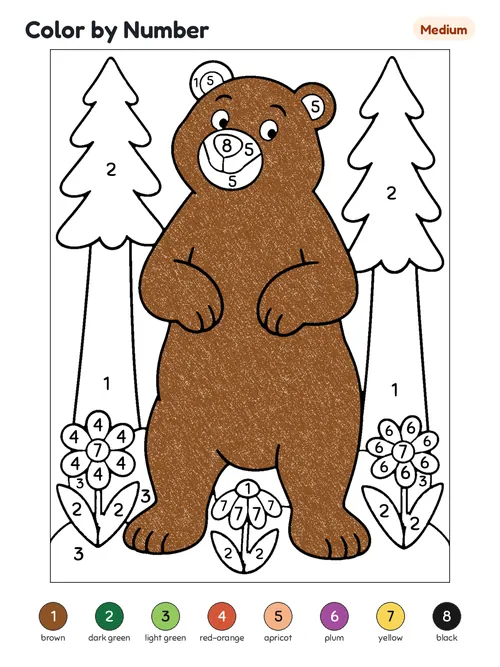
Bear color by number pages
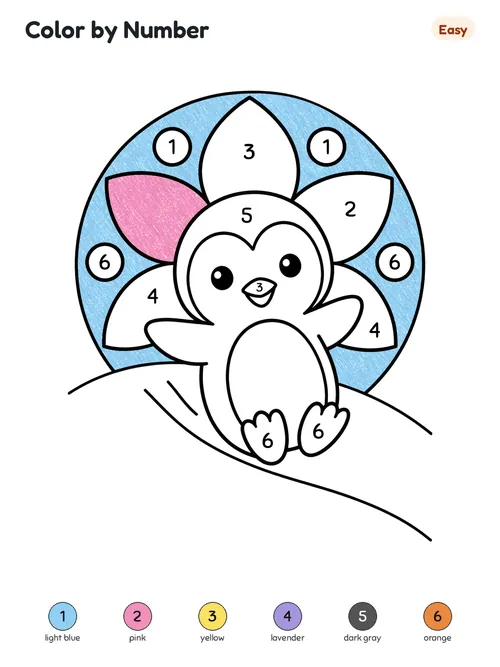
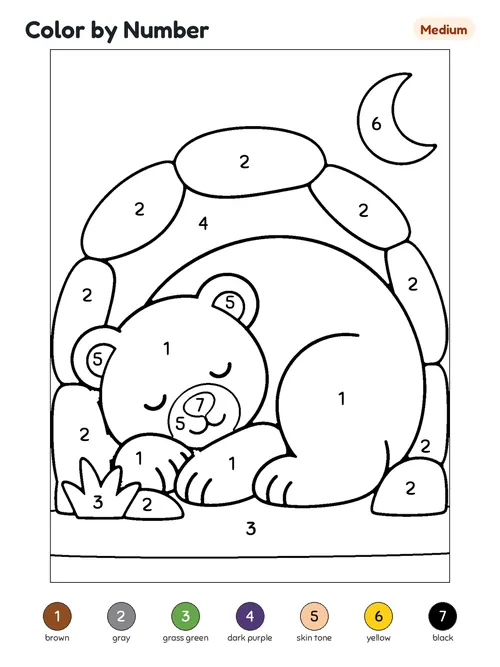
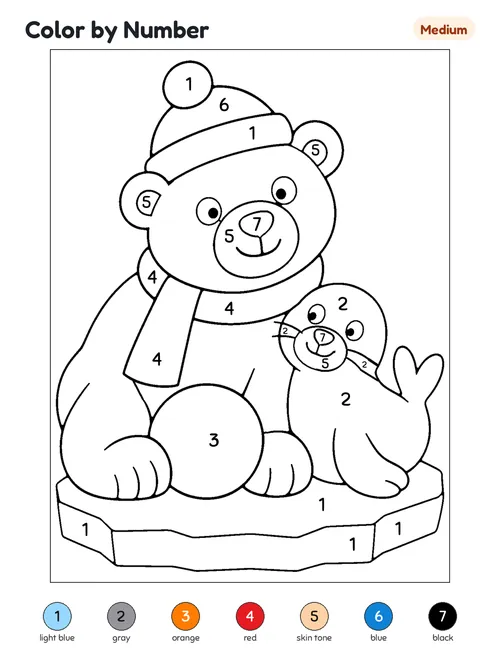
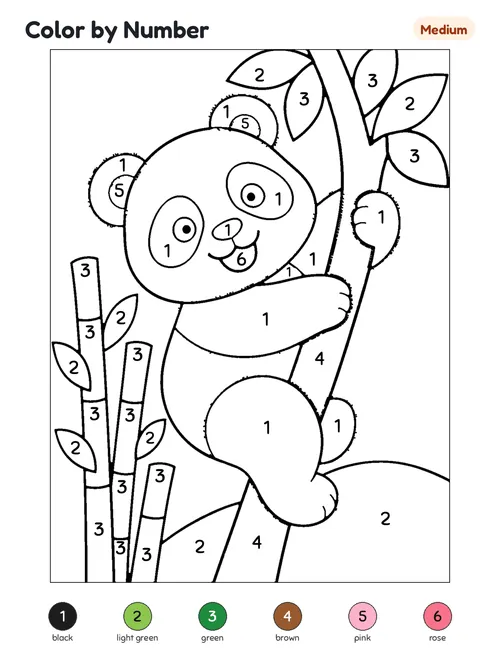
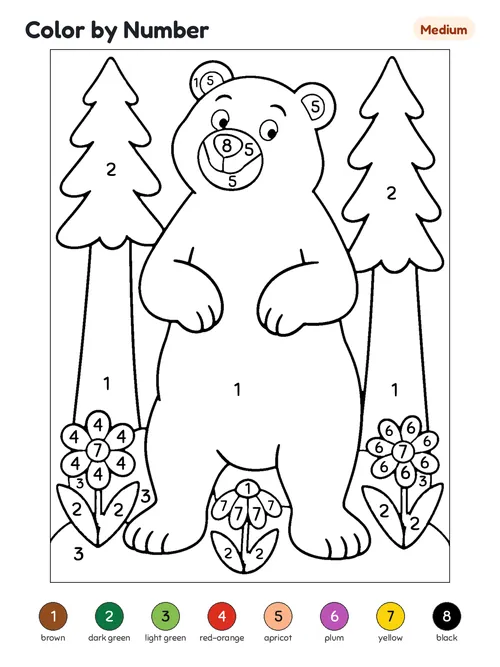
Sleepy brown bears, polar cubs, and pandas fill 19 bear color by number pages: 7 easy pages for preschool with bold lines, 7 medium pages, 1 challenge page and 4 advanced pages for teens and adults.
PDF paper size:
Easy 7 pages · ages 3 to 6
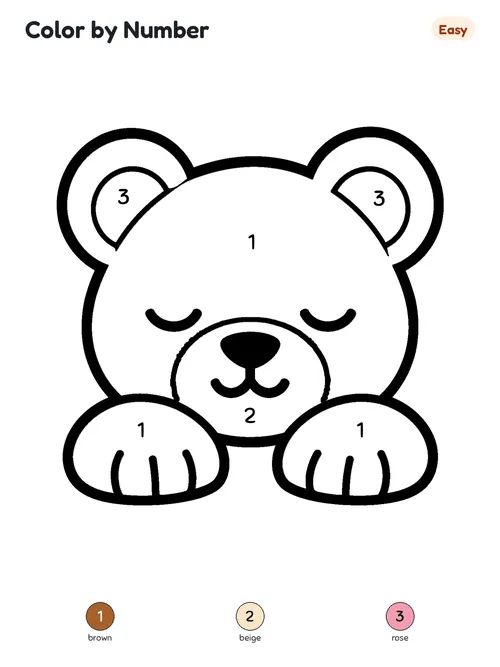

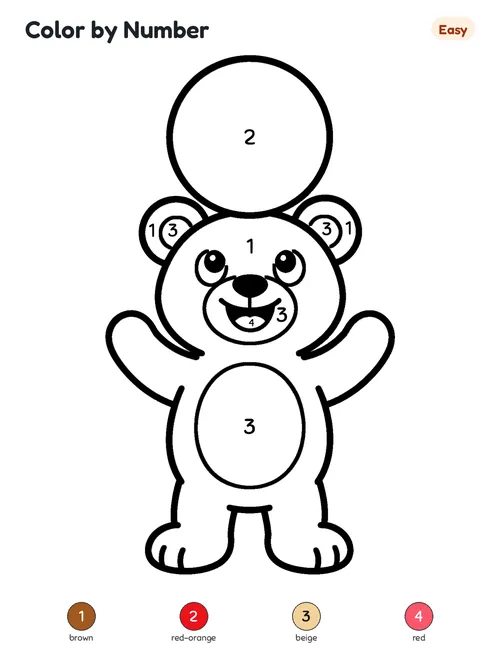


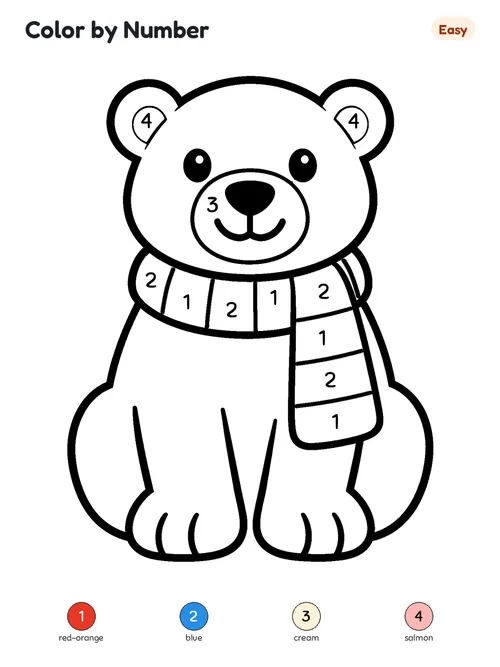


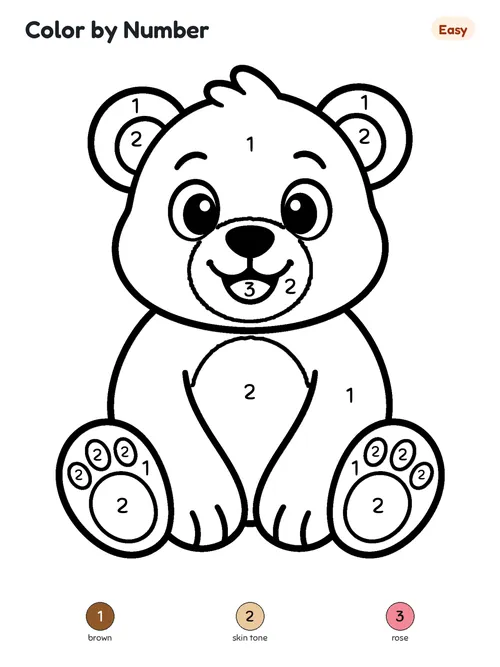

Medium 7 pages · ages 5 to 8








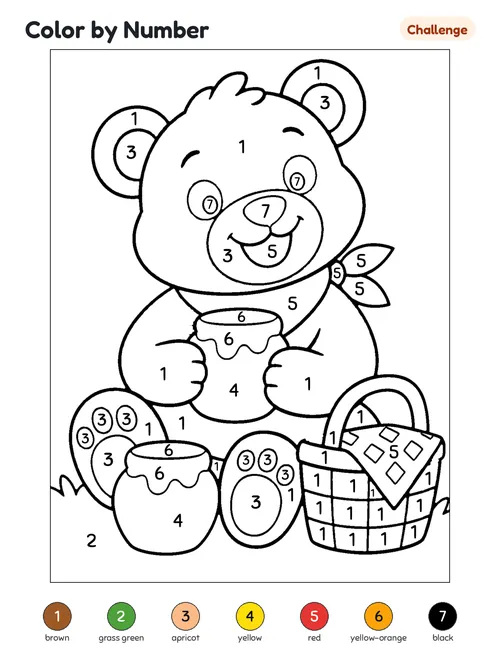
Challenge 1 page · ages 7 and up

Advanced 4 pages · teens and adults


Brown bears, polar bears, and pandas
Bears look surprisingly different across habitats. Polar bear fur appears snowy white, yet it is actually see-through hair over dark skin that helps trap warmth. Meanwhile, giant pandas rely on bamboo for nearly all of their daily meals.
Young kids spot these contrasts right away. For even simpler practice across other themes, try our preschool pages.
Fur color tips for every species
Each species calls for a different coloring approach. For a color by number bear with brown fur, layer warm tans and rich browns so the coat looks thick rather than flat. Polar bears pop best on white paper when kids shade edges with pale blue or soft gray.
Pandas work best with crisp dark contrast. The panda eating bamboo sheet pairs black-and-white fur with green bamboo stalks and smooth boulders for steady practice. Older colorists who want intricate floral borders and autumn forest tones can try the grizzly in stained glass autumn design or our detailed adult pages.
Winter sleep lessons and quiet afternoons
Many bears sleep through the coldest winter months. That habit makes bears color by number sheets a practical fit for seasonal science units or cozy indoor days. Every sheet downloads as a free printable PDF, with a teacher version that includes a full answer key.
Some children prefer picking their own palette after finishing a numbered scene. Pair these sheets with our freehand bear coloring pages whenever kids want open-ended color choices. Mixing guided and freehand pages keeps practice fresh.
Questions about Bear color by number
Why does polar bear fur look white if their skin is dark?
Polar bear hairs are clear and see-through rather than white. Sunlight bounces off those translucent strands, which makes the coat look snowy against ice and snow. Underneath the thick fur, dark skin helps soak up warmth from the sun during freezing weather.
How can kids color white polar bear fur without leaving the page blank?
Shading coat edges with pale blue or soft gray gives white fur shape on white paper. Press slightly harder under the chin, paws, and belly, then leave the center bright so the bear still looks snowy while standing out clearly.
What makes bear sheets a good match for a winter hibernation lesson?
Pairing a bear sheet with a short story helps children visualize how many bears sleep through the coldest winter months. Kids can compare forest bears resting in dens with polar bears on ice and bamboo-eating pandas, then display finished pages on a classroom wall.