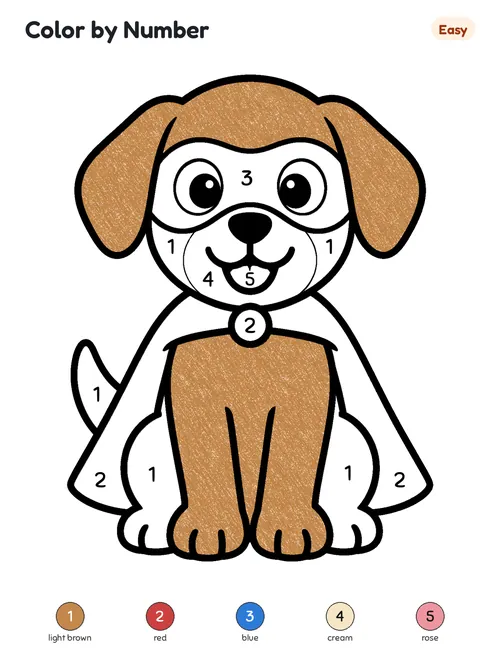
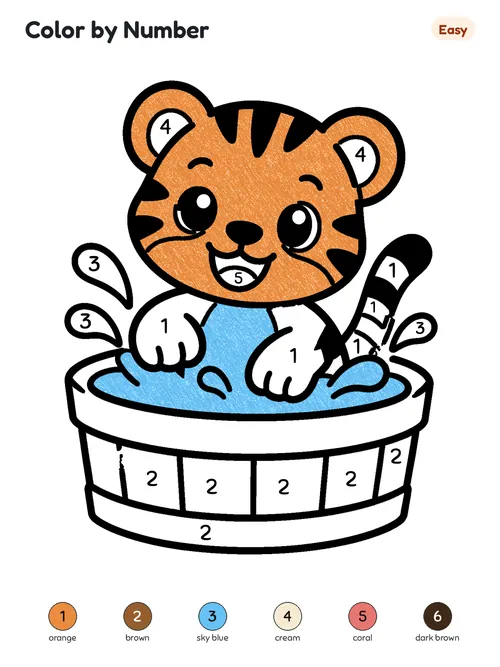
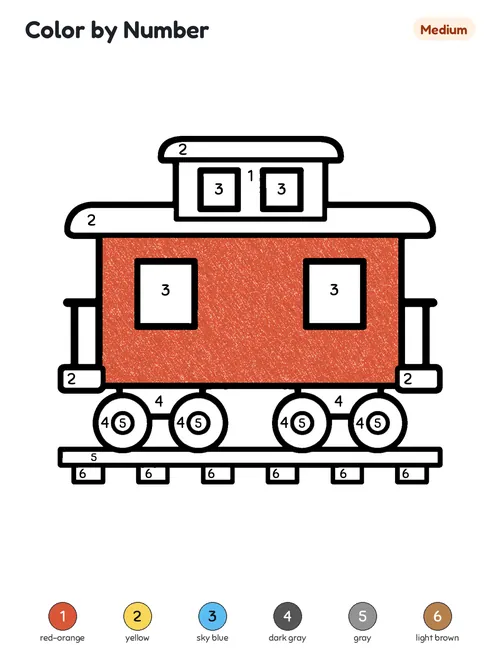
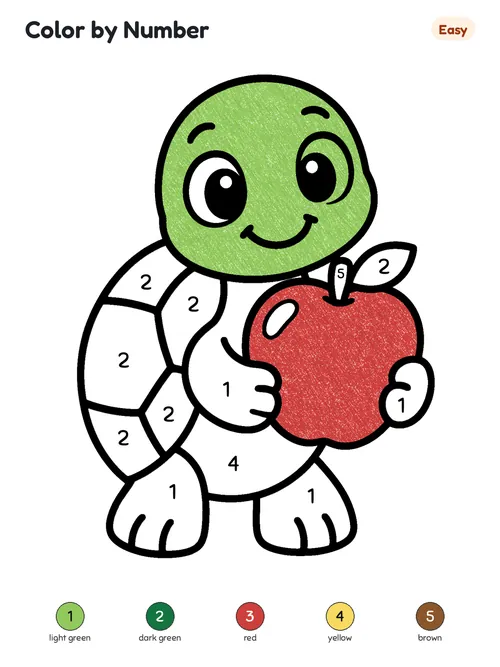
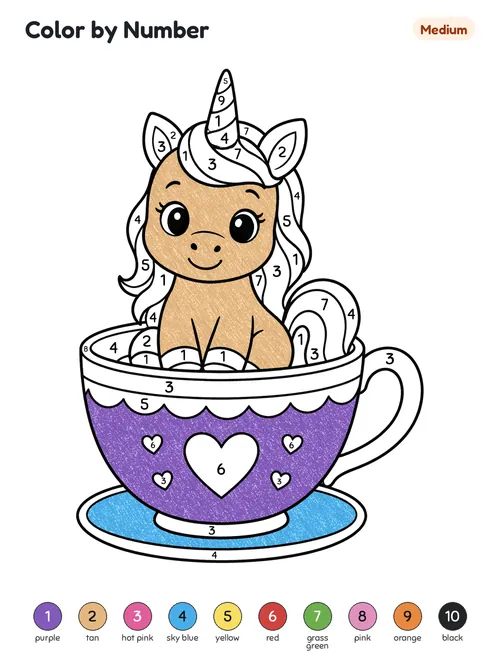
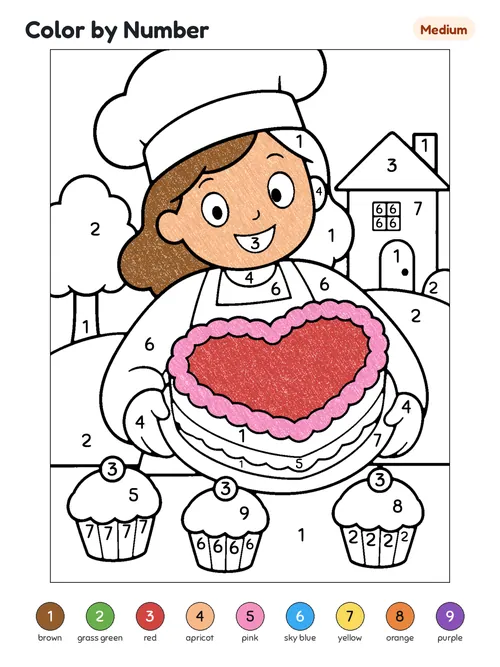
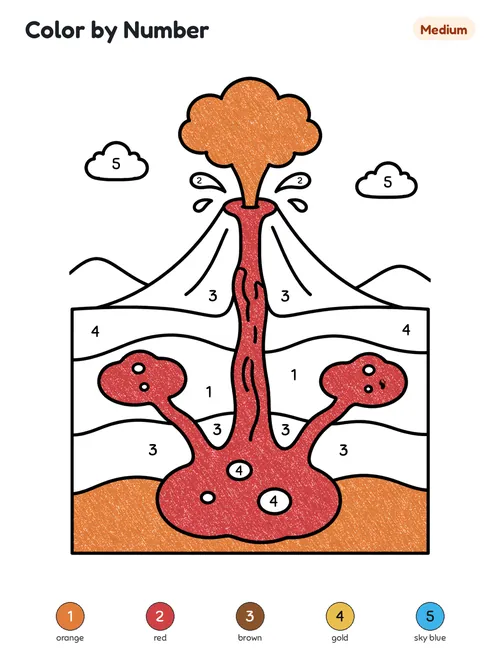
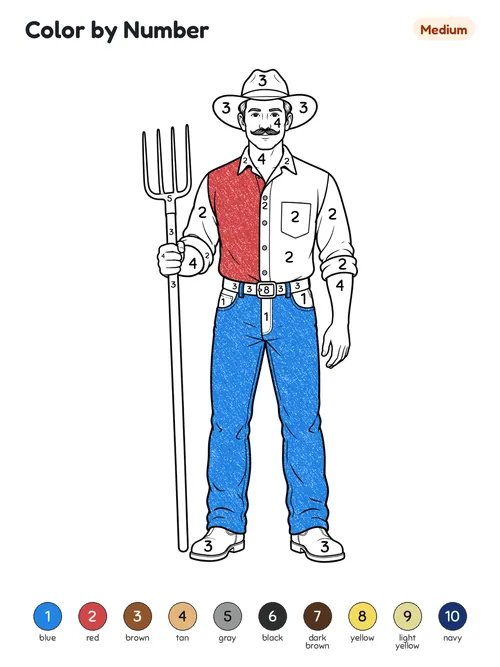
Cow color by number pages
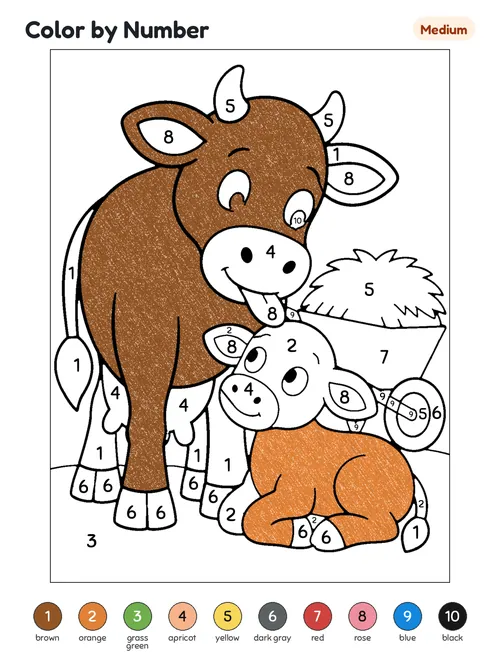
Every dairy cow wears its own patch pattern. Here are 24 cow color by number pages: 8 easy pages for preschool with bold lines, 8 medium pages, 4 challenge pages, and 4 advanced pages for teens and adults.
PDF paper size:
Easy 8 pages · ages 3 to 6


Medium 8 pages · ages 5 to 8


Challenge 4 pages · ages 7 and up


Advanced 4 pages · teens and adults


Cows, calves, and where milk comes from
Many children think milk starts at the grocery store. Working on a color by number cow sheet opens an easy talk about how dairy cows feed calves and supply milk for cheese. Ask kids to name dairy foods aloud as they color.
For early learners, the cute spotted calf page pairs big spaces with a wooden milk bucket beside the sitting dairy calf. Wide outlines help little hands color without rushing. Children who prefer freehand drawing can switch to our cow coloring pages for blank scenes.
Spot patterns, shaggy coats, and pasture greens
No dairy herd looks identical, because every cow has unique spots just like human fingerprints. Black-and-white dairy patches encourage kids to stop at each line instead of rushing across the whole body. Leaving white patches clean keeps the coat crisp.
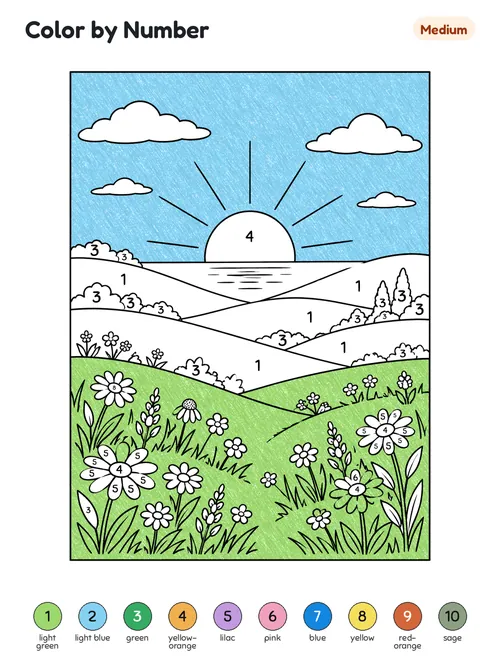
Shaggy highland cattle add a warm change of texture. In the highland cow in a field scene, kids practice mixing pasture greens across the mound, wildflowers, and rolling hills beneath a fluffy coat. Older colorers can pick the cattle in a lavender meadow design for grazing cattle and a sunrise, alongside our detailed adult pages.
Using cattle sheets in a farm unit
Farm weeks in early grades pair well with quiet number matching after circle time. Lay out crayons in grass and earth tones first. Sorting greens, browns, and warm reds ahead of time keeps small tables calm so children finish smoothly.
Teachers can download a free printable PDF with a full answer key page for fast prep. Pair these cattle sheets with our horse color by number pages to round out a barn bulletin board. Finished pastures look striking hung side by side.
Questions about Cow color by number
Why does every black-and-white dairy cow have a different spot pattern?
Pigment cells spread across a calf's skin in random ways before birth, so no coat pattern ever repeats. Dairy farmers often recognize individual cows from across the barn just by glancing at their markings. Mentioning this fact turns simple patch coloring into a quick science moment.
How can kids color shaggy highland cattle fur and pasture greens so they stand out?
Short, curved strokes in the direction of the bangs and coat make shaggy cattle look fluffy instead of flat. Pairing warm reddish browns or tan fur against cool light and dark greens keeps the animal clearly separated from the meadow behind it.
How can a cow picture help explain where milk comes from during a farm unit?
Hands-on coloring right after a farm read-aloud helps young learners remember the steps from barn to table. Tape finished dairy cow and calf pages beside real photos of milk, butter, and cheese so children can trace how pasture grass turns into everyday snacks.