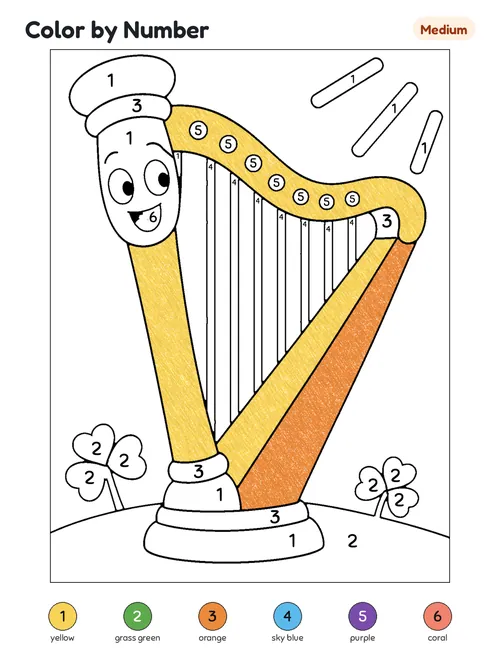
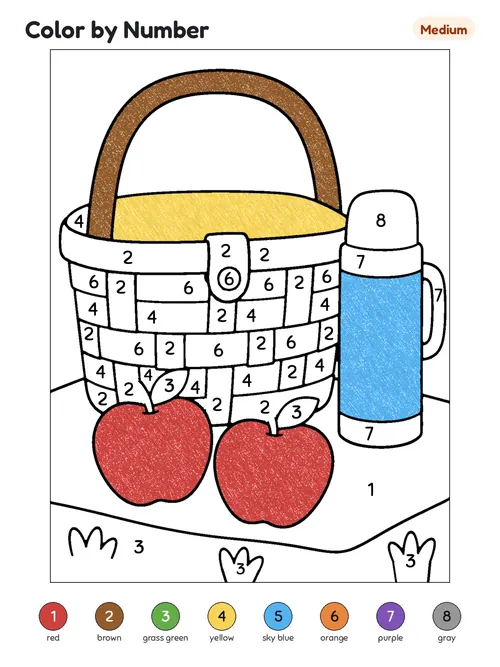
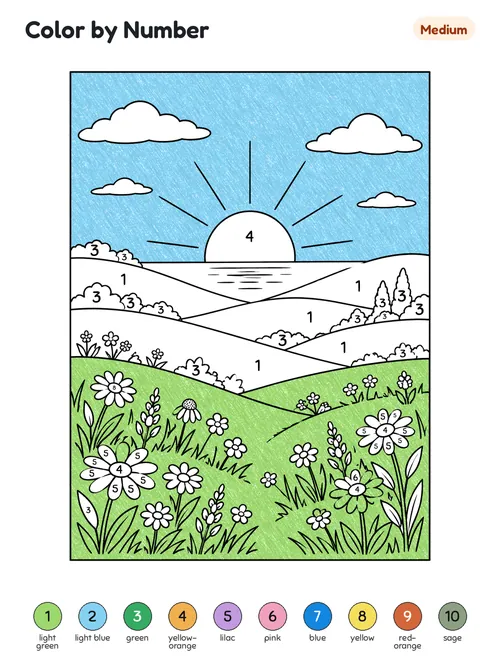
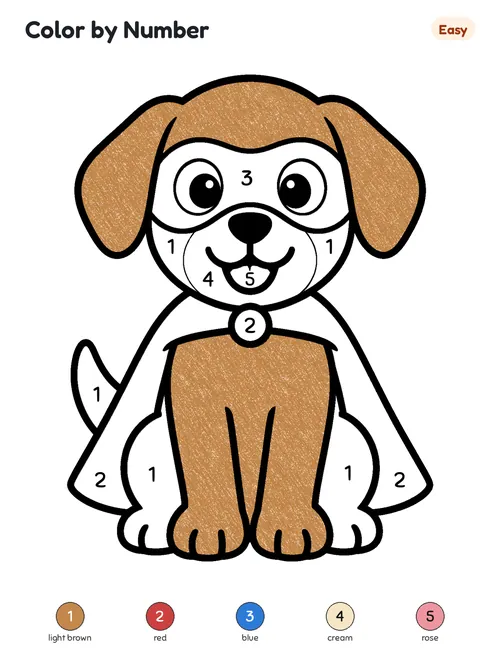
Spring color by number pages
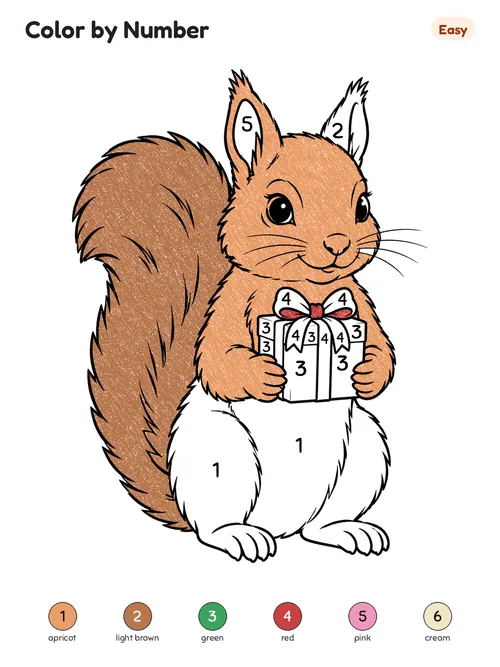
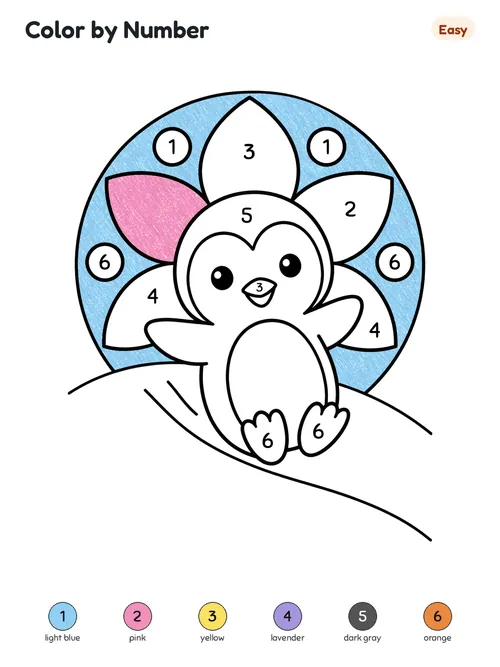
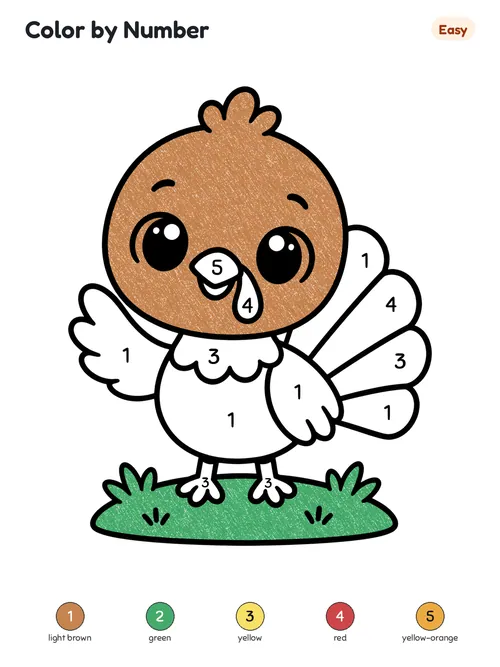
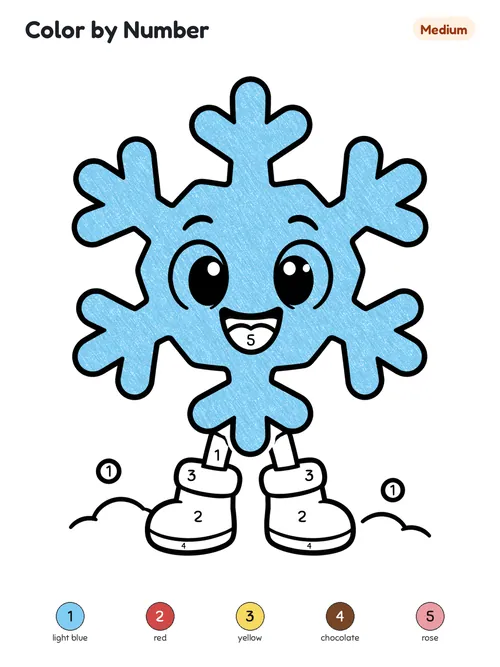
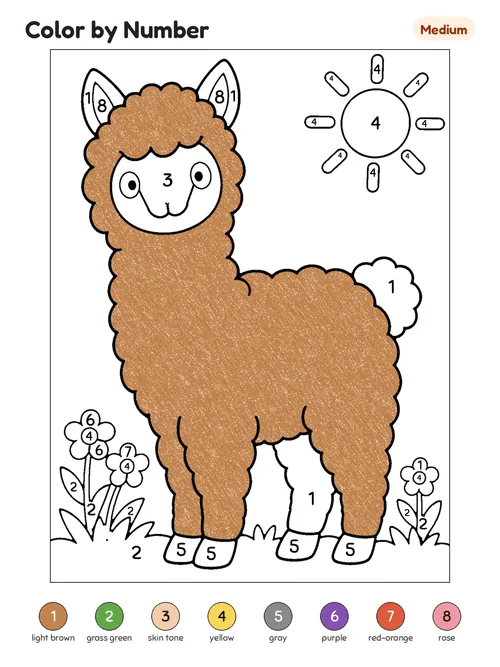
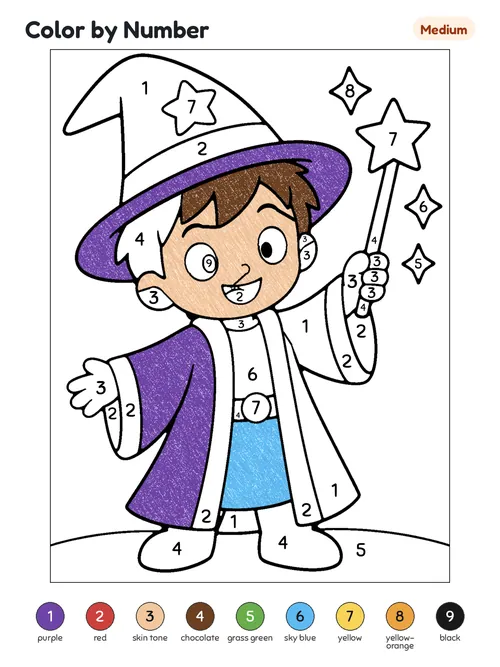
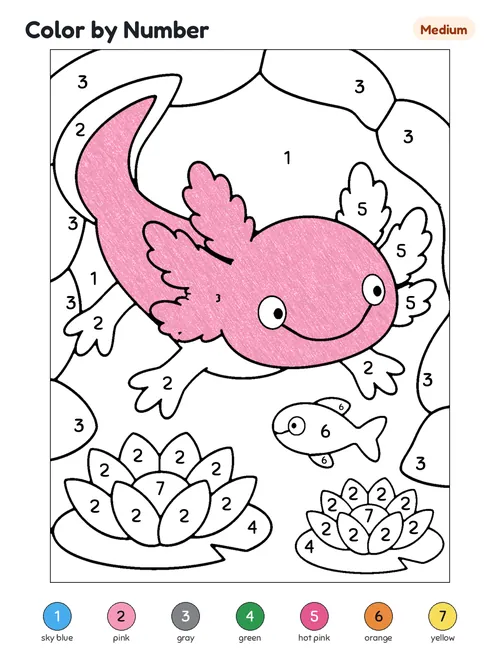
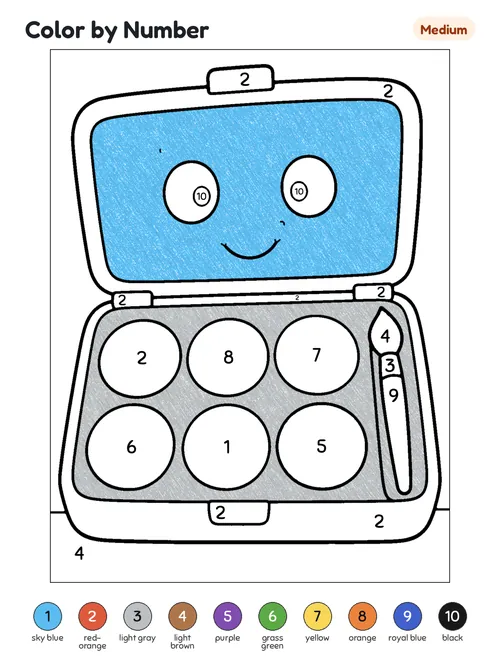
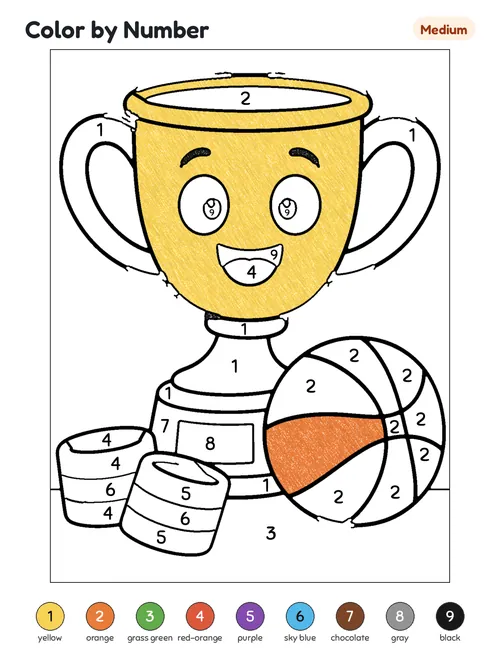
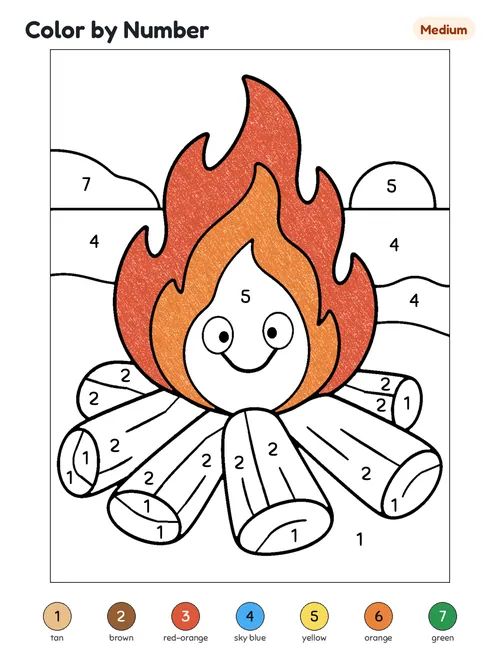
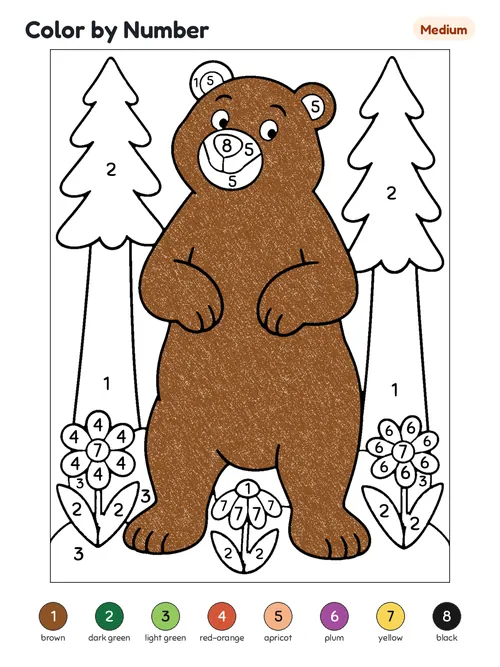
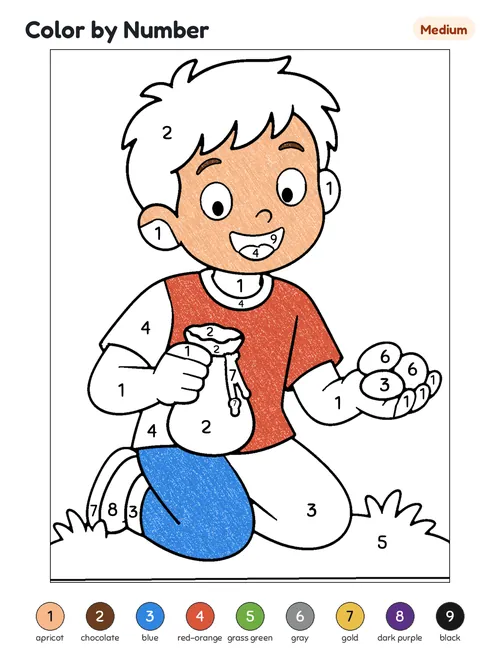
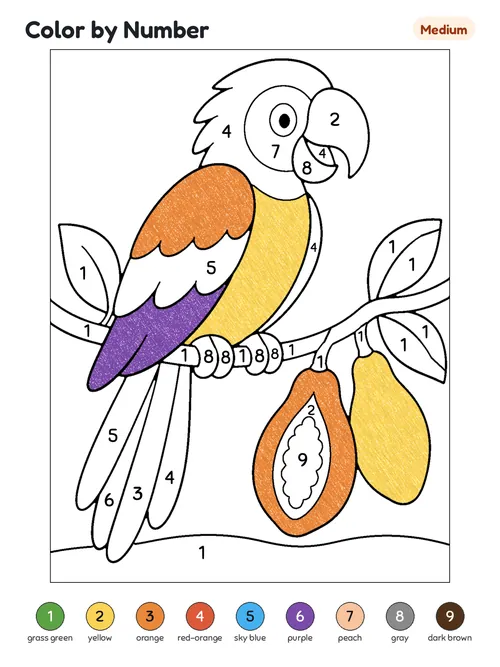
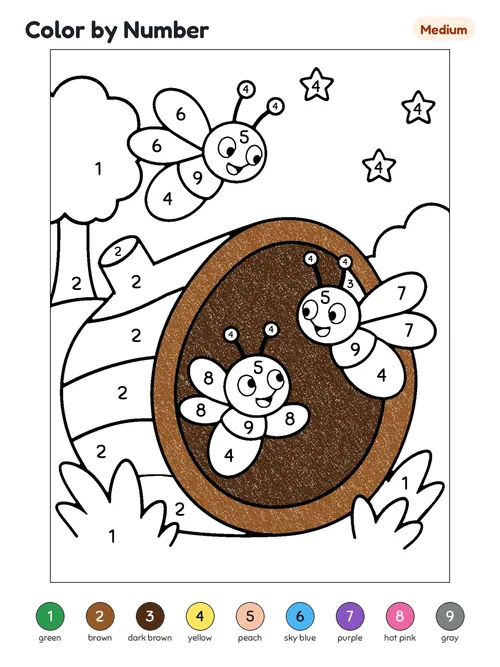
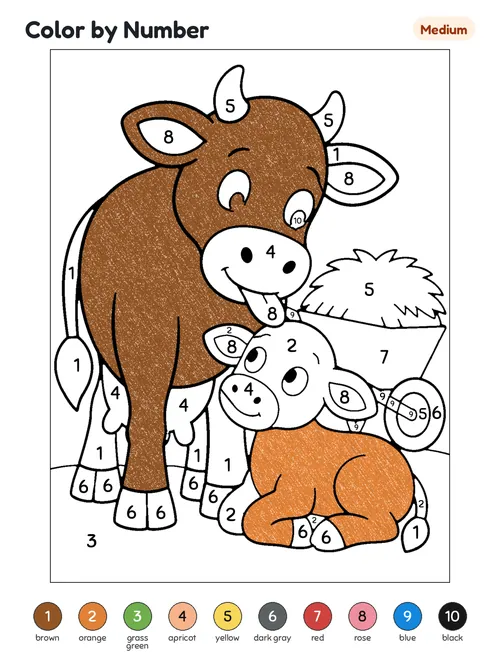
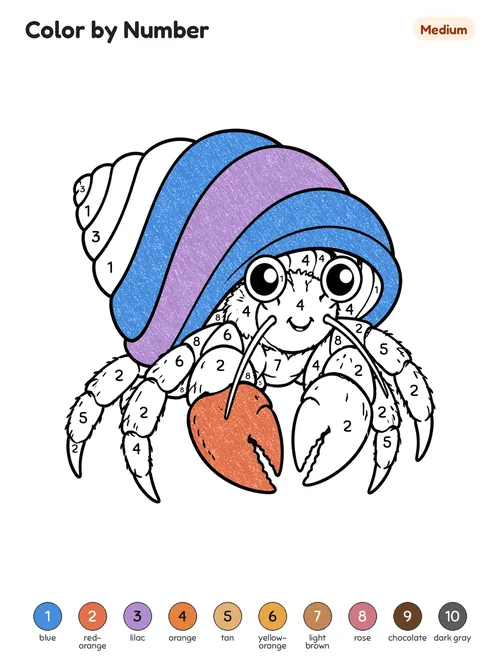
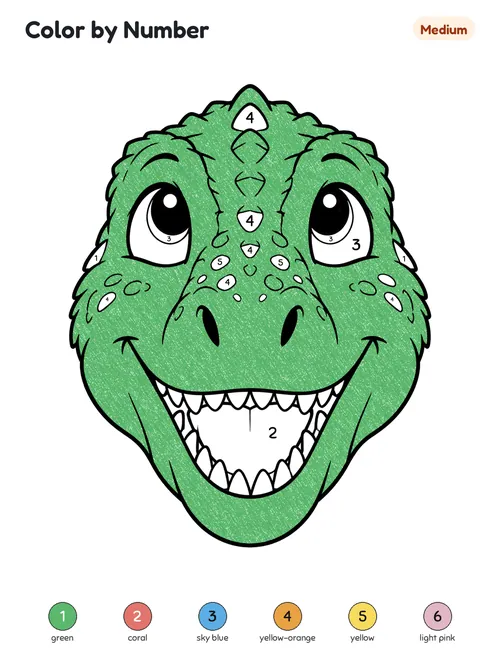
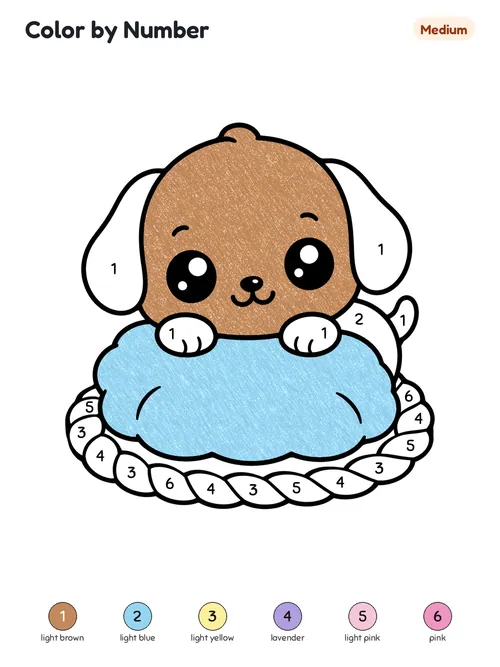
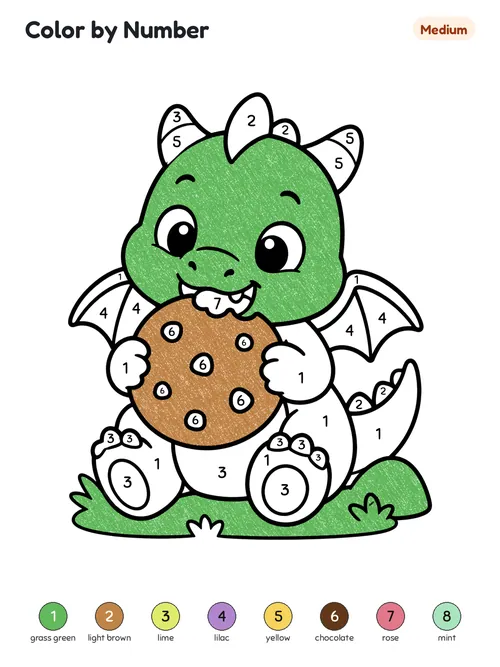
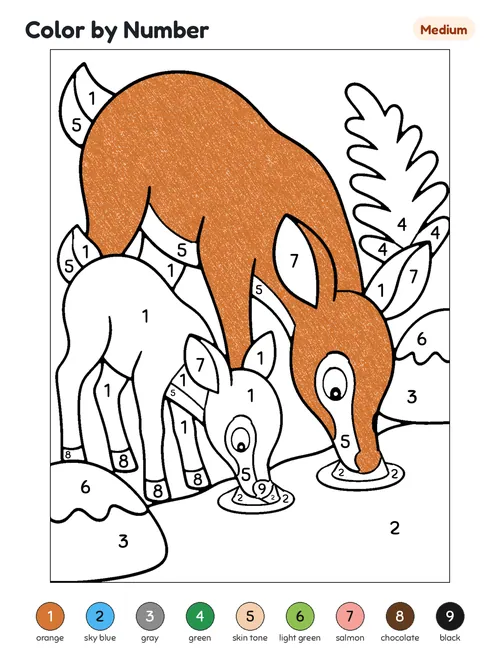
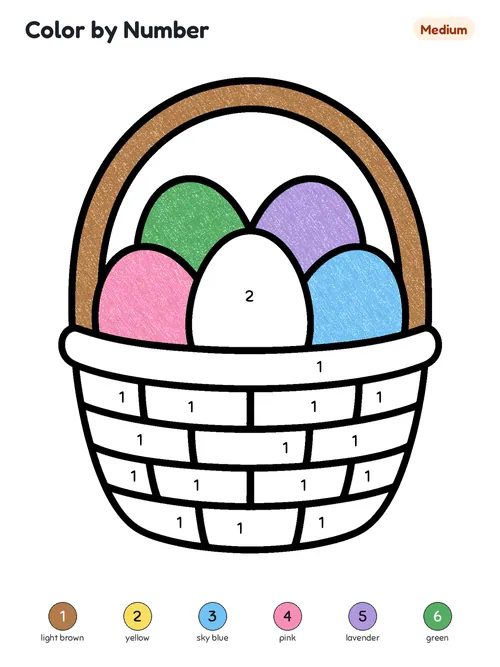
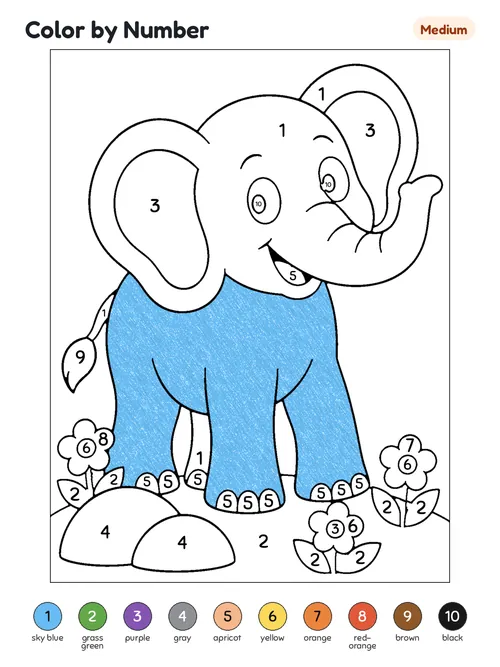
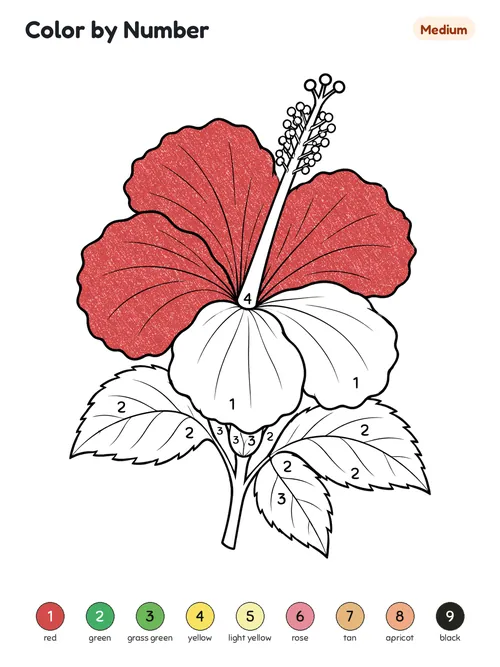
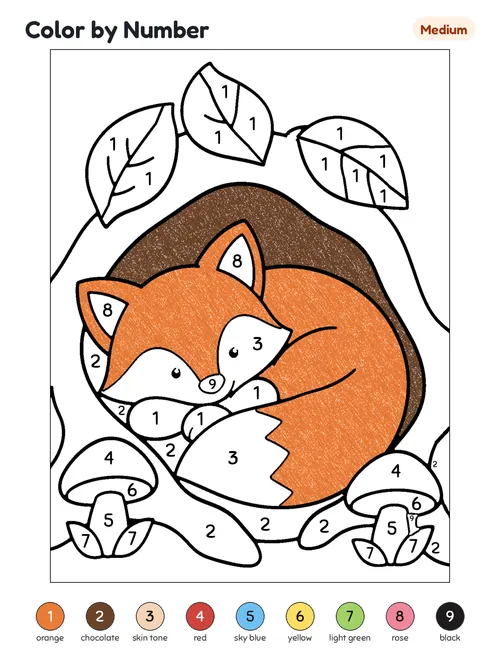
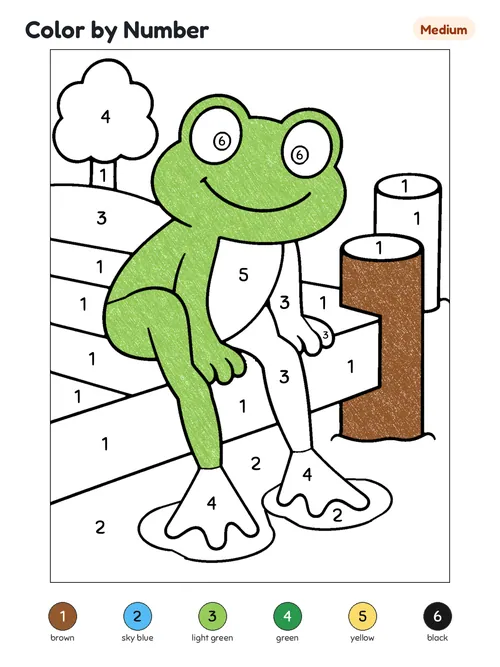
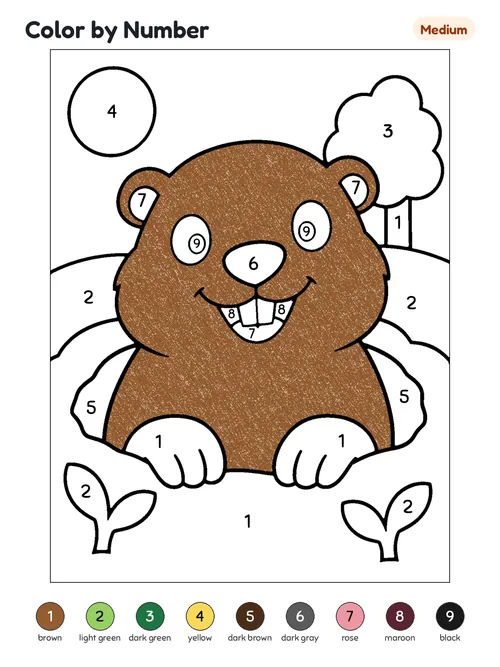
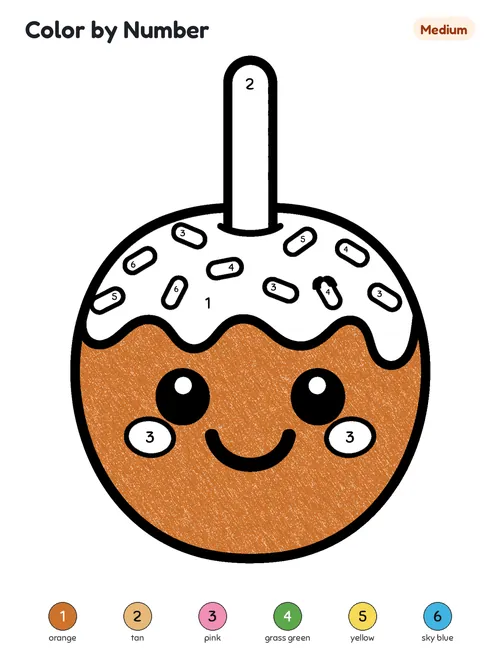
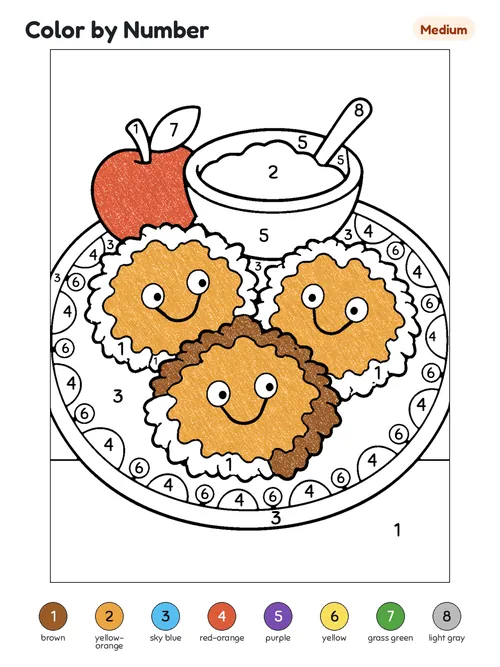
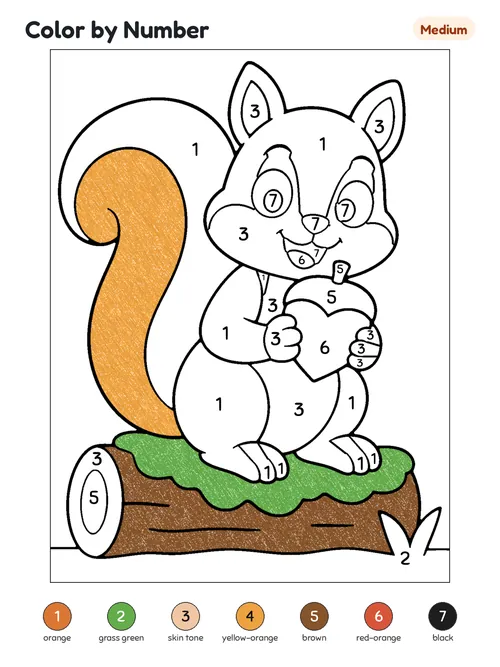
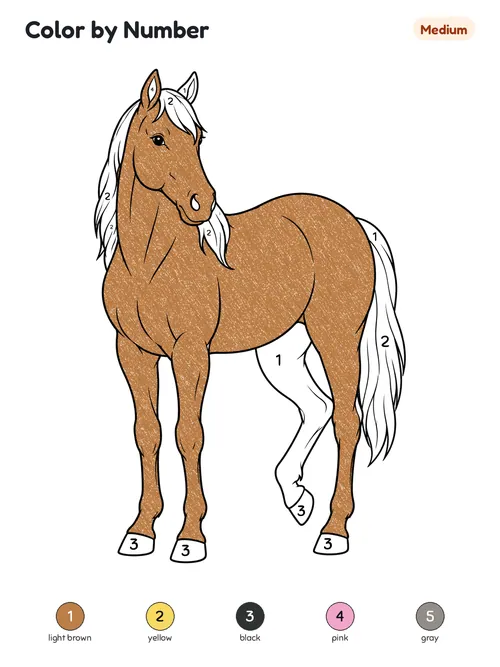
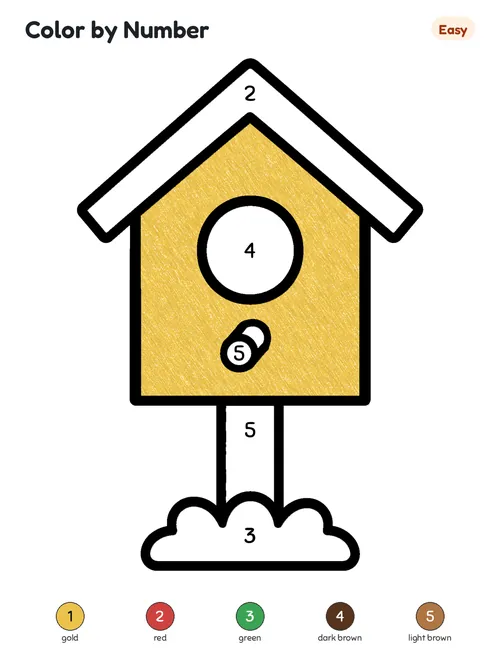
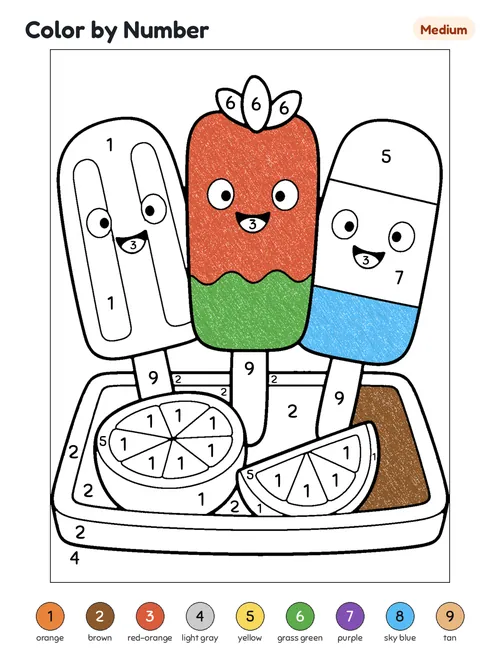
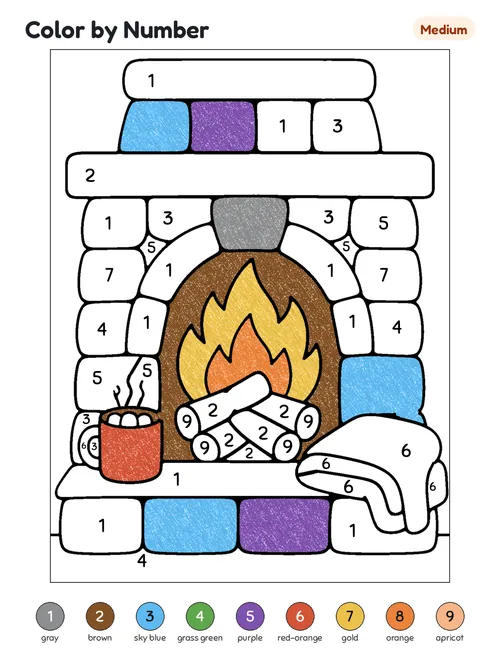
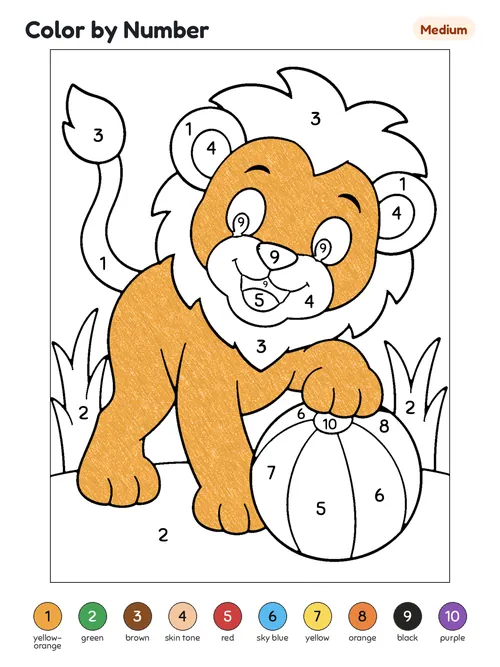
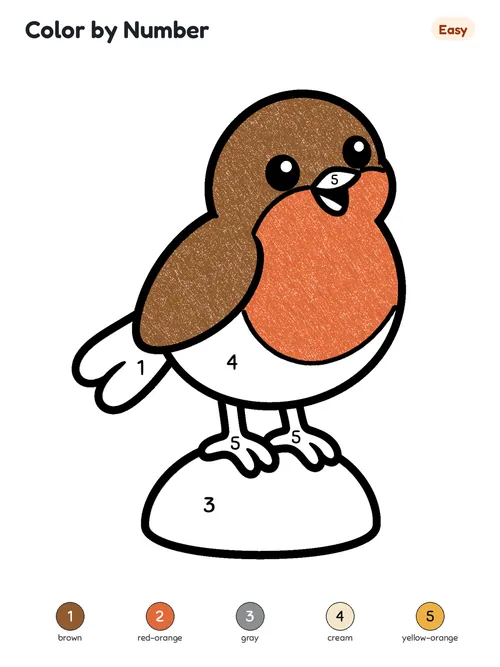
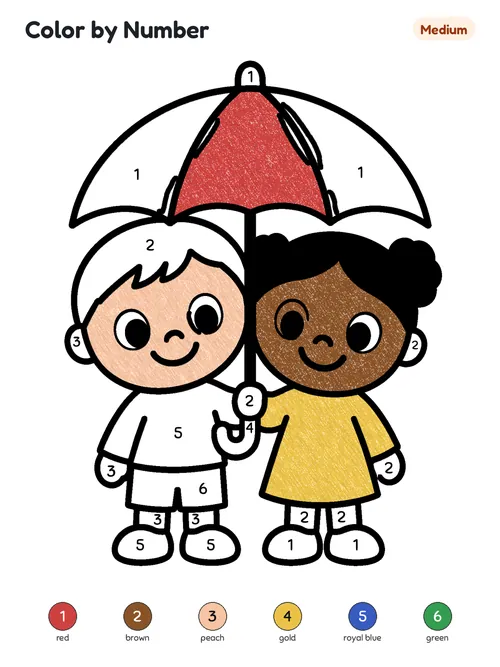
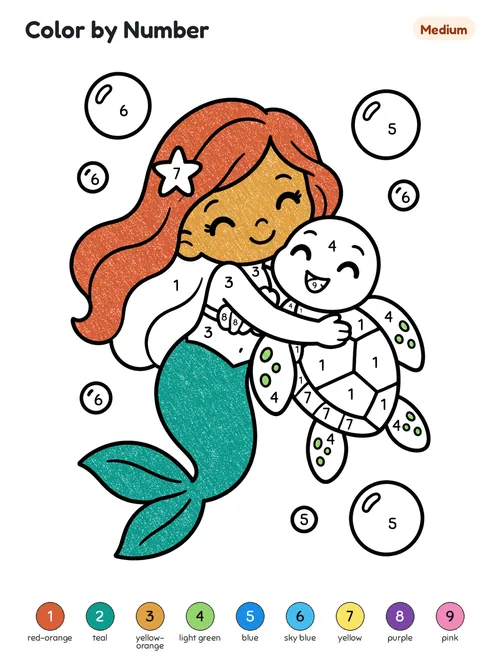
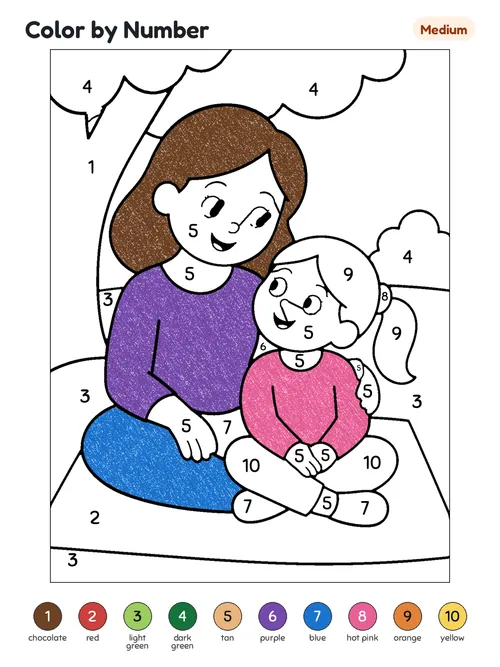
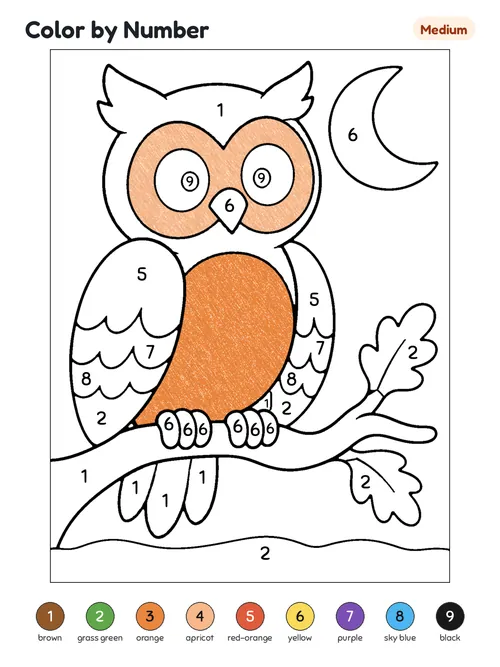
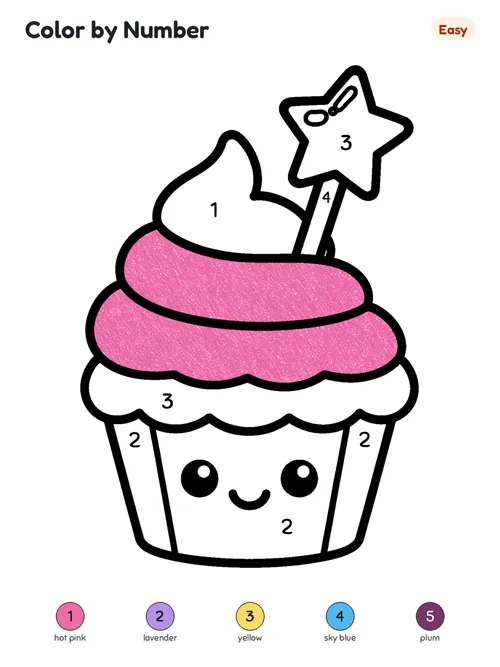
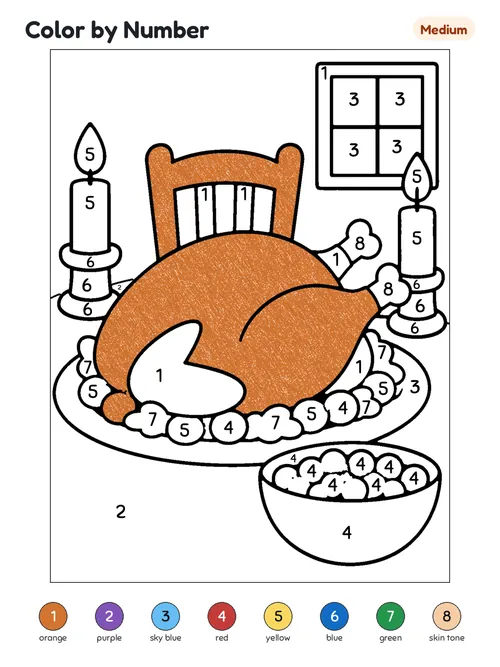
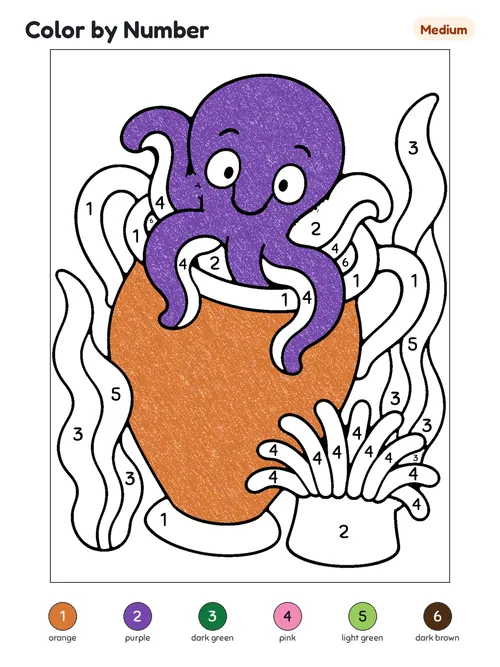
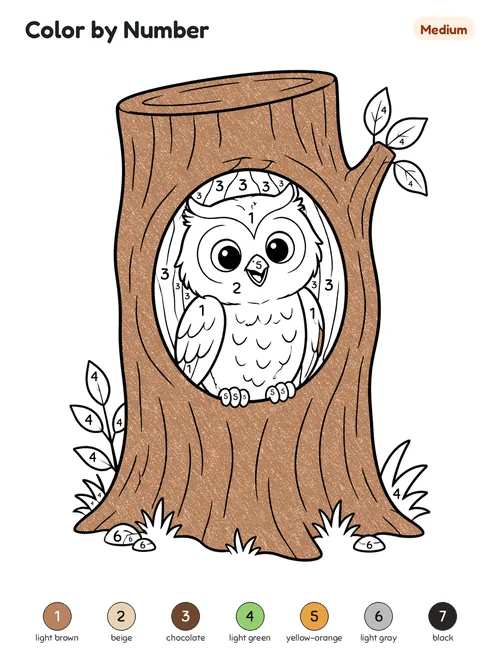
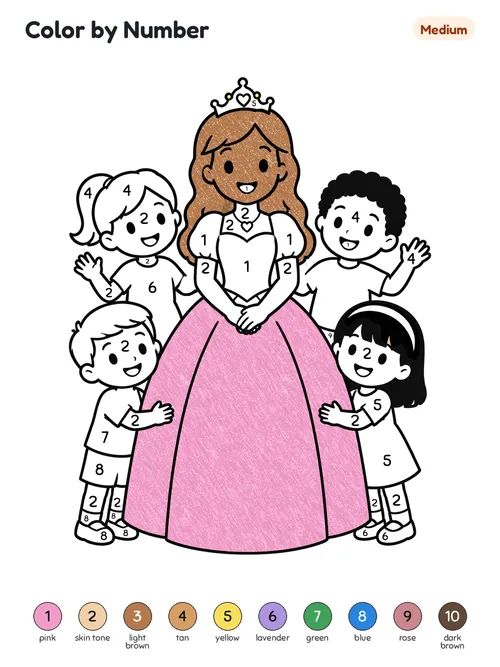
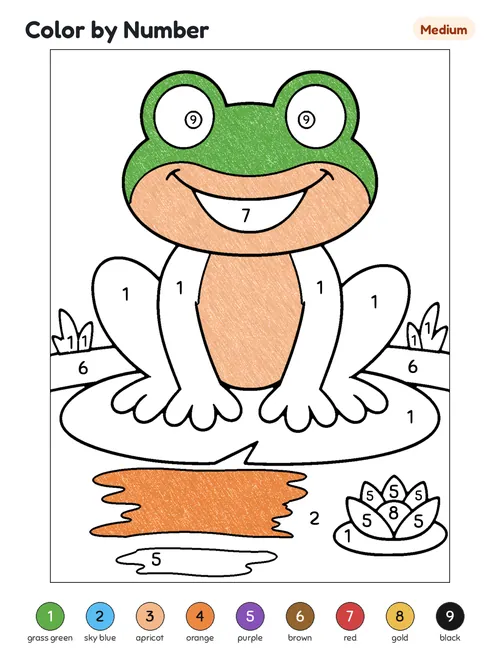
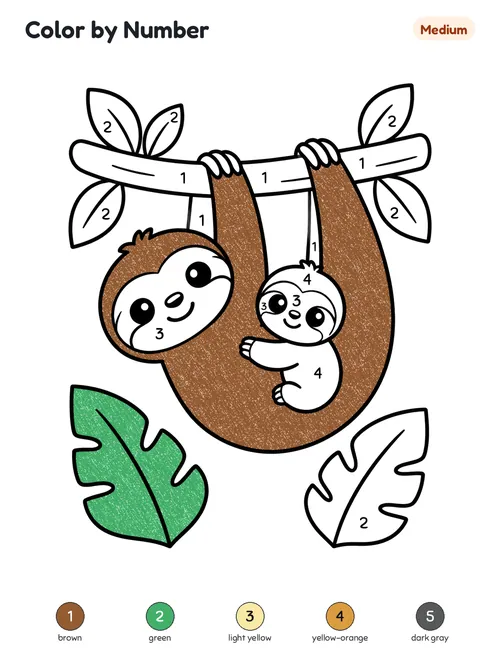
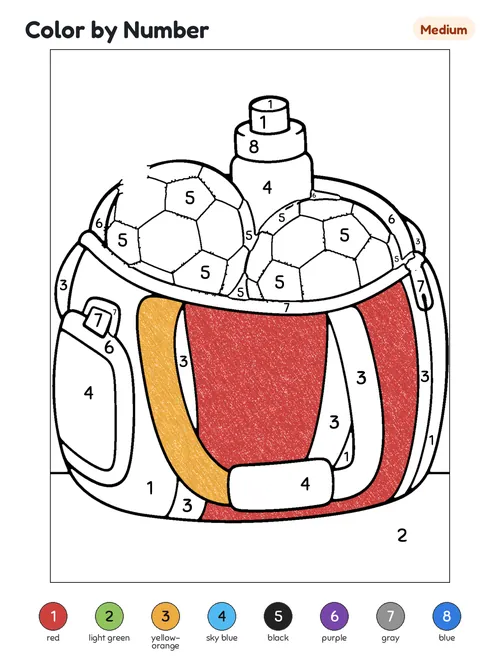
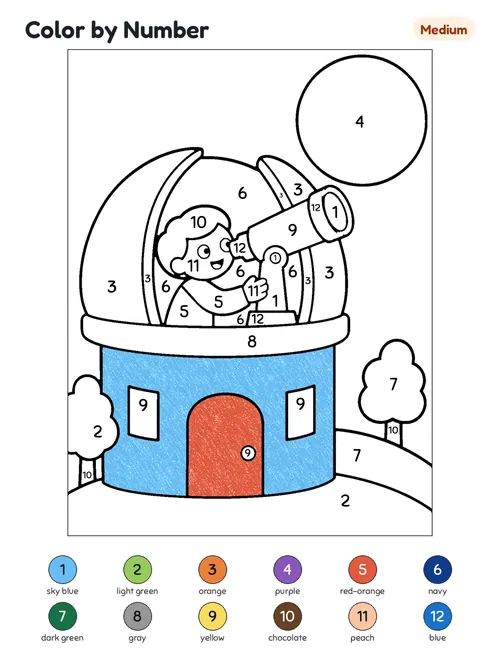
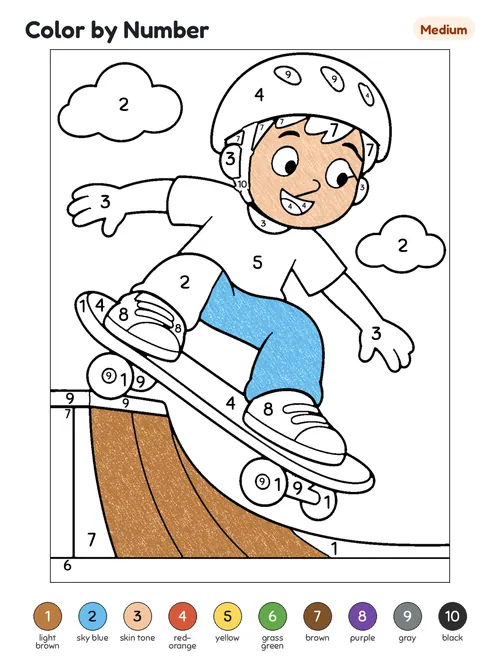
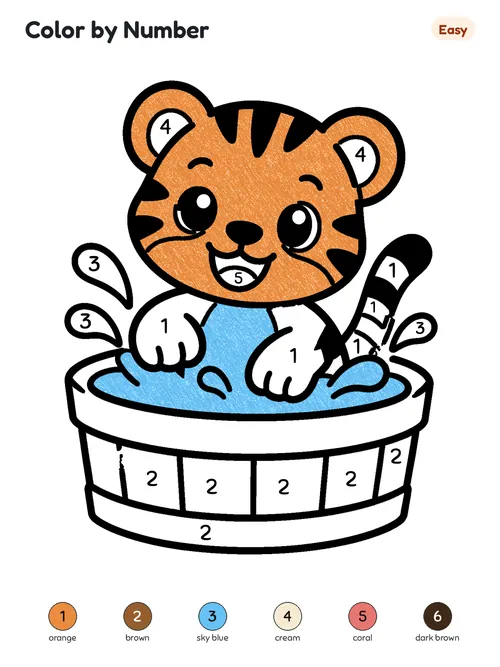
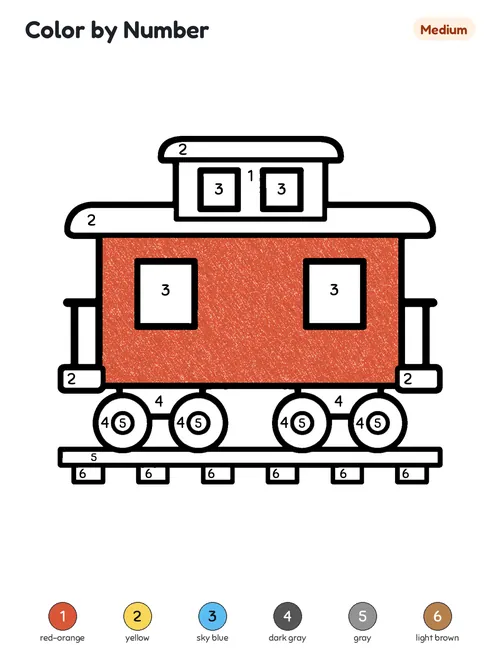
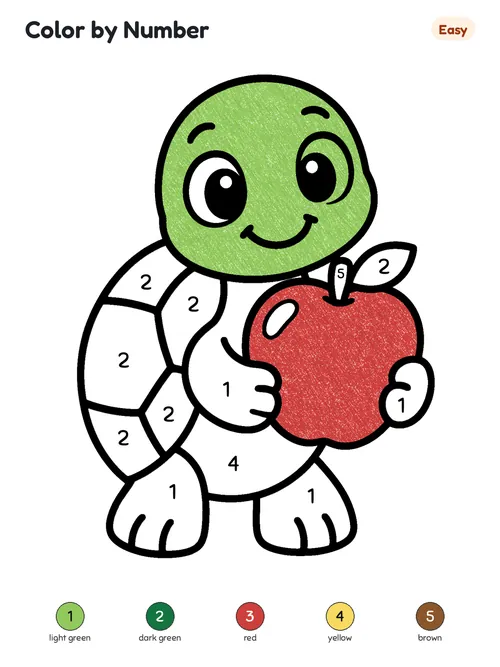
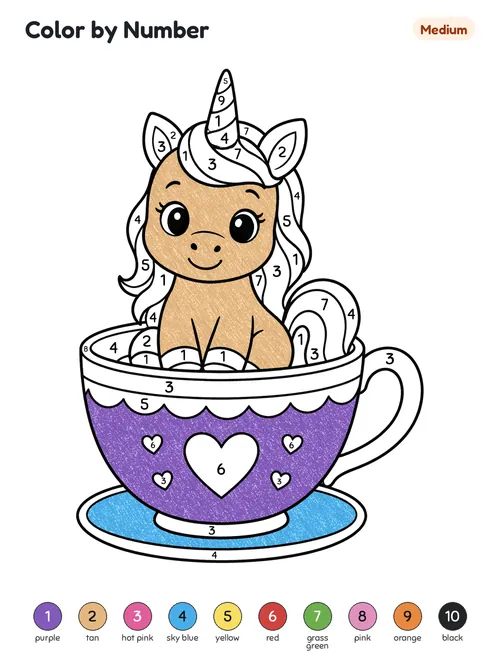
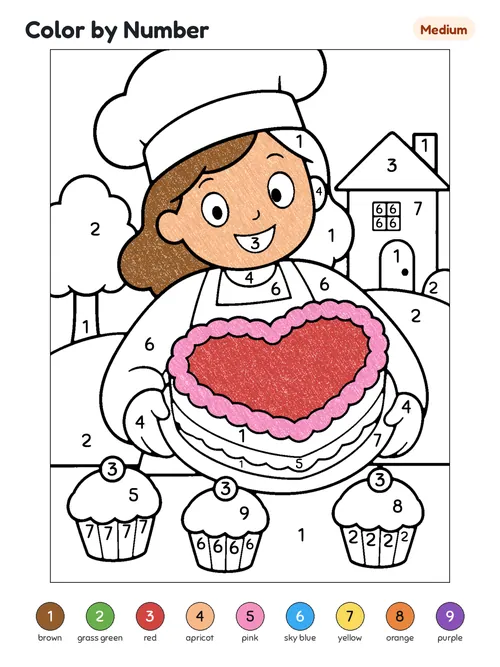
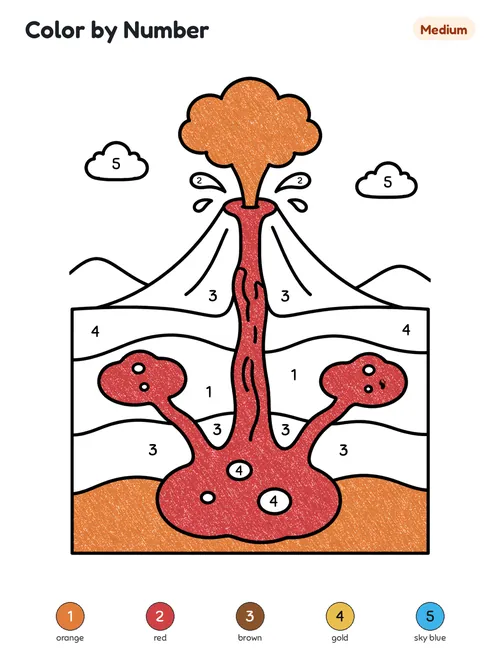
Rain wakes new shoots from March to May. Here are 26 spring color by number pages: 8 easy pages for preschool with bold lines, 9 medium pages, 5 challenge pages, and 4 advanced pages for teens and adults.
PDF paper size:
Easy 8 pages · ages 3 to 6


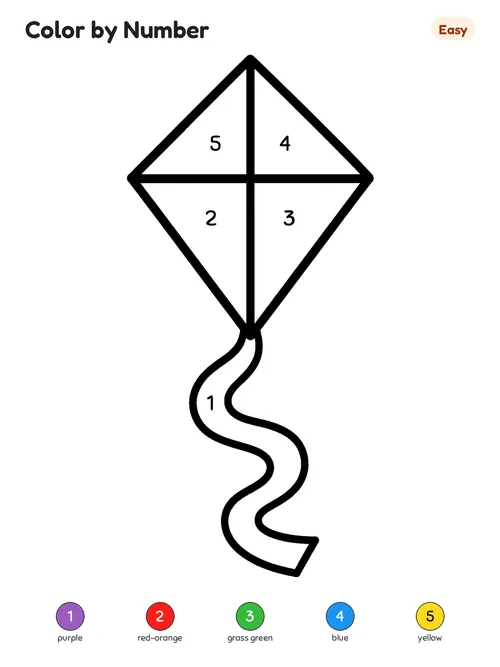

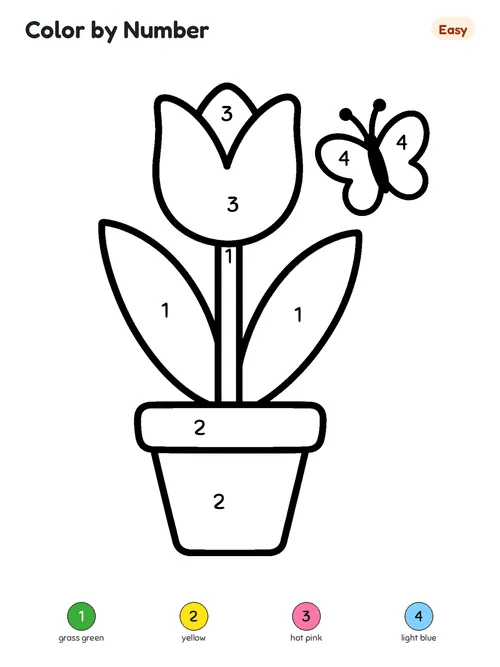

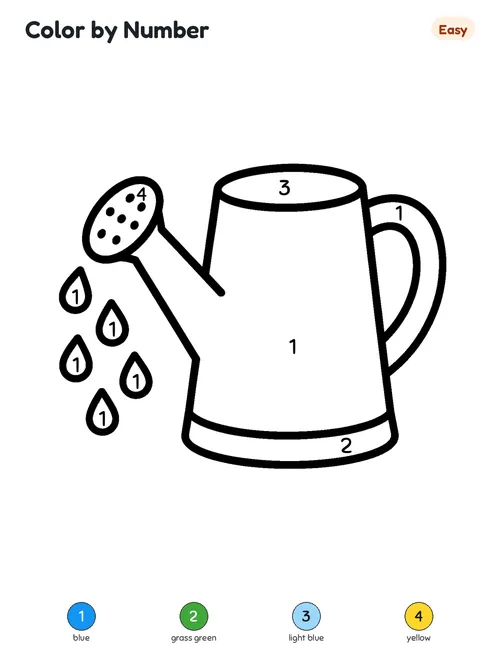

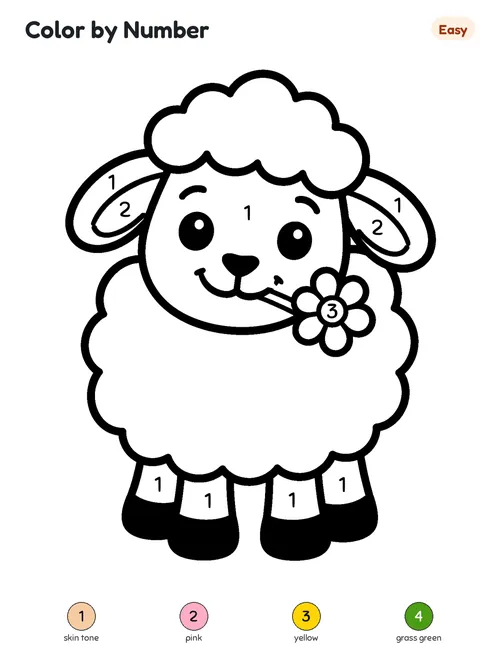

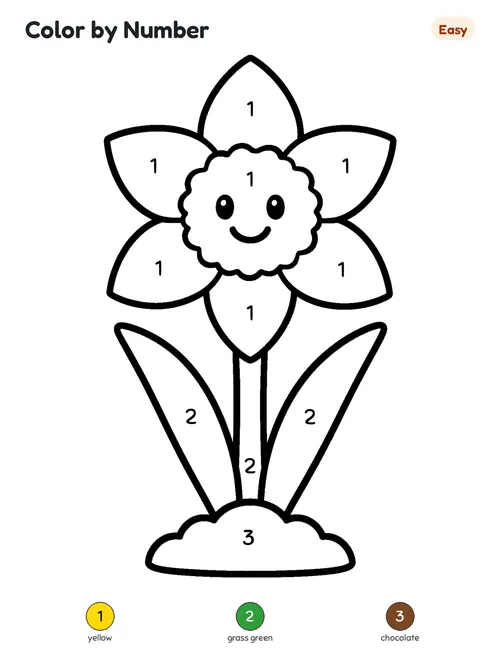


Medium 9 pages · ages 5 to 8


Challenge 5 pages · ages 7 and up


Advanced 4 pages · teens and adults


Rain puddles and new life from March to May
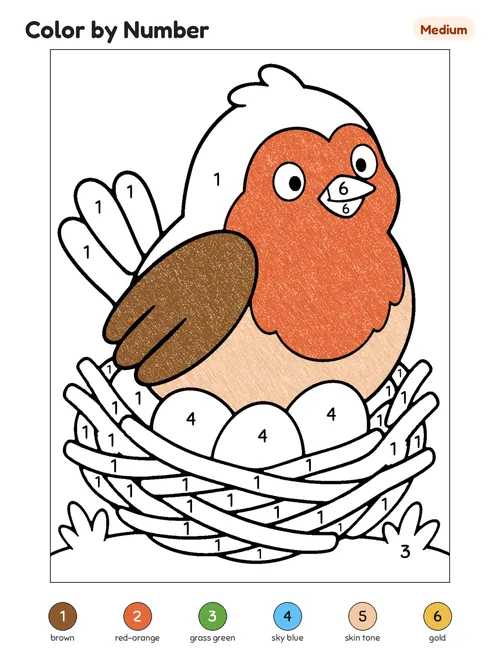
Wet sidewalks and fresh shoots arrive each March, and open spring layouts need only a light palette. On the baby chick with eggshell page, for example, the wide cracked shell leaves plenty of room for chunky crayons. Setting out just a few pastel crayons keeps those open spaces calm and clean.
Rainy afternoons call for a stronger palette with sharper contrast and tighter borders. As a contrasting example, the splashing in spring puddles page sets yellow rain boots against a muddy splash, where bright and dark tones meet in tricky narrow spaces. Pairing warm yellows beside cool blues highlights how bright gear stands out on gray days.
Working with pastel greens and pale yellows
Spring scenes lean on pale green and soft yellow. Heavy pressing turns those light hues dull fast, especially when a dark outline sits next to a fresh sprout. Ask children to shade with gentle pressure so light greens stay clean beside brown soil.
Each spring color by number printable downloads as a free PDF with a labeled color key. Fine linework on the botanical greenhouse conservatory sheet calls for colored pencils, alongside detailed pages for adults. Tight spaces around blooming orchids and hanging ferns reward slow color layering.
Pairing spring pages with a seasons science unit
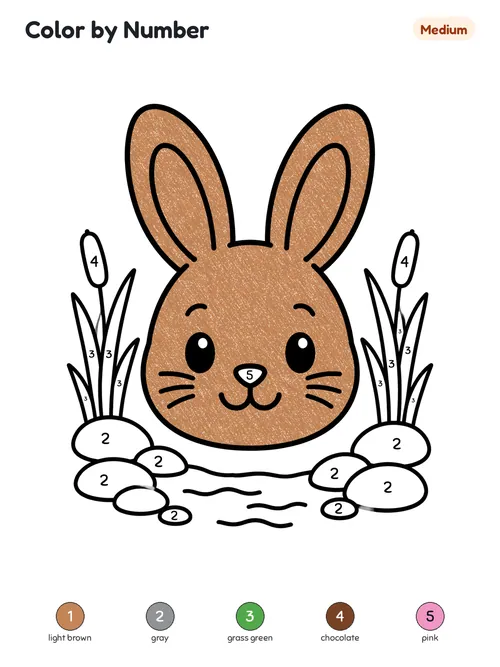
Classroom science lessons click when art matches outdoor weather. Seedlings, bunnies, and hatching chicks spark simple talks during a seasons unit about why plants sprout after winter. Teachers can group finished sheets by month on a wall display to track rain clouds and new leaves.
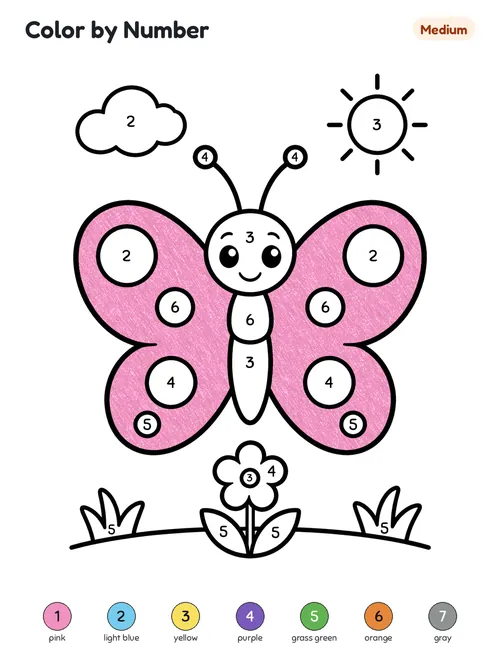
Numbered keys build steady color matching before open drawing begins. When students want to pick their own petal shades, offer regular spring coloring pages without numbers. Classes studying insects in May can also add butterfly color by number pages to the table.
Questions about Spring color by number
Why do so many seedlings sprout and baby animals arrive in spring?
Longer daylight hours and milder rain warm the soil after winter, signaling dormant seeds and bulbs to grow. Fresh leaves, grass, and insects quickly provide the food that nesting birds, rabbits, and other young animals need to survive before summer arrives.
How can you keep pastel yellows and light spring greens from looking washed out?
Color light yellow petals and pale green shoots before filling in dark mud, bark, or rain clouds so dark pigment does not smear. Adding a deeper tone near leaf edges or rain boots gives soft hues clean contrast while keeping the page bright.
How can you pace spring scenes across a seasons science unit from March to May?
Start in March with rain and puddle scenes while students chart daily weather. Move to sprouting seeds and garden beds during April plant lessons, then finish in May with baby chicks, bunnies, and blooming trees as warmer days settle in.