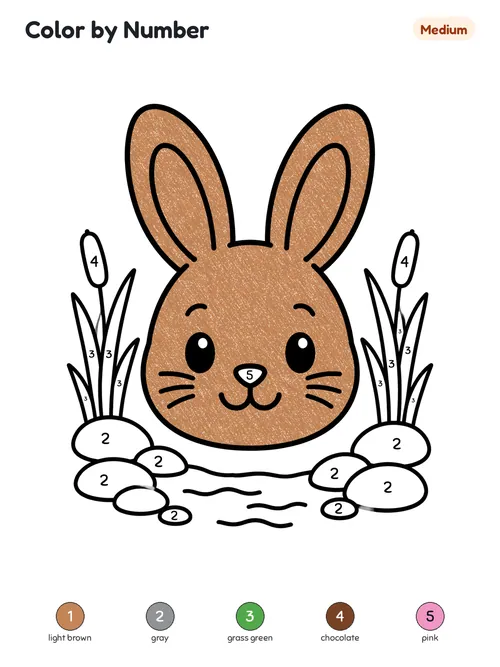
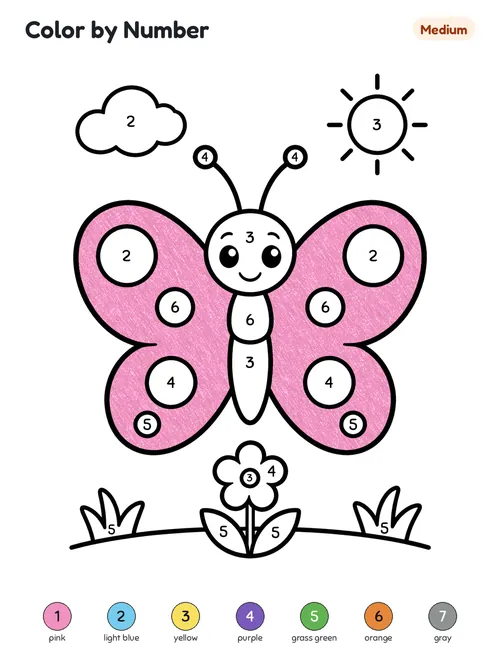
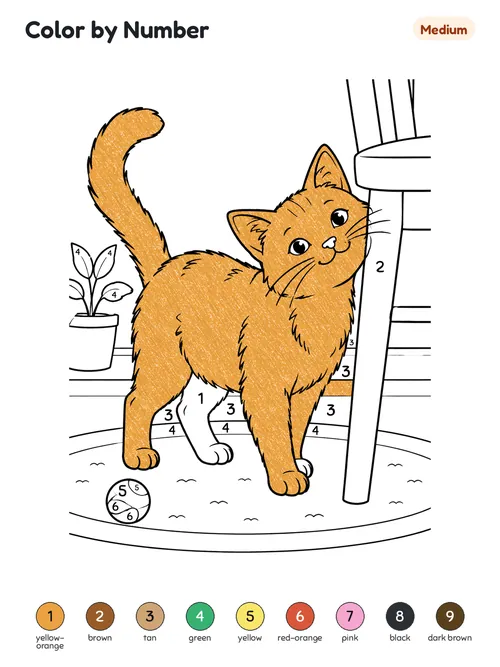
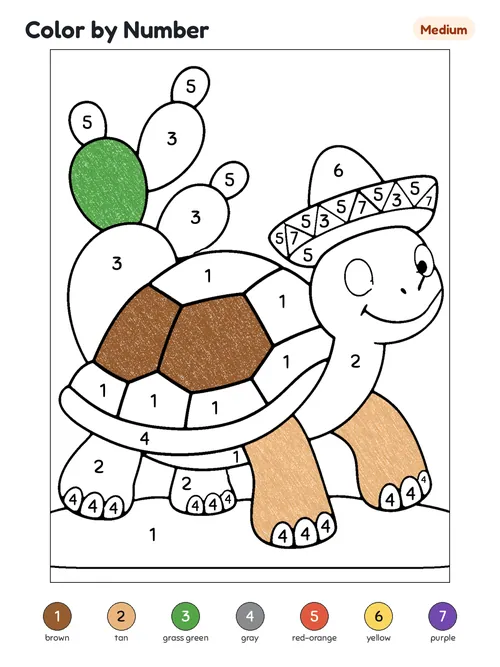
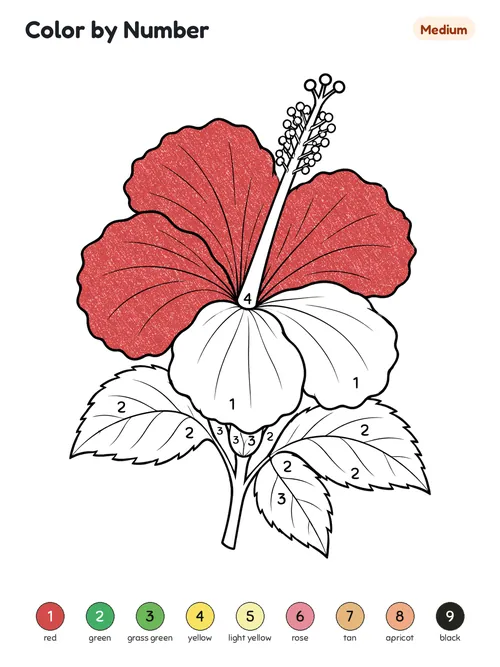
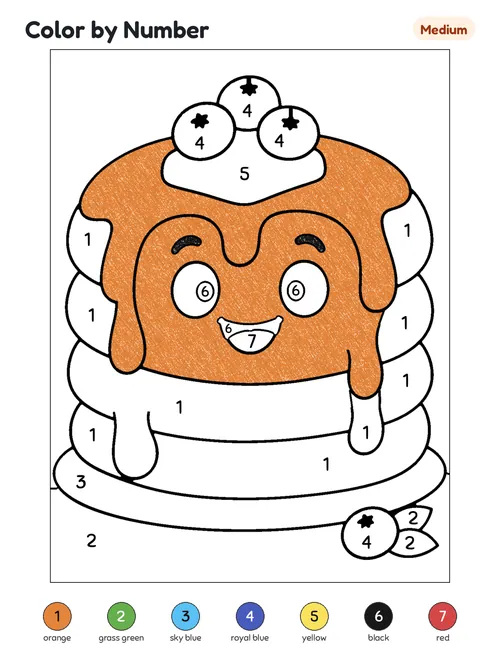
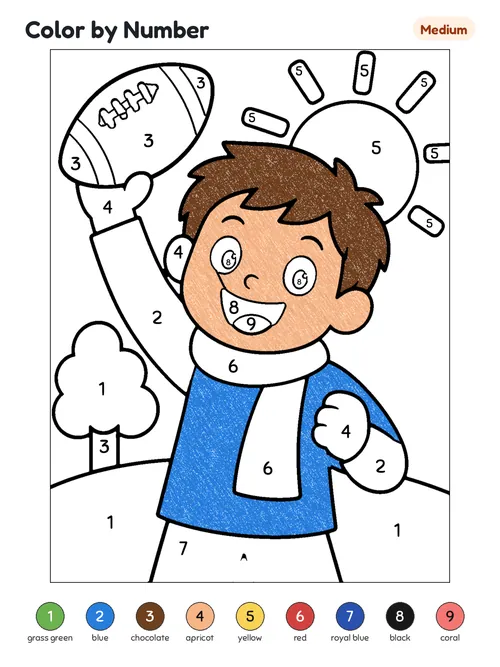
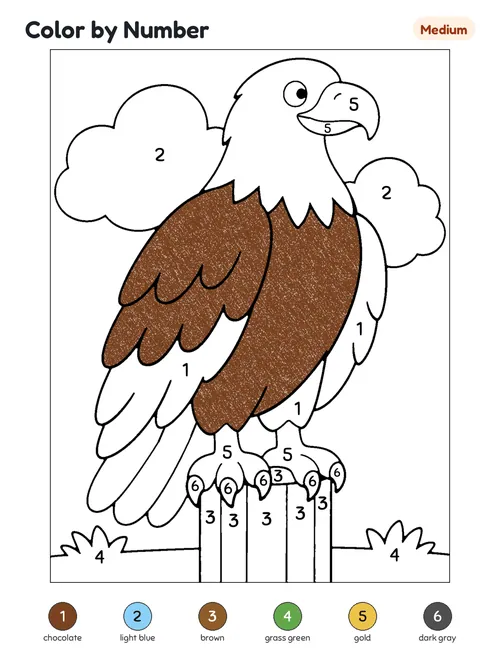
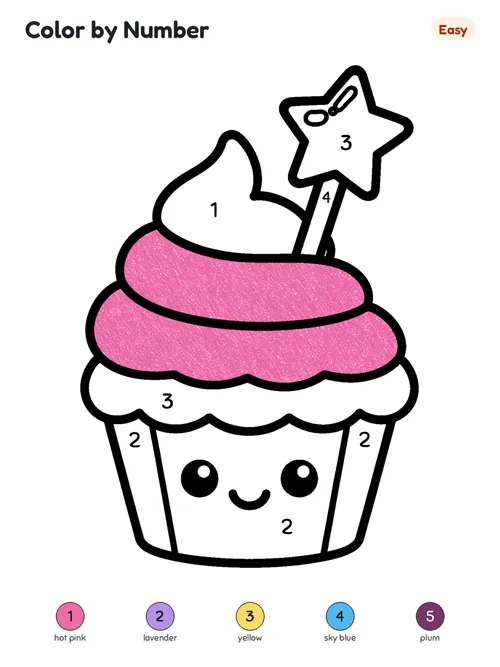
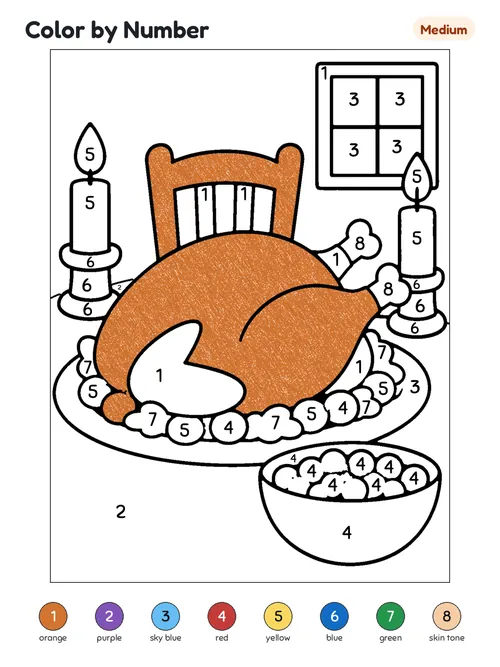
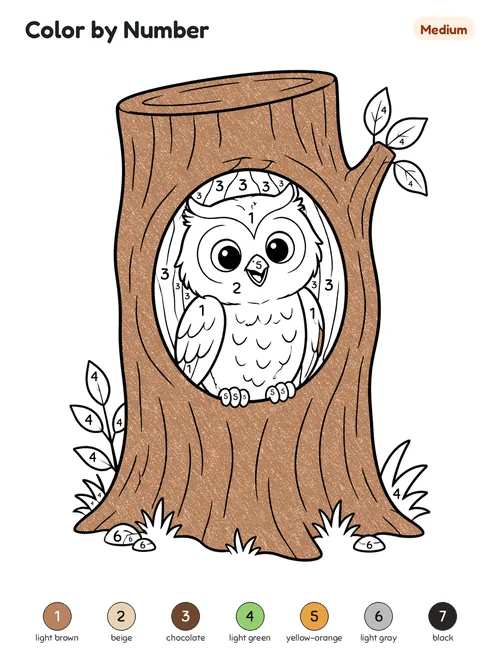
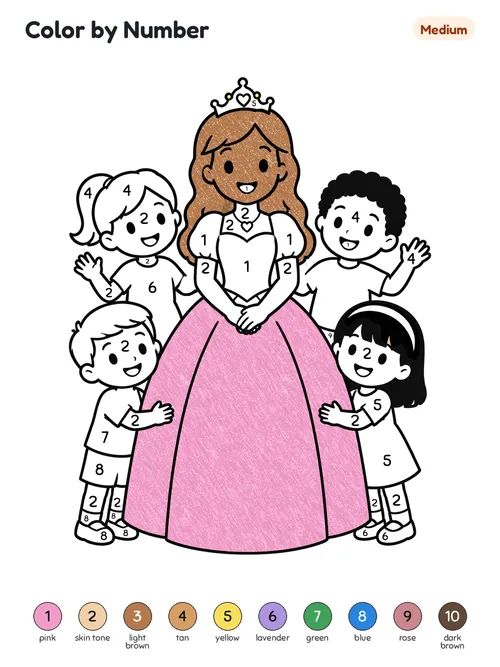
Ocean color by number pages
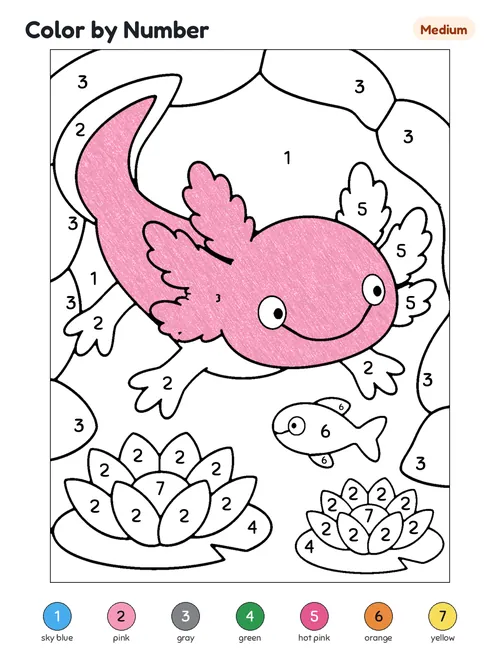
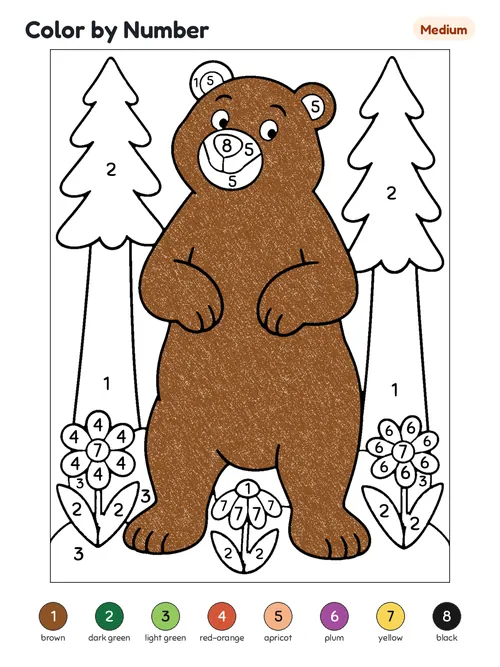
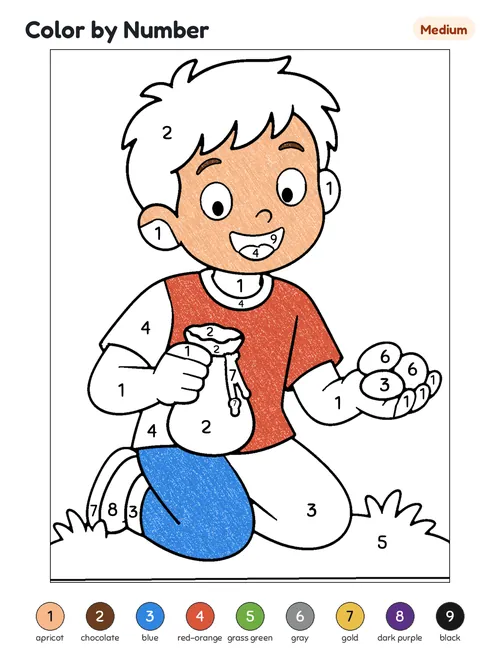
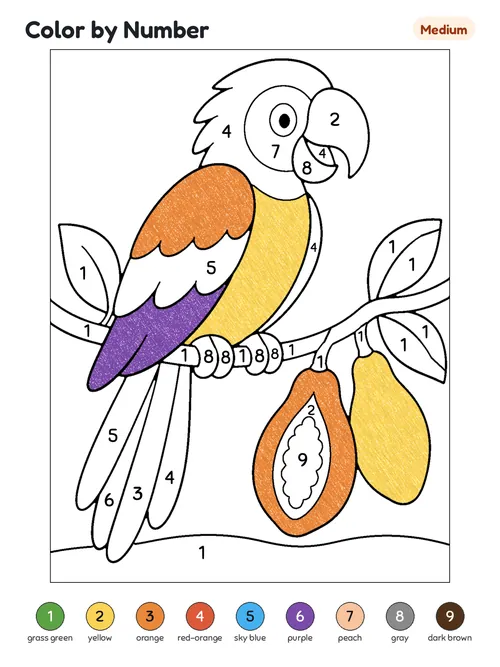
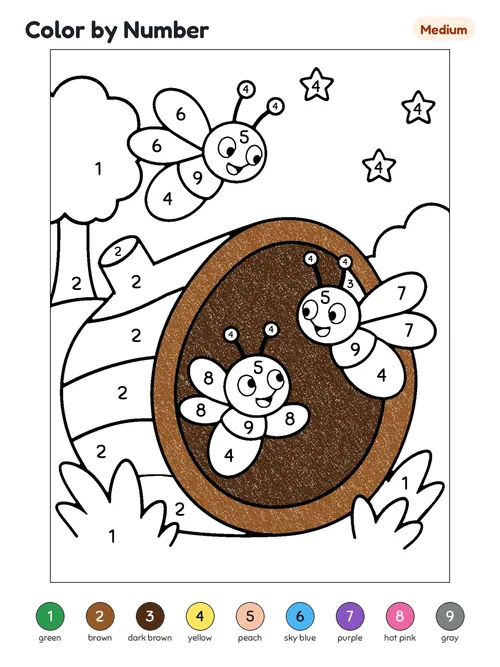
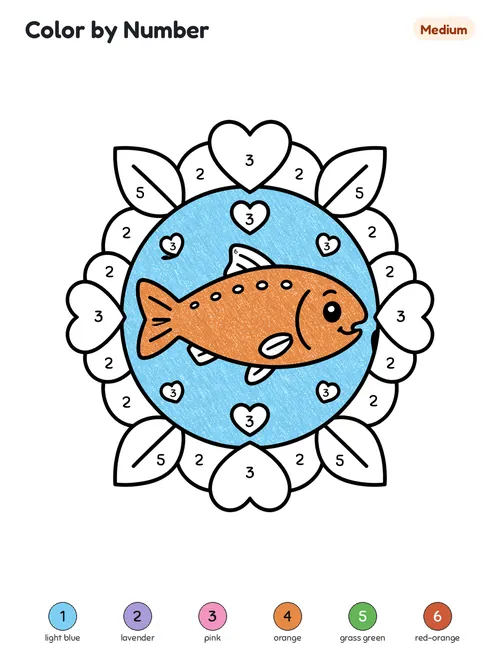
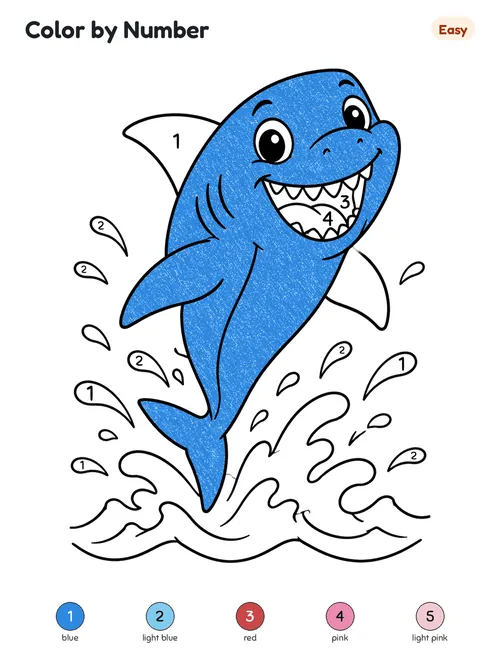
Sunlit shallows and deep water habitats meet across these 21 ocean color by number pages: 8 easy pages for preschool with bold lines, 8 medium pages, 2 challenge pages, and 3 advanced pages for teens and adults.
PDF paper size:
Easy 8 pages · ages 3 to 6








Medium 8 pages · ages 5 to 8
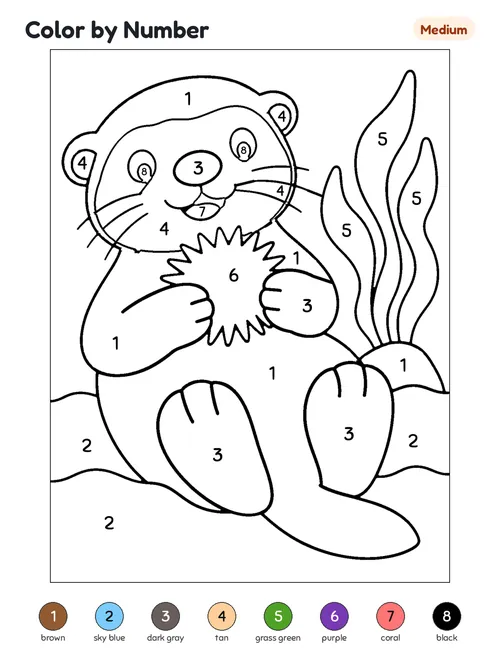



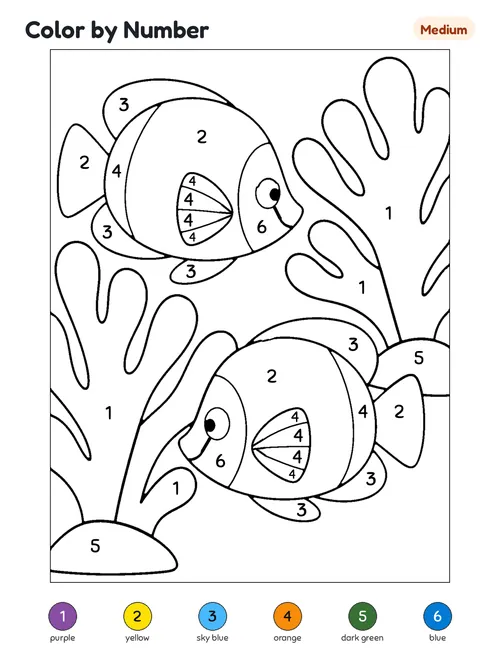



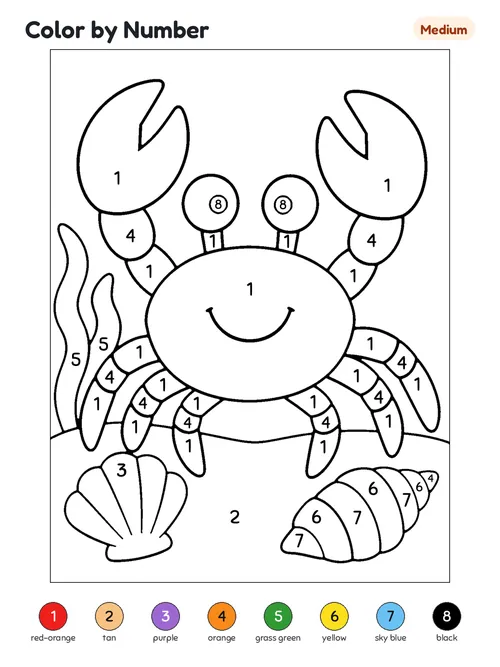


Challenge 2 pages · ages 7 and up


Advanced 3 pages · teens and adults


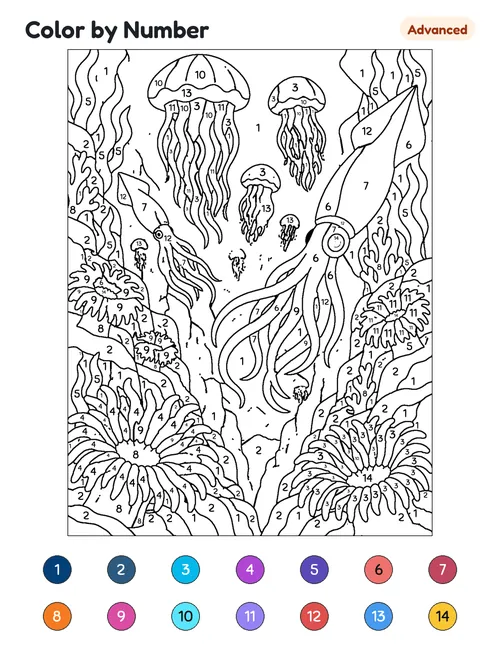


Shading shallow and deep water with blue and teal
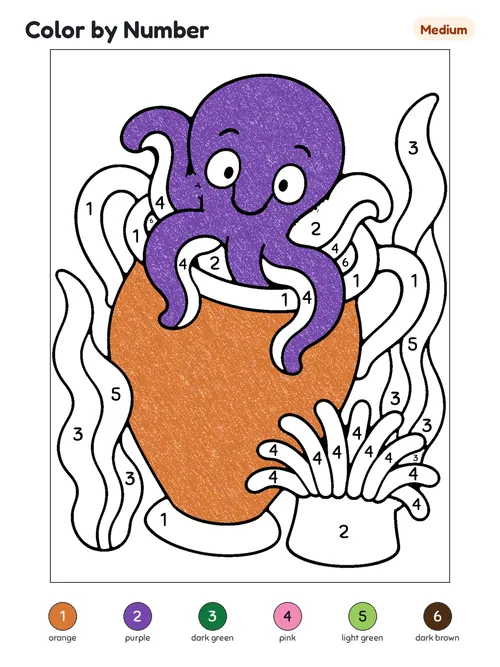
Ocean scenes rely heavily on closely related blues, so sorting crayons by shade before starting saves frustration. Light aqua and teal fit sunlit shallows best. Deeper water shifts toward navy and dark blue, giving sea creatures clear contrast against the background.
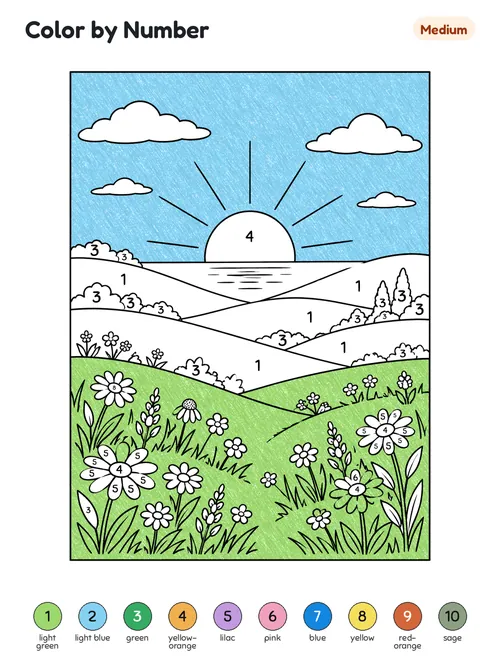
In the playful leaping dolphin page, gentle ocean waves meet a warm sunny sky and fluffy clouds. Warm sky tones break up the cool blue palette nicely. Older colorists who want dense shading can branch into our color by number for adults collection.
Using sea animals in a marine science unit
Teachers often pair color by number sea animals with habitat charts during a marine science unit. Comparing mammals, reptiles, and invertebrates builds lasting science vocabulary. Children notice flippers, blowholes, and shells as they fill each numbered section, connecting art time directly to classroom reading.
Every printable sheet downloads as a free PDF with an optional full answer key page for quick checking. Pair these sheets with our fish color by number set when studying reef life. Finished pages make a bright hallway mural sorted from surface swimmers down to seabed dwellers.
From smooth sea turtles to spiny sea stars
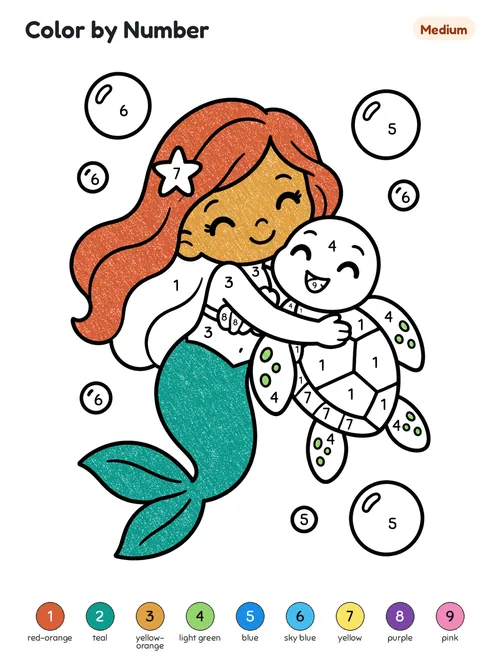
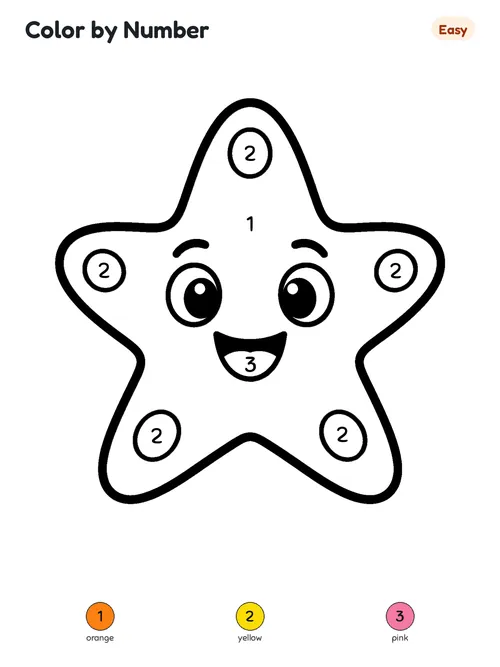
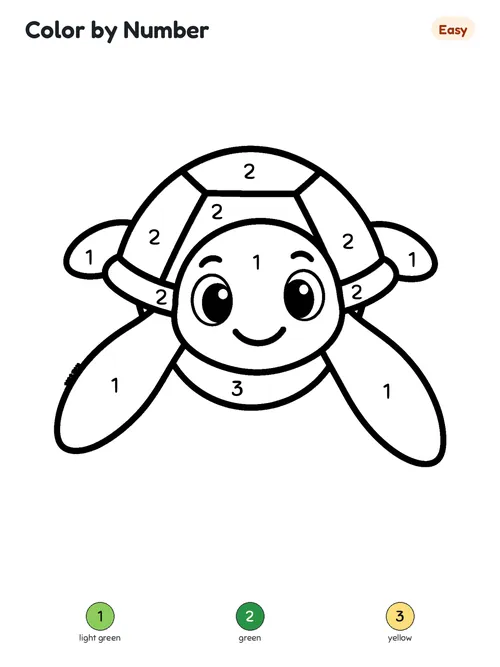
Marine biologists usually call starfish sea stars because they are not true fish. Sharing that small fact sparks great table talk. In the swimming sea turtle sheet, wide flippers and a smooth shell give early learners simple shapes to fill without stress.
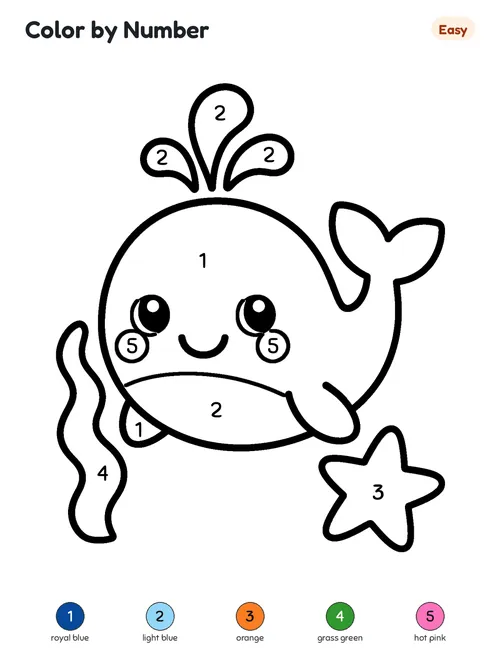
The friendly baby whale sheet pairs a blue whale with a curved water fountain for gentle number practice. Once children handle keys smoothly, switch to our ocean coloring pages for open-ended color choices. Alternating guided and freehand pages builds both focus and creativity.
Questions about Ocean color by number
Why do marine scientists call starfish sea stars instead?
Starfish are echinoderms, not fish, because they lack backbones, gills, and fins. Marine biologists use the name sea star to keep that distinction clear in classrooms. Calling them sea stars while coloring helps children remember how invertebrates differ from swimming fish.
How can kids tell similar blues and teals apart on ocean scenes?
Lay out light blue, teal, turquoise, and navy crayons beside the key before starting. Test each pencil or crayon on scrap paper and mark its number beside the swatch. Keeping those shades lined up prevents mix-ups between shallow and deep water.
How do ocean animal sheets fit into an elementary marine science unit?
Group finished whale, dolphin, sea turtle, and starfish pages on a wall chart showing sunlit shallows and deeper water. Students can write mammal, reptile, or invertebrate below each sheet. That simple display reinforces ocean habitats and animal groups during science review.