Caterpillar color by number pages
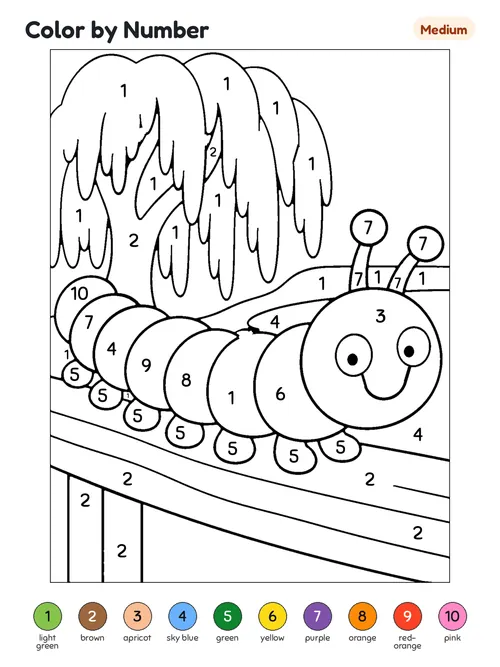
Garden caterpillars chew through spring leaves before transforming. Here are 26 caterpillar color by number pages: 10 easy pages for preschool with bold lines, 7 medium pages, 5 challenge pages and 4 advanced pages for teens and adults.
PDF paper size:
Easy 10 pages · ages 3 to 6


Medium 7 pages · ages 5 to 8
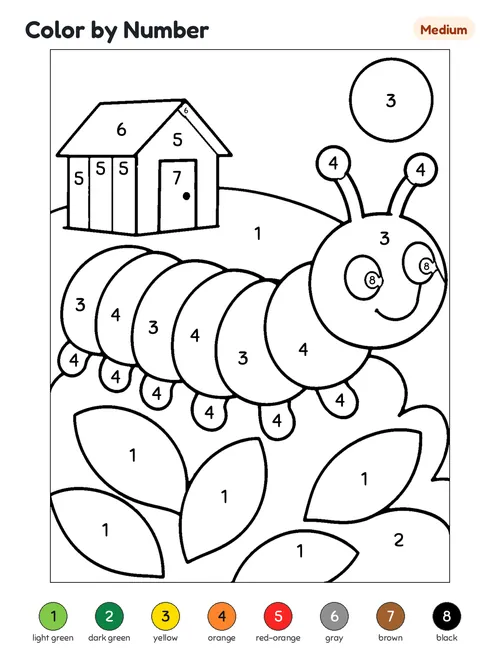




Challenge 5 pages · ages 7 and up


Advanced 4 pages · teens and adults


More Caterpillar coloring pages →
Why caterpillars are not always green
Many people picture every caterpillar as plain leaf green. Plenty of garden larvae do match the leaves they eat all day, yet other species rely on bold warning colors instead. Monarch caterpillars feed on milkweed and show crisp stripes, while woolly bear caterpillars grow dense black and rusty bristles.
That variety shapes every color choice. Rather than filling a body flatly, try blending two green shades on smooth larvae and keeping crisp edges along striped bands. Short, flicked strokes build a fuzzy coat on bristly species far better than heavy pressure.
Tracing the life cycle in spring science
Growing caterpillars eat leaves almost nonstop. That steady appetite powers all four stages of a spring or summer science unit: egg, caterpillar, chrysalis, and butterfly. Pairing a color by number caterpillar sheet with butterfly color by number pages helps students compare the crawling larva beside the winged adult.
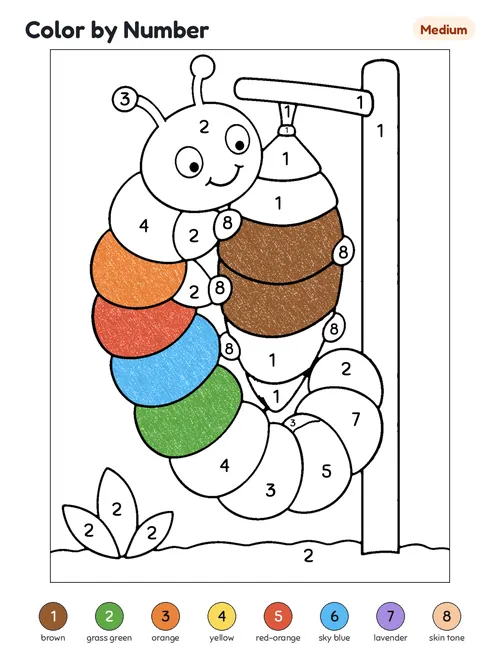
Each free printable PDF includes a color key with swatches and names. The botanical milkweed and caterpillar design pairs a monarch larva with its chrysalis and host plant. Hanging completed sheets in order lets a class review every stage visually while learning how milkweed sustains young monarchs.
Summer garden notebooks and backyard spotting
Summer walks often reveal caterpillars on porch railings and stems. The fuzzy caterpillar on a twig page gives beginners wide shapes for steady crayon strokes. Keeping finished pages in a binder alongside bug color by number pages turns rainy afternoons into a simple backyard field guide.
Unnumbered sheets work well right after a guided activity. Handing out caterpillar coloring pages invites children to match real garden sightings from memory instead of following a preset palette.
Questions about Caterpillar color by number
Why do monarch caterpillars only eat milkweed leaves?
Milkweed plants contain natural bitter compounds that most other insects avoid. Monarch larvae tolerate those chemicals and store them in their bodies as they grow. That buildup gives both the striped caterpillar and the adult butterfly a bitter taste that helps warn birds away.
How can you make a woolly bear caterpillar look fuzzy when coloring?
Skip heavy flat shading and use a sharp colored pencil instead. Lay down a light base of rusty brown or dark charcoal, then flick quick, short lines outward along each segment. Leaving tiny slivers of white paper between strokes creates a soft, bristly texture.
When do caterpillar pages fit best in a spring life cycle unit?
Introduce them right after students observe real larvae or read about the egg stage. Children can shade striped or leaf-green segments while charting how much foliage caterpillars eat each day. Save the completed artwork for the classroom timeline once the chrysalis forms and butterflies emerge.