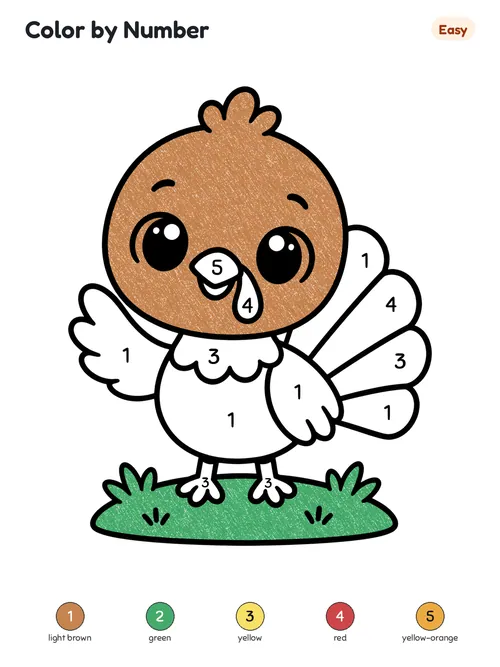
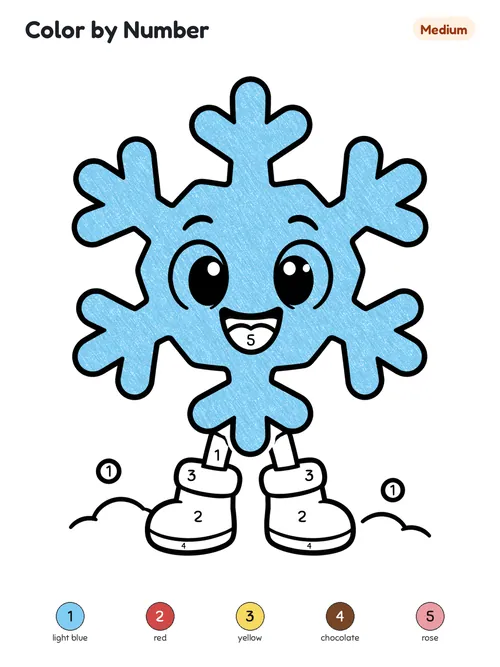
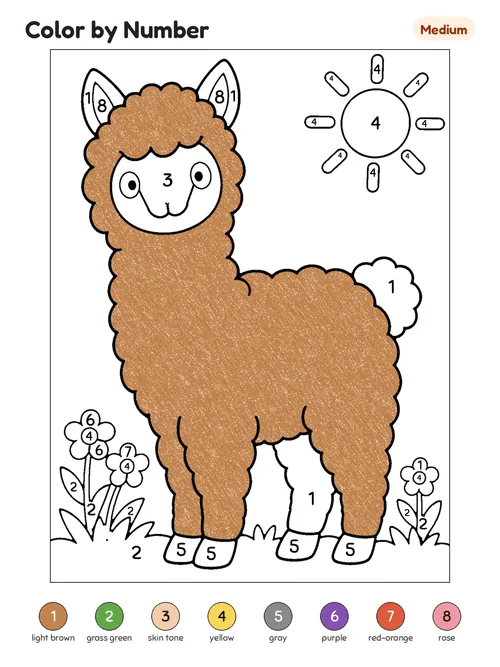
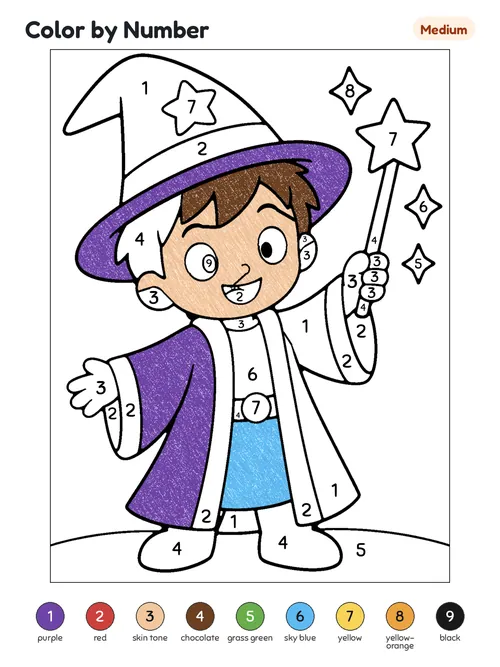
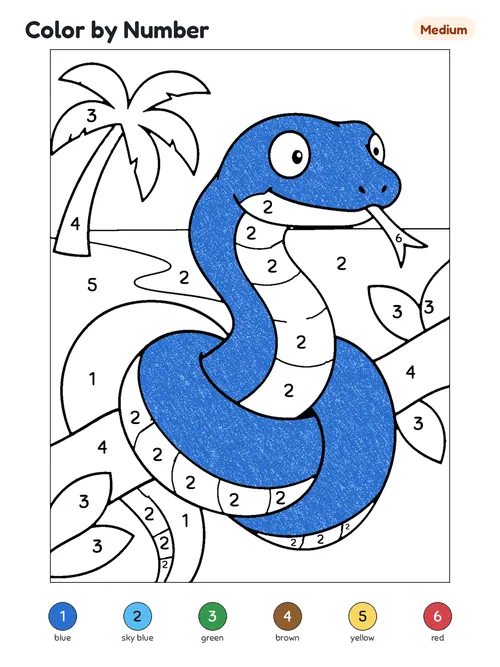
Monkey Color by Number Pages
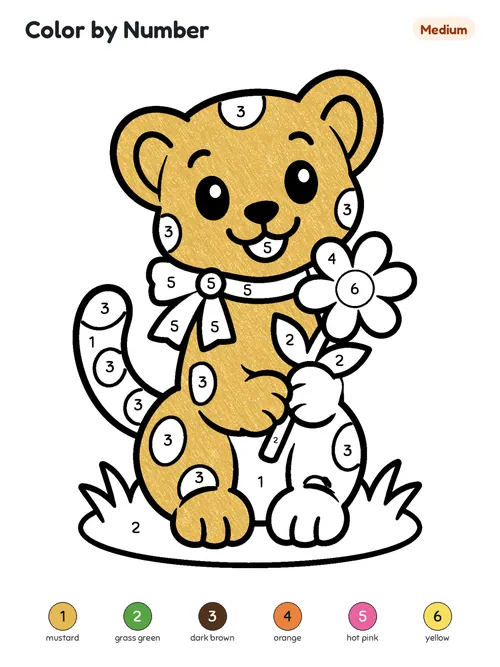
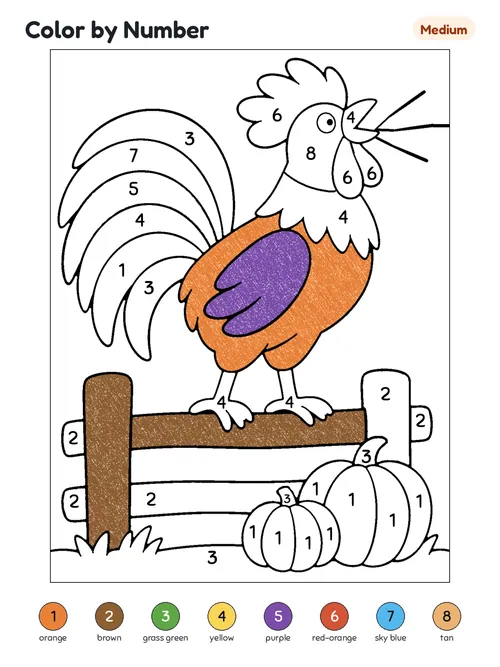
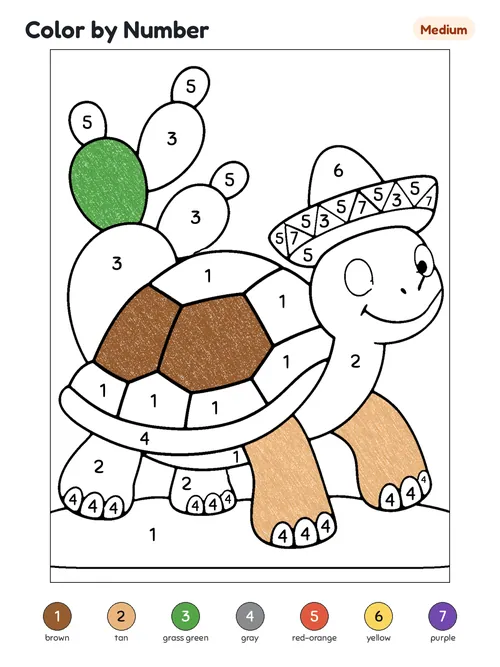
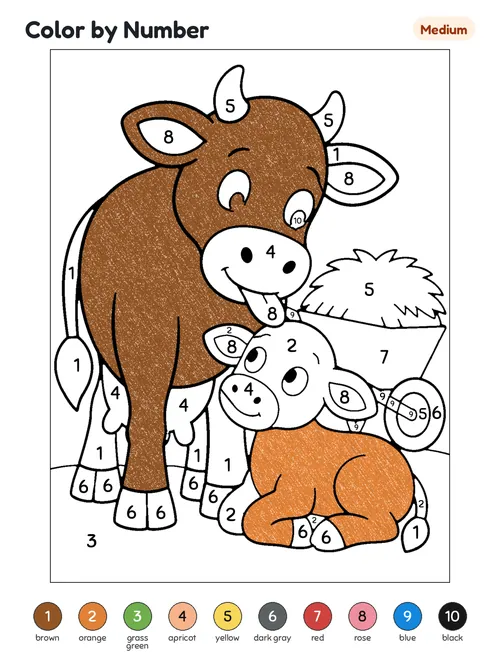
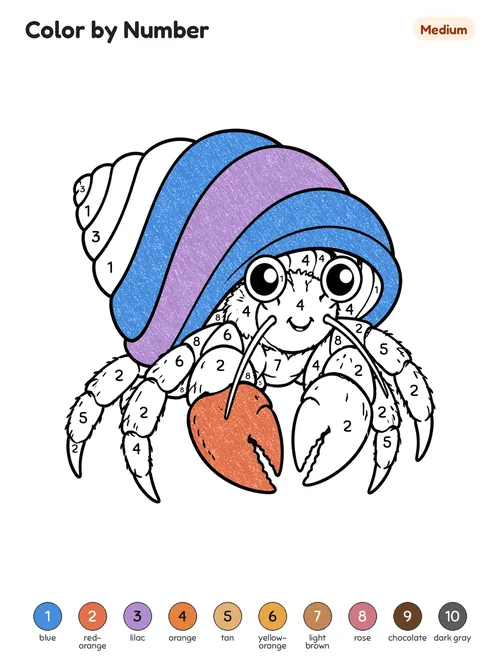
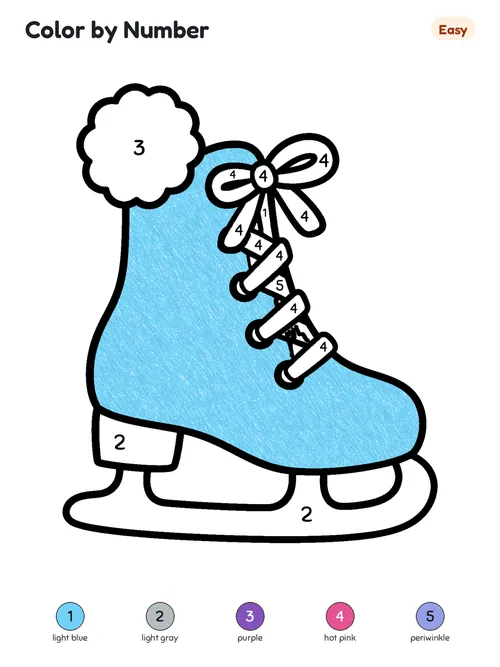
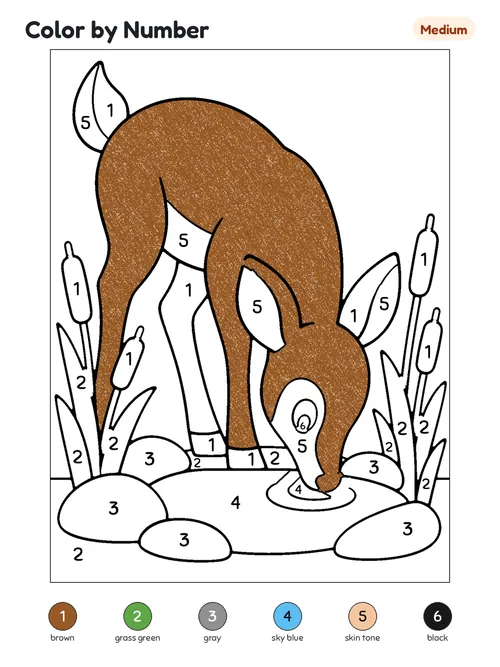
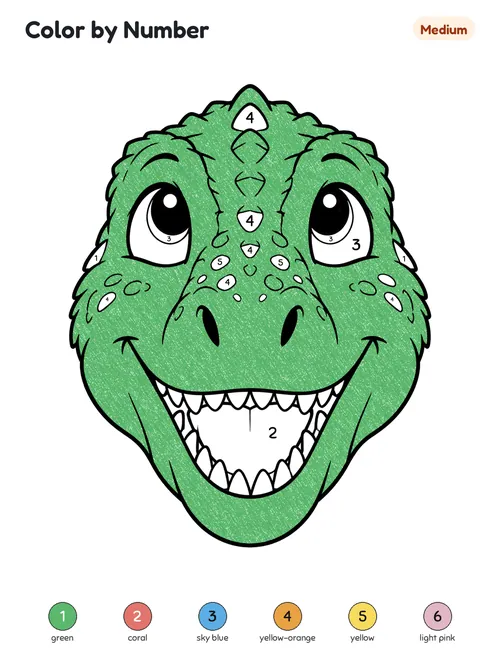
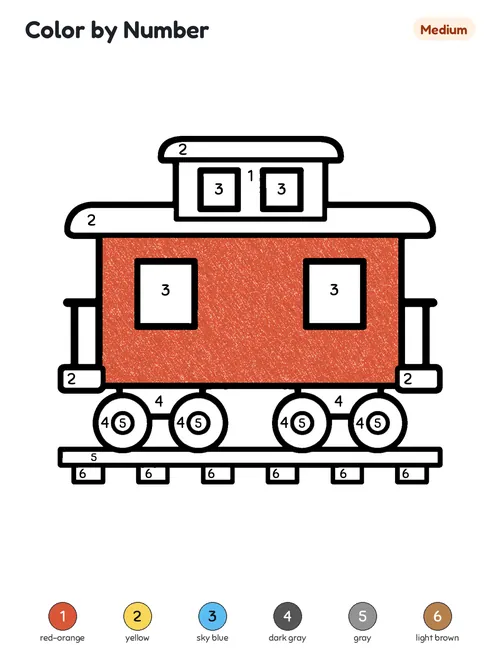
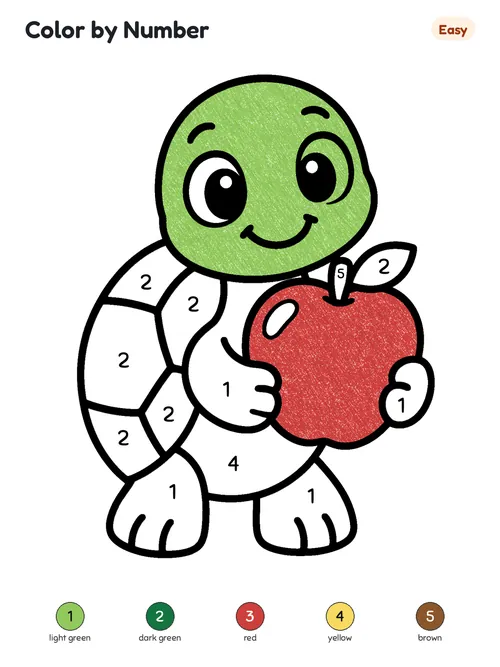
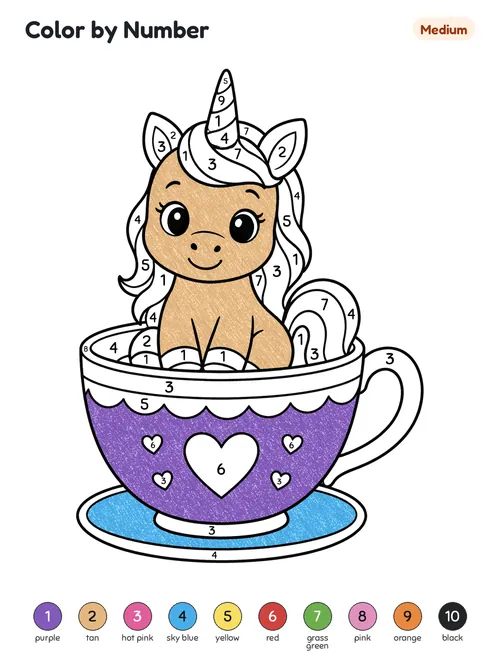
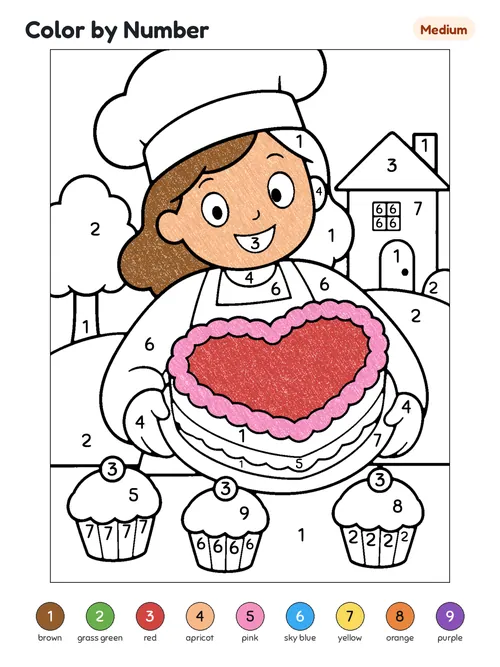
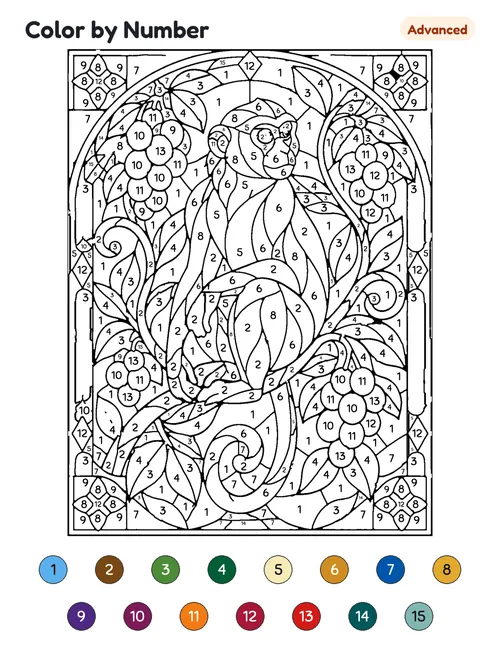
Curled tails and tropical leaves run through these 23 monkey color by number pages: 3 easy pages for preschool with bold lines, 14 medium pages, 3 challenge pages, and 3 advanced pages for teens and adults.
PDF paper size:
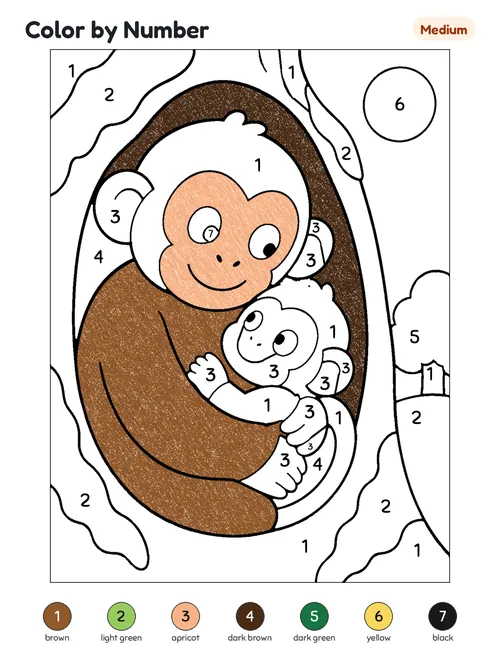
Easy 3 pages · ages 3 to 6
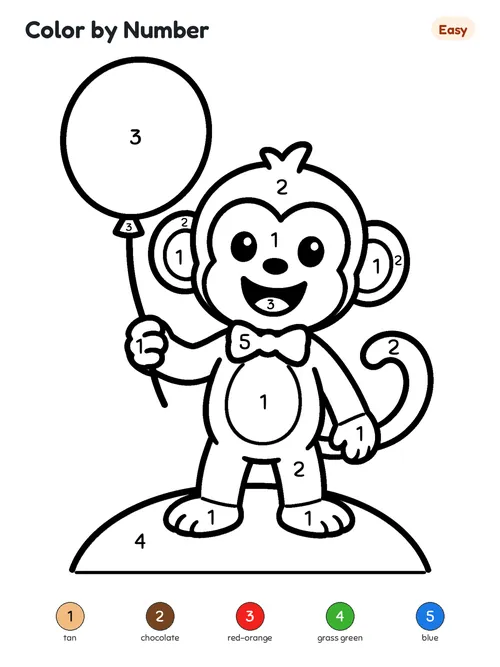

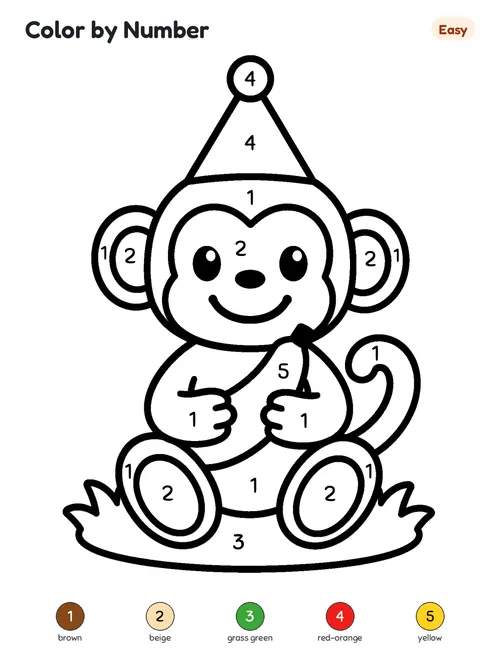

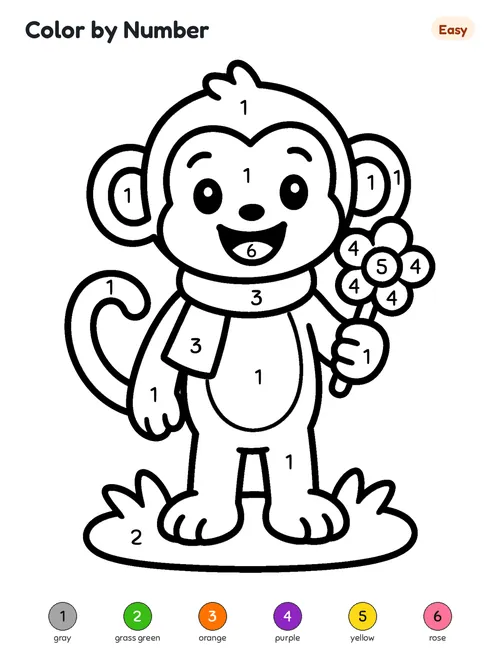

Medium 14 pages · ages 5 to 8
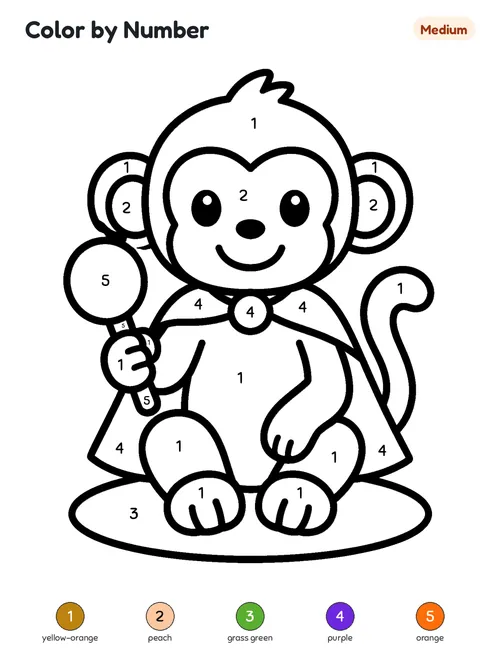


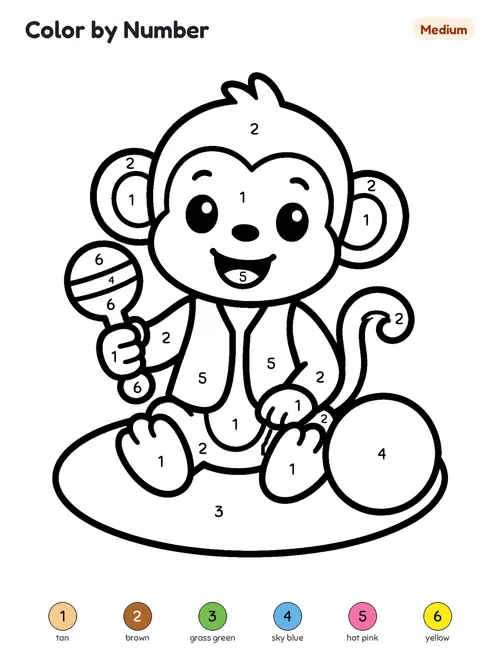

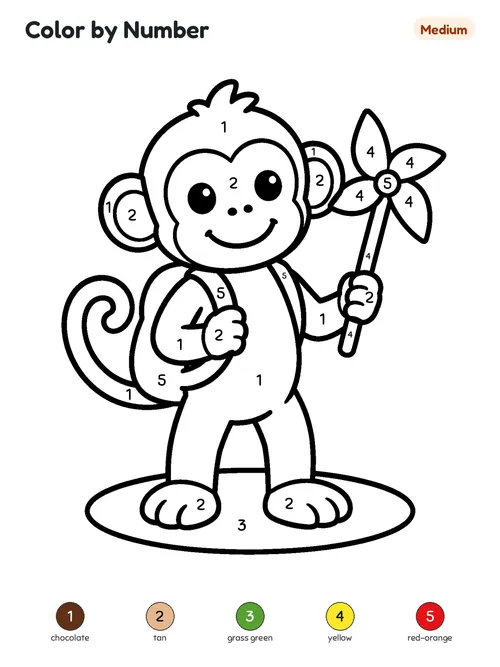

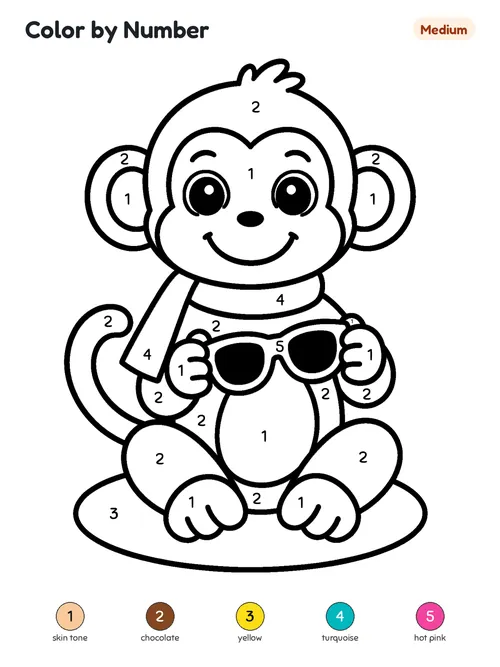

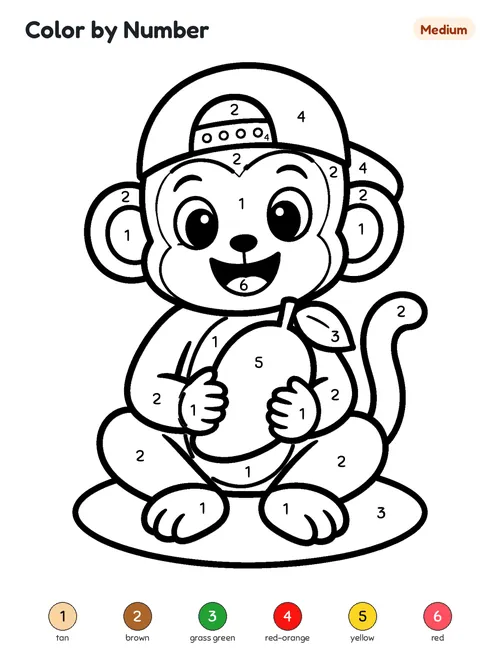

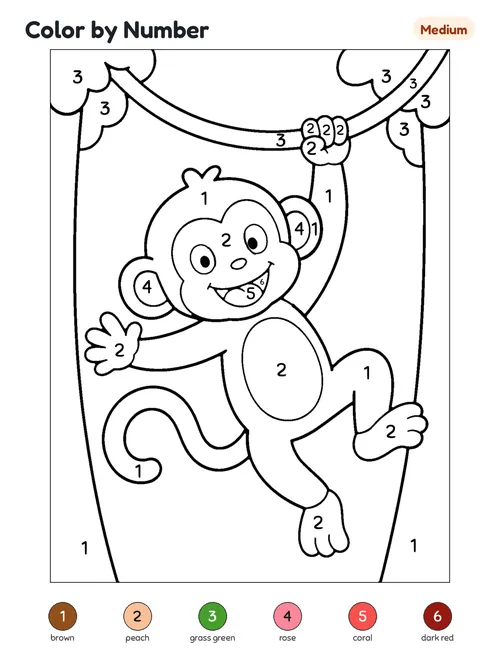

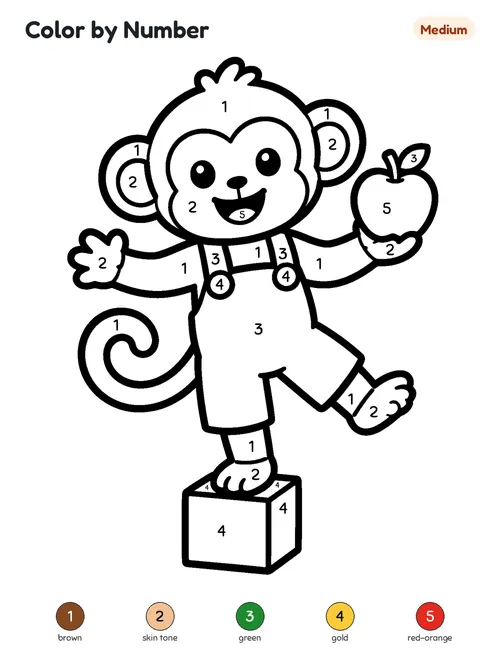

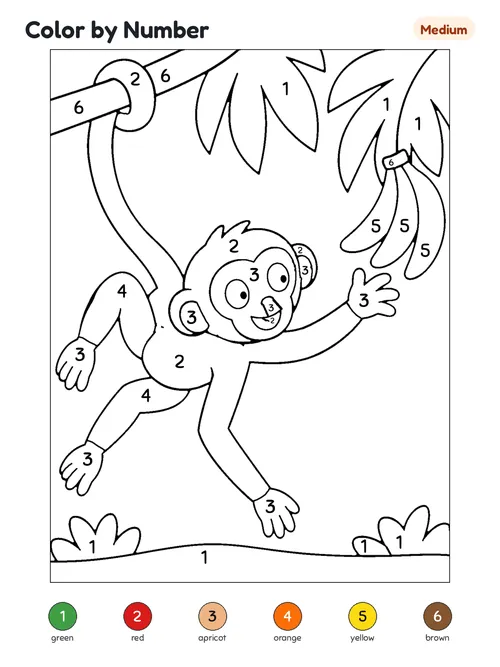

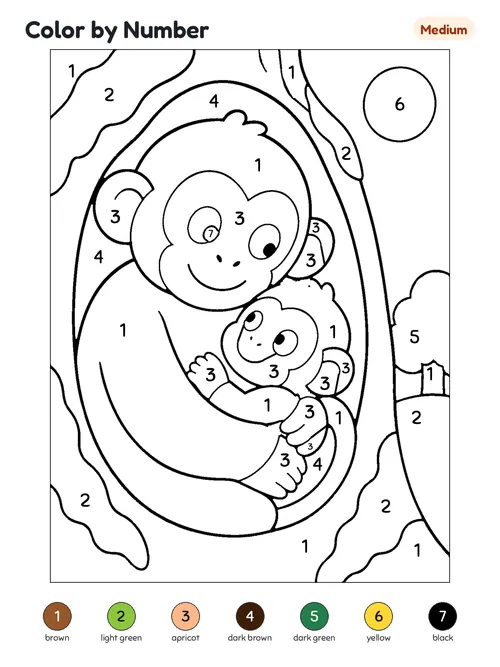


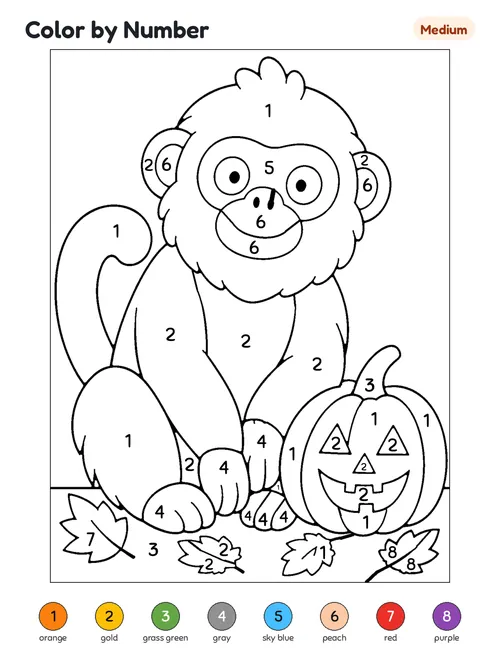

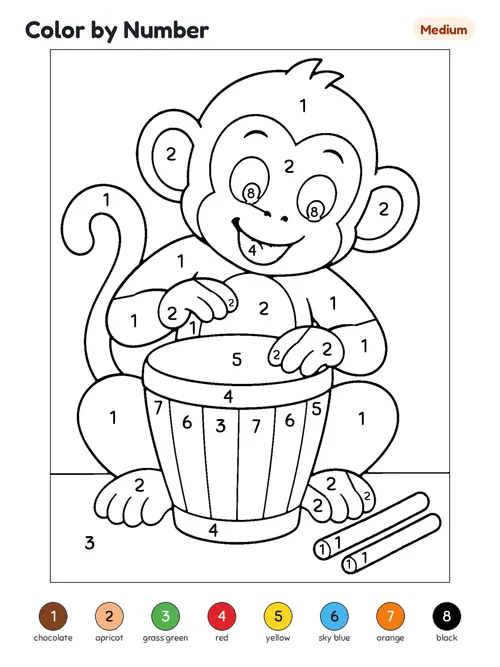

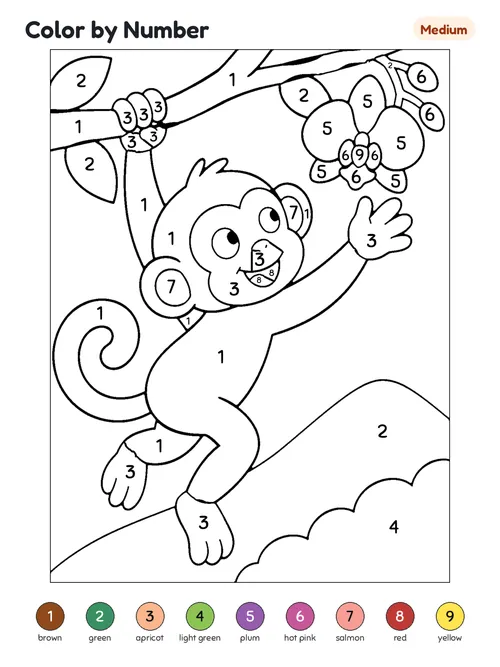

Challenge 3 pages · ages 7 and up


Advanced 3 pages · teens and adults




Layering brown, tan, and banana-yellow palettes
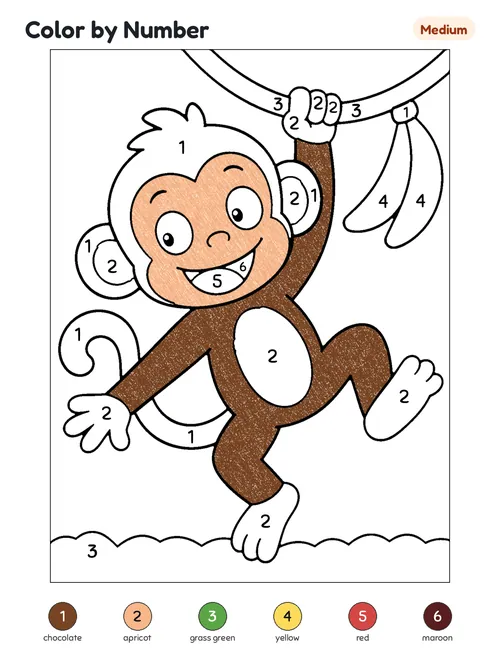
A typical color by number monkey palette relies on warm brown fur, soft tan faces, and bright banana-yellow accents. Tan and light brown are easy to confuse. Swatch both tones first on scrap paper so the pale face stays distinct from the darker fur around the ears.
Always layer light shades before dark, filling in sunny yellow accents and cream bellies while marker tips stay clean. The party monkey with banana page pairs simple brown fur with a festive red hat and a yellow banana. Dark chocolate brown belongs last along tails and outer edges.
From rainforest canopies to Japanese hot springs
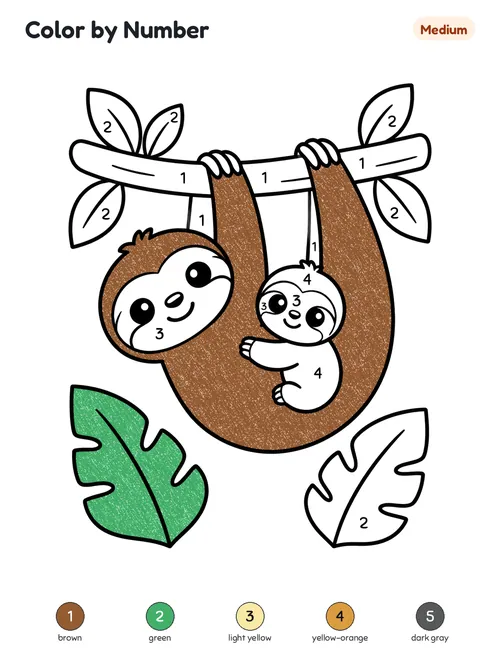
One quick feature separates every monkey from an ape. Monkeys have tails, while apes do not, and nimble spider monkeys use theirs to grip high branches across tropical rainforests. Smart capuchins share those leafy canopies, making these sheets a natural match alongside our sloth color by number pages during a habitat week.
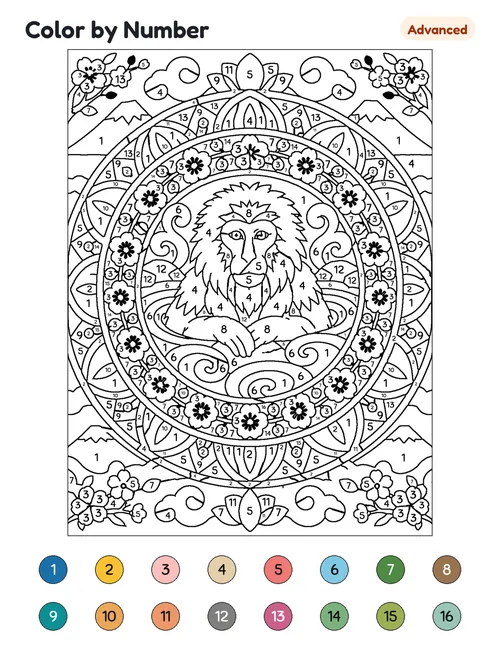
Not all primates live in tropical jungles, since snow monkeys in Japan warm up in mountain hot springs. The snow monkey mandala design surrounds a calm winter primate with blossoms and swirling spring water. Contrasting winter scenes with rainforest foliage sparks great science questions.
Playful monkey scenes for classrooms and rainy afternoons
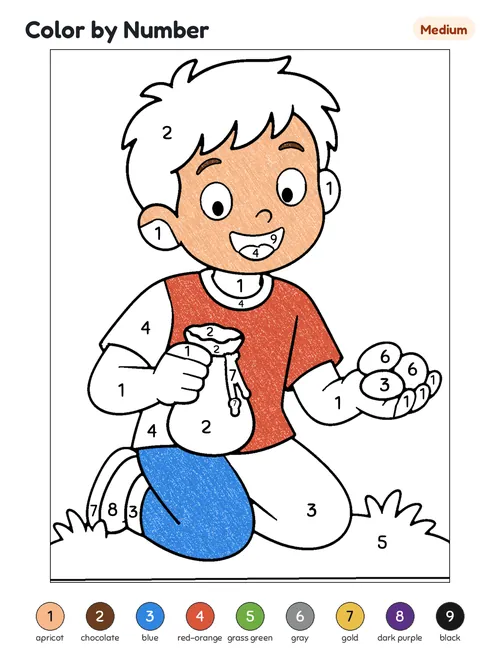
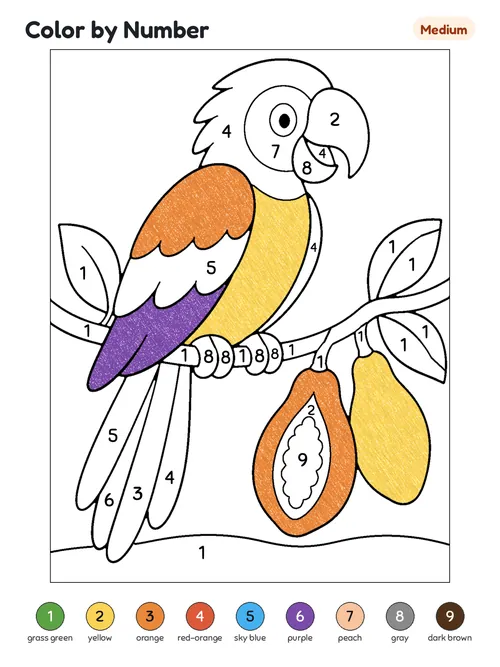
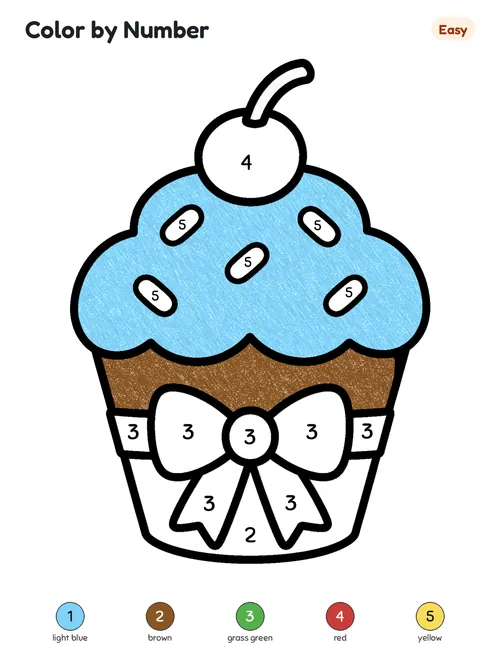
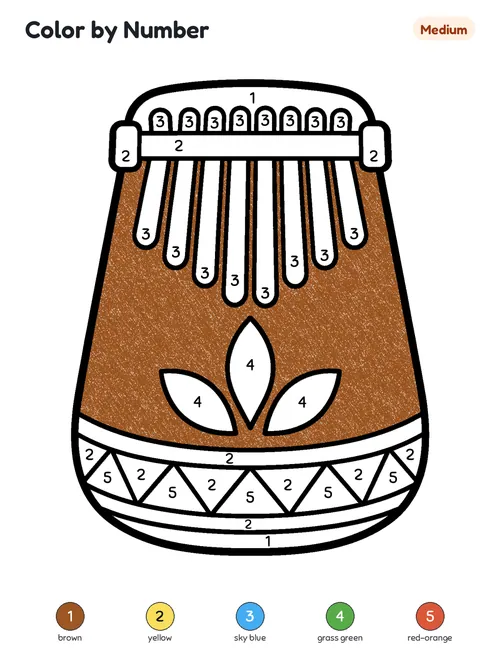
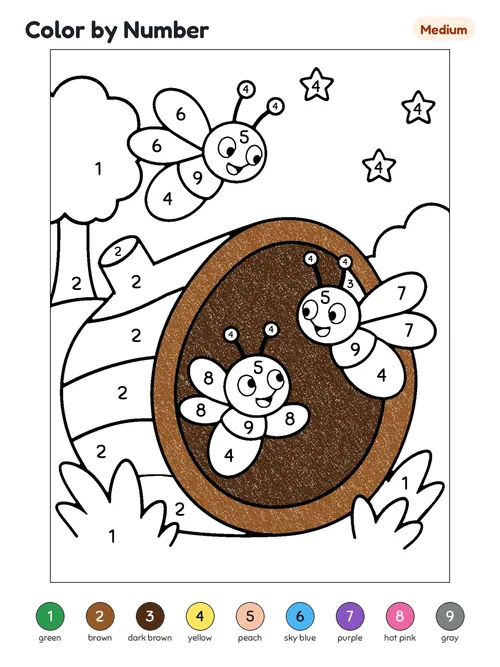
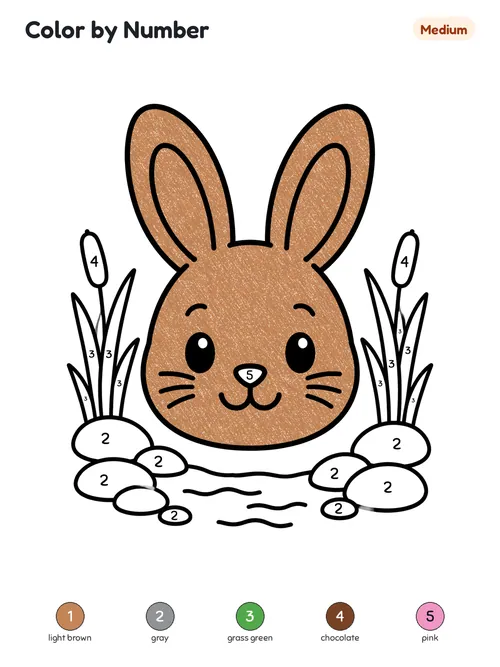
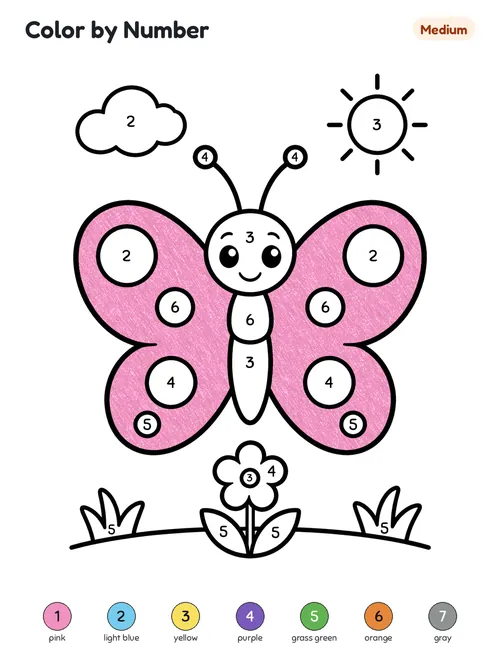
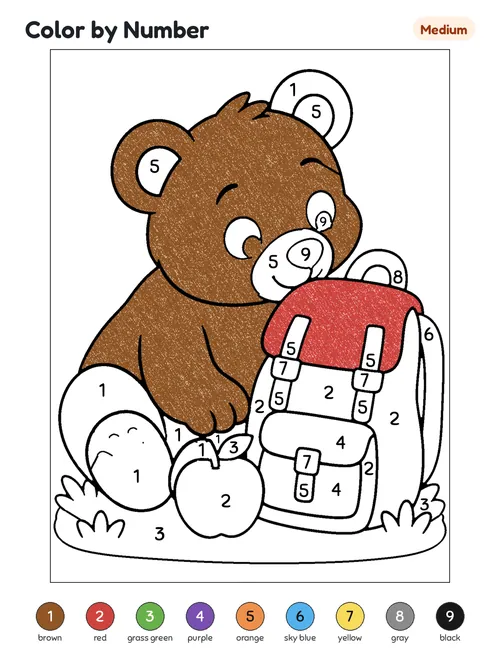
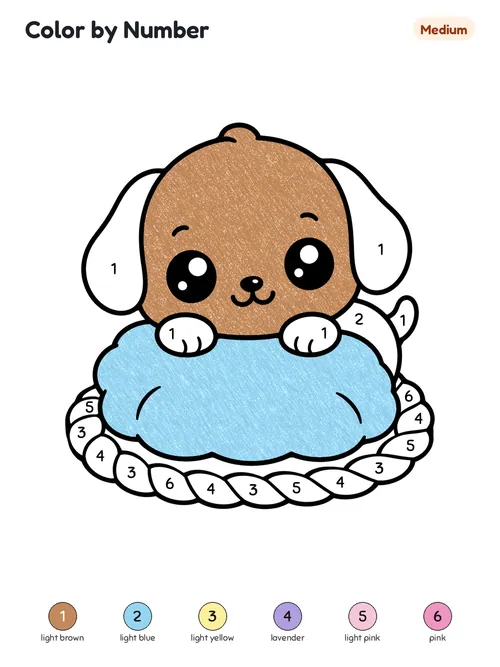
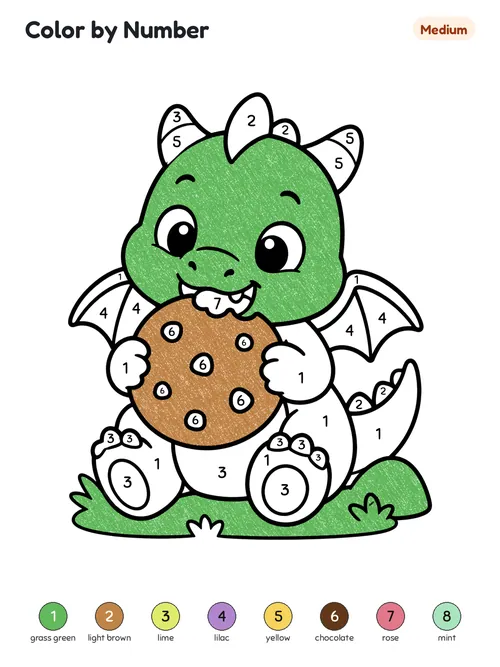
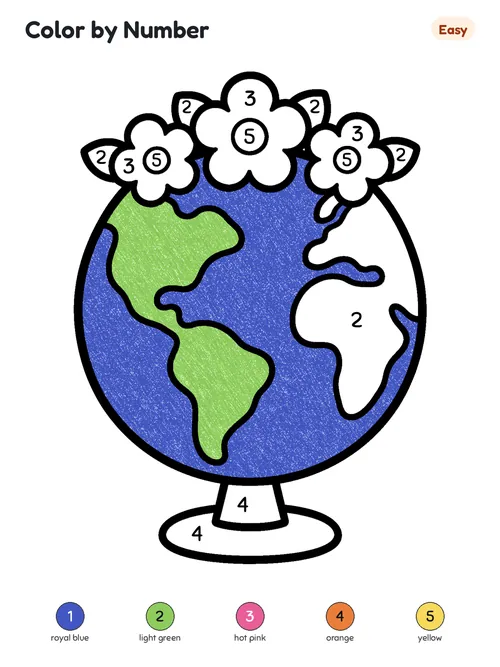
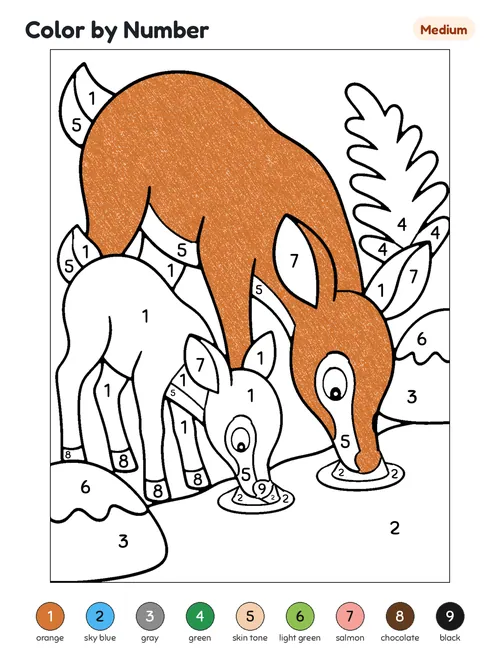
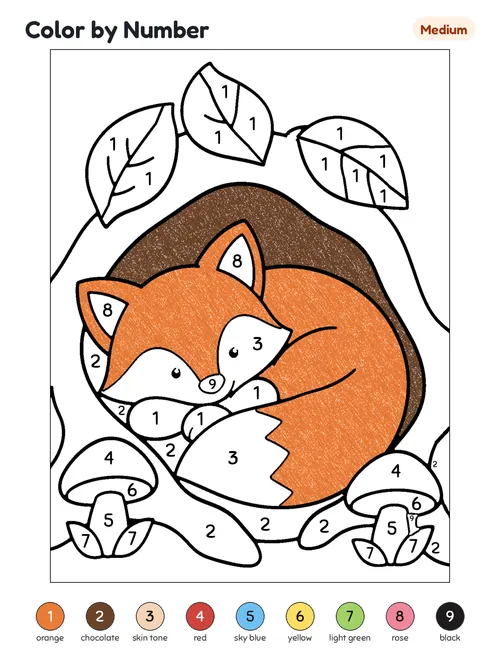
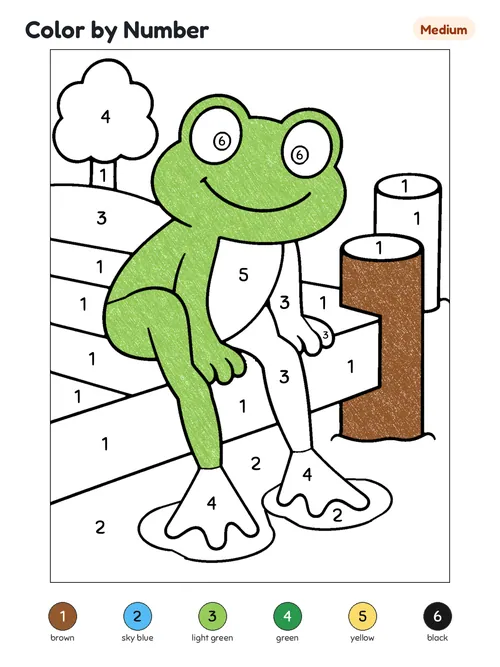
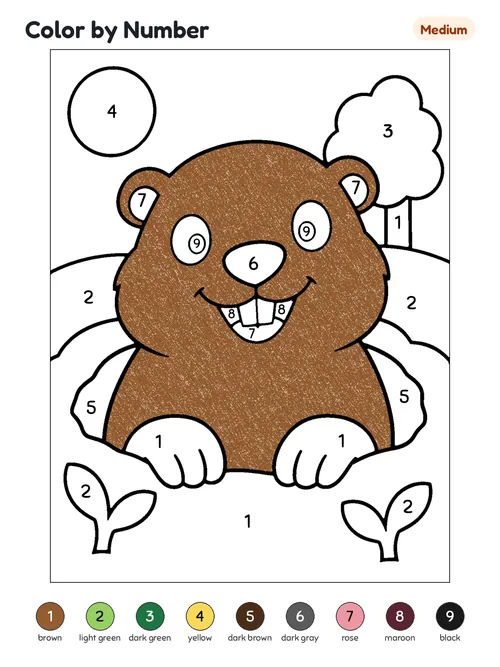
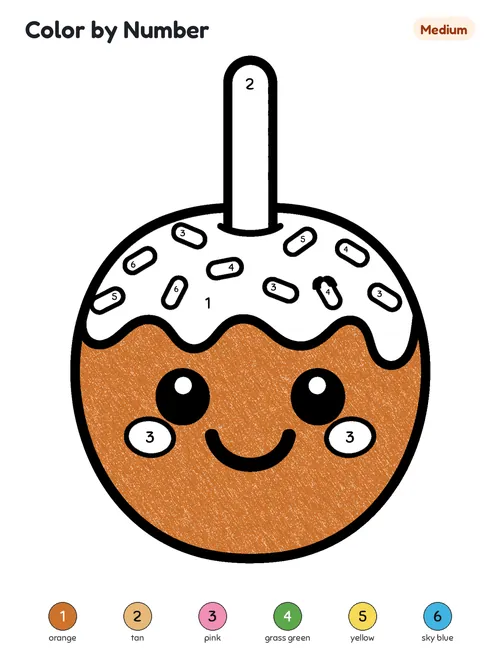
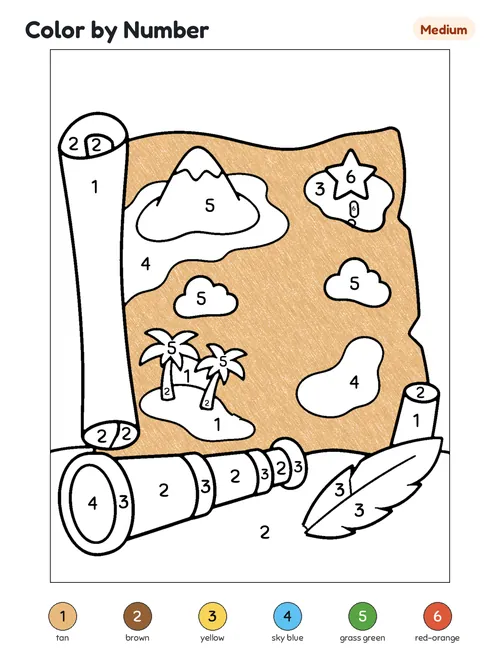
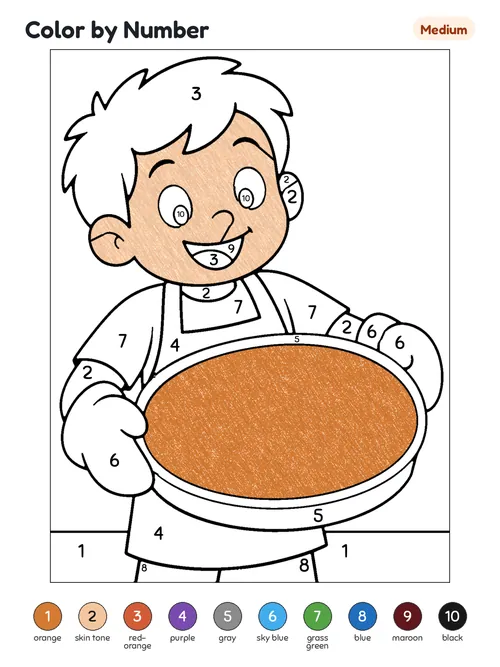
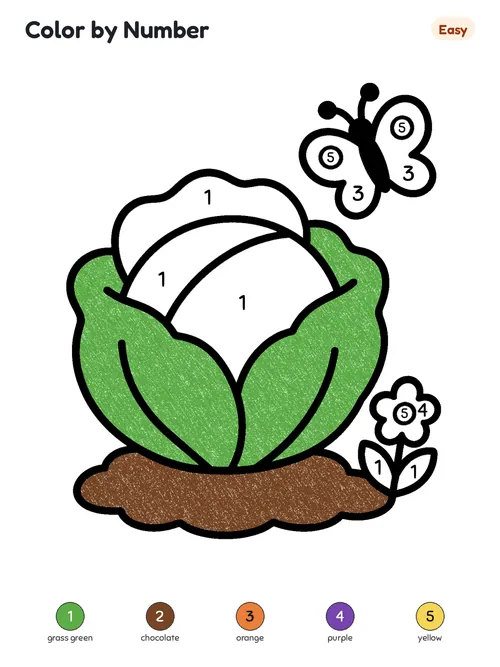
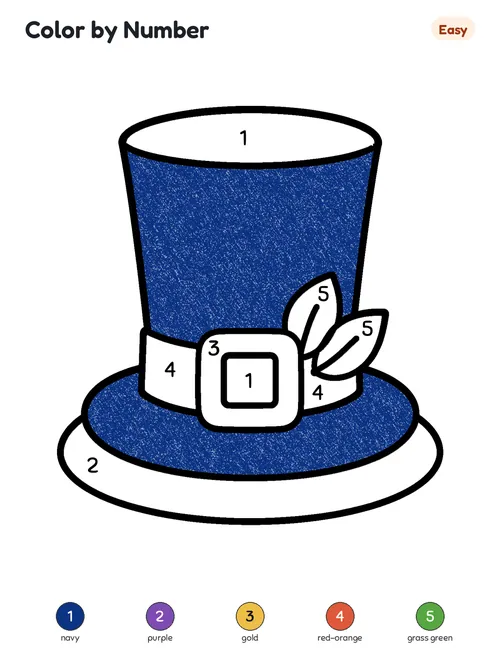
Each free printable PDF includes a small finished picture for quick color checking. Beginners working on number recognition can pair playful banana scenes with other easy preschool pages during quiet table time. Tape pages to the desk so busy hands stay steady.
When colorists want to invent purple fur or neon vines instead, switch to open-ended monkey coloring pages for freehand color choices. Keeping both styles handy covers guided and creative afternoons.
Questions about Monkey color by number
How can children tell a monkey apart from an ape?
Look for a tail first, because nearly all monkeys have one while apes such as gorillas and chimpanzees do not. Rainforest species like spider monkeys even wrap their long tails around high branches for grip and balance, whereas apes rely mainly on their long arms to swing.
How do you keep brown and tan monkey fur from looking muddy?
Start with the lightest tan on the face, ears, and belly using gentle pencil pressure. Add warm medium brown to the body next, and save deep chocolate brown for outlines and tails. Keeping wax and ink layers light prevents pale neutral tones from turning dull.
How can spider monkeys, capuchins, and snow monkeys support a habitat lesson?
Pair tropical rainforest climbers with winter primates from Japan so students see how climate shapes animal life. Capuchins and spider monkeys thrive in leafy treetops, while Japanese snow monkeys gather in steaming hot springs during cold months. Comparing the completed artwork starts an easy group discussion.