Earth Color by Number Pages
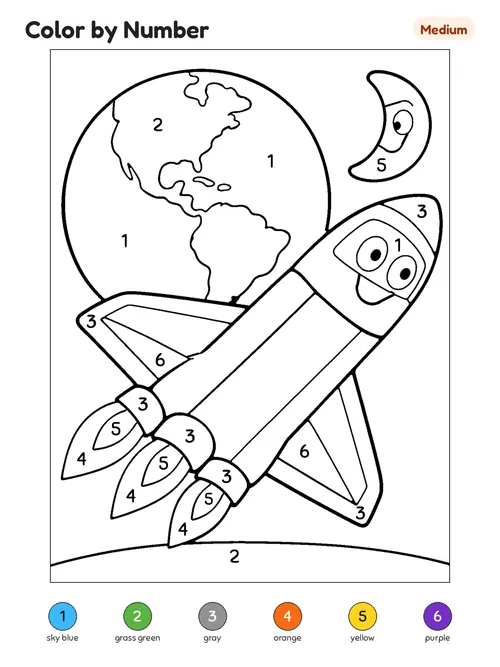
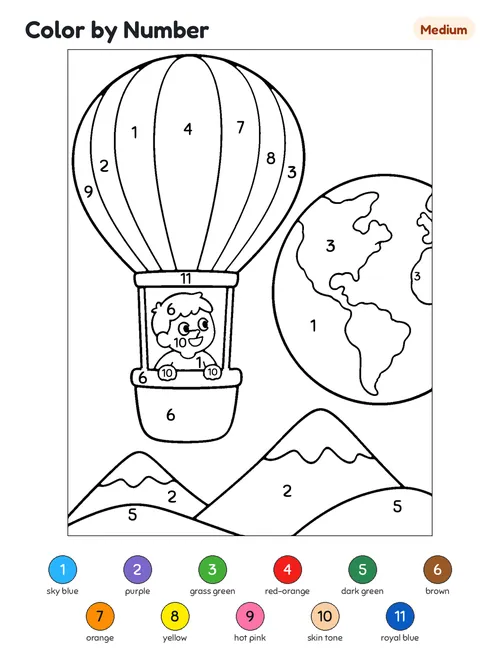
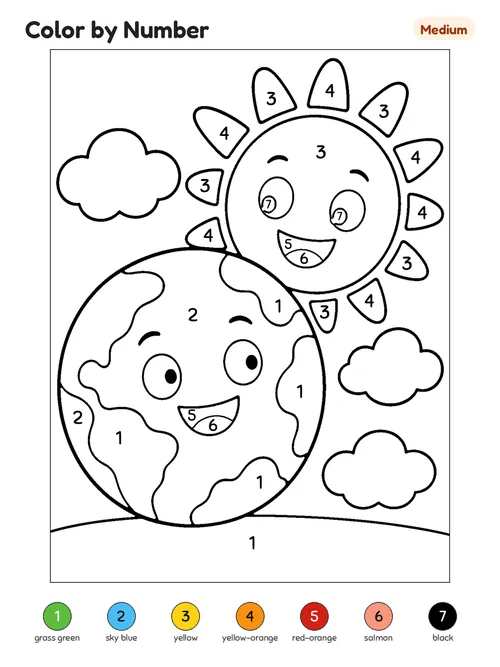
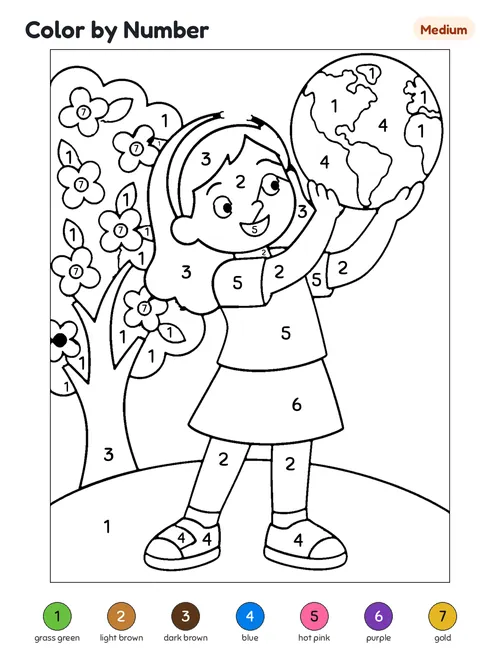
Blue oceans, green land, and our planet's inner layers fill 24 Earth color by number pages: 8 easy pages for preschool with bold lines, 9 medium pages, 3 challenge pages, and 4 advanced pages for teens and adults.
PDF paper size:
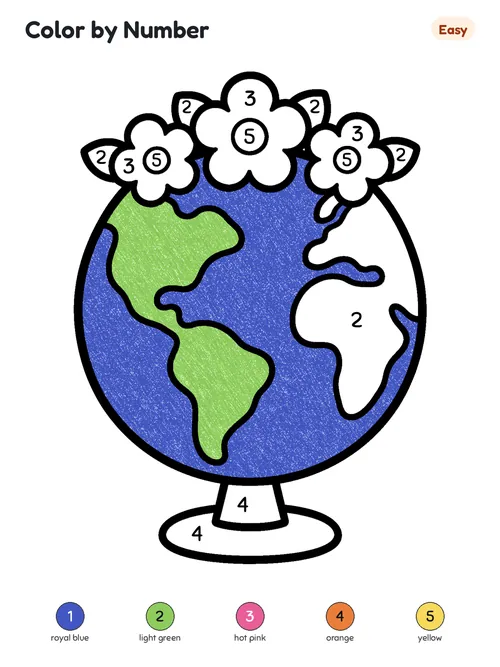
Easy 8 pages · ages 3 to 6
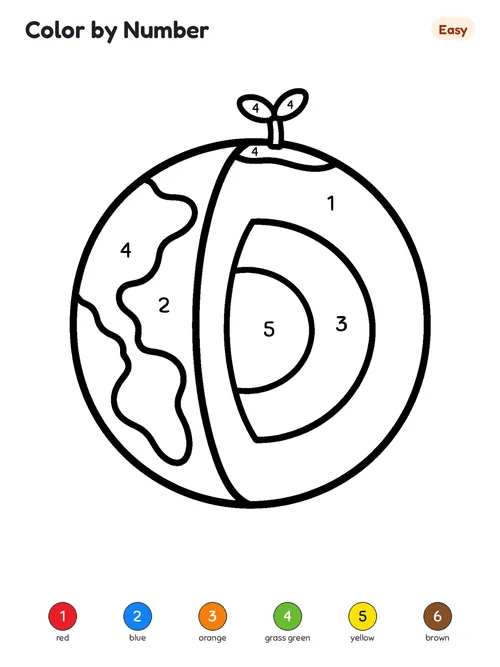

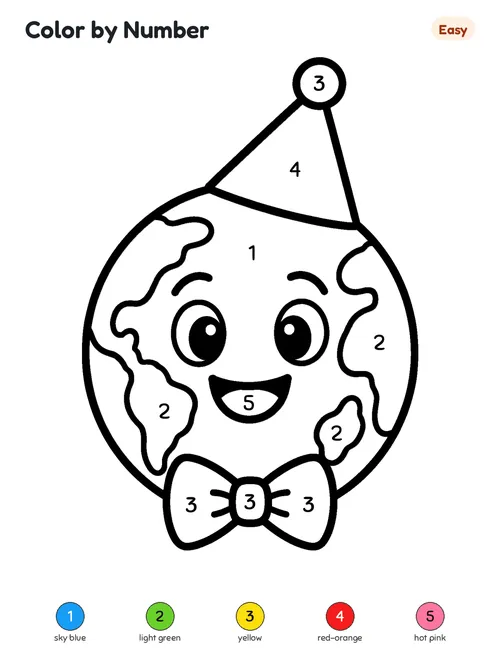

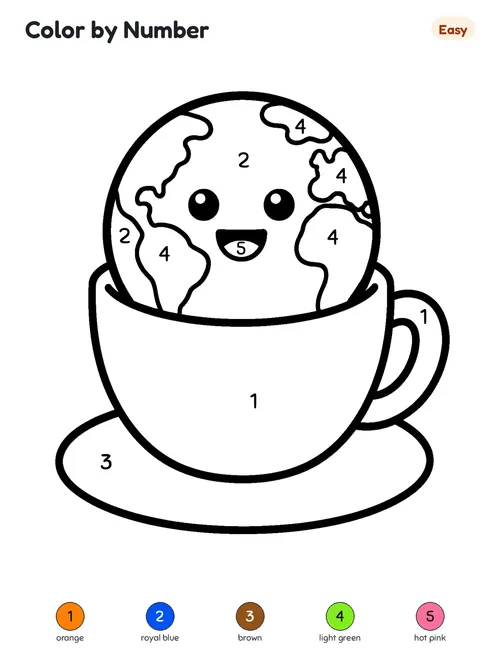

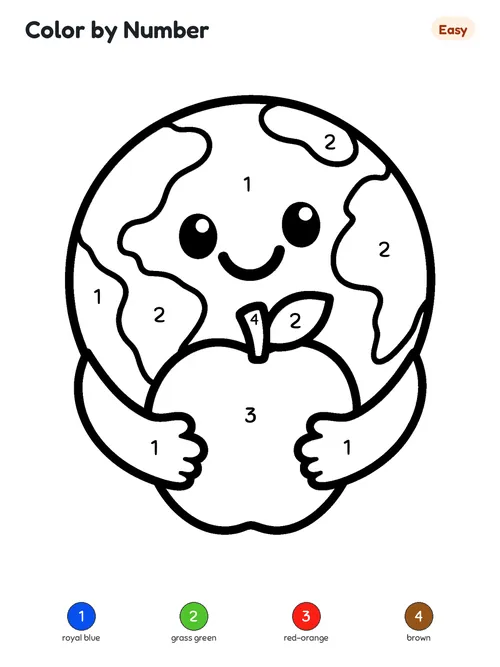

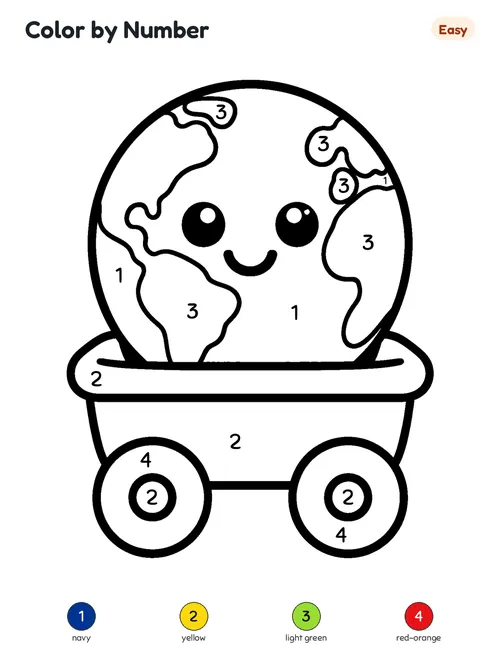

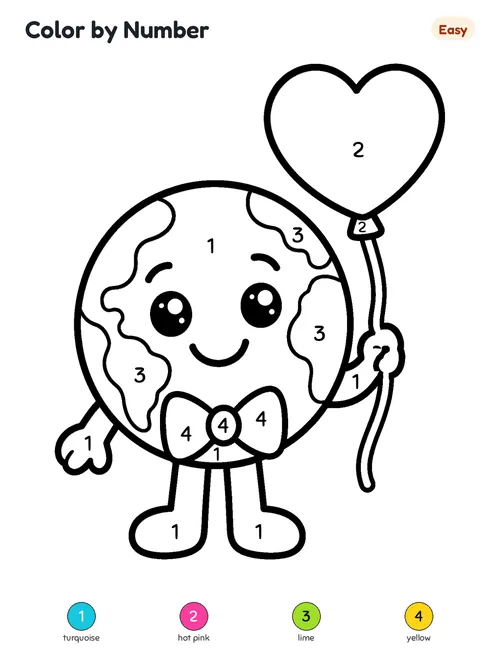



Medium 9 pages · ages 5 to 8







Challenge 3 pages · ages 7 and up
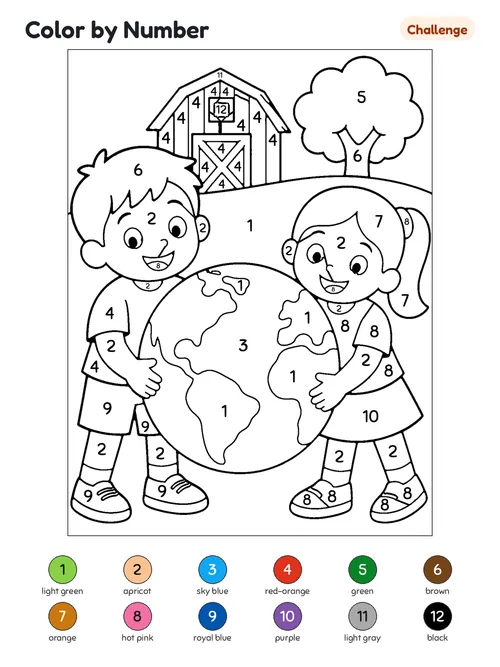


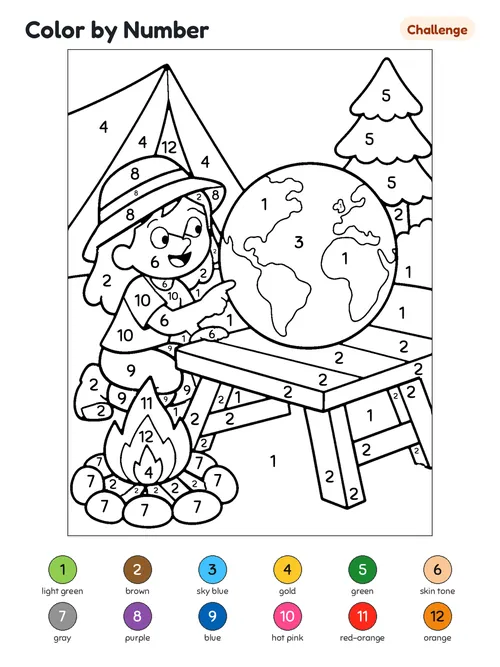

Advanced 4 pages · teens and adults


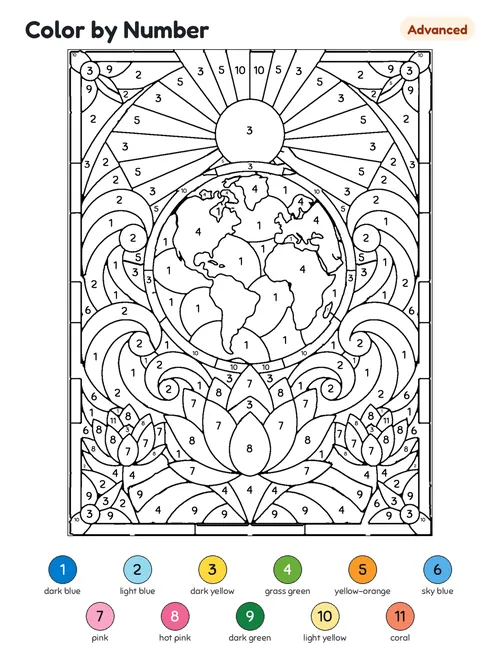

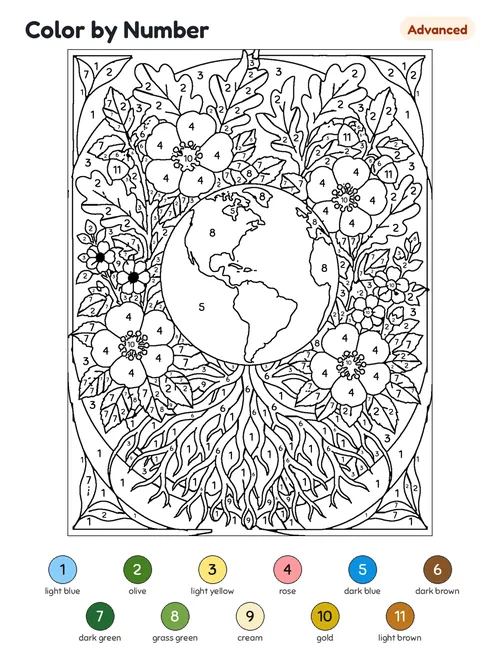

Oceans, continents, and the layers inside Earth
Water covers most of Earth's surface, so blue shades fill the largest spaces on every globe. Continents mix green forests with brown deserts and mountains, making geography easy to picture on paper. Beneath the thin crust lie the hot mantle and dense core, shifting the palette from cool blues to warm inner reds. Every real detail gives kids something concrete to notice.
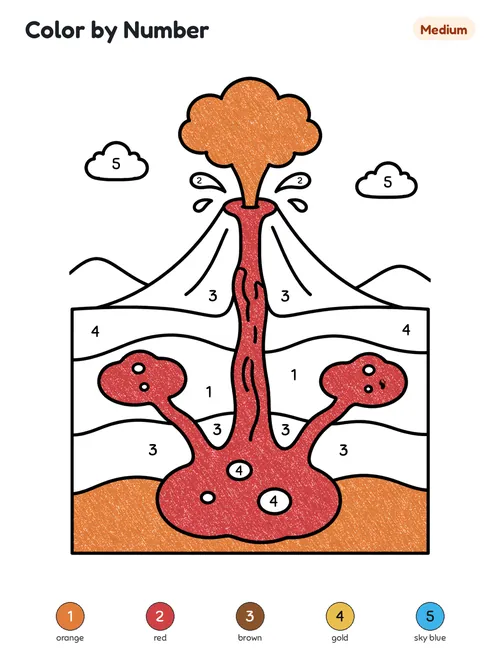
Switching between pale sky blue and deep navy helps a flat circle feel rounder on the page. The cutaway Earth layers page highlights the crust, mantle, and core in clear bands of warm color. Using light pencil pressure keeps small ocean gaps neat and readable. Every sheet is a free printable PDF, and teachers can also download a full answer key.
Earth Day on April 22 and science lessons
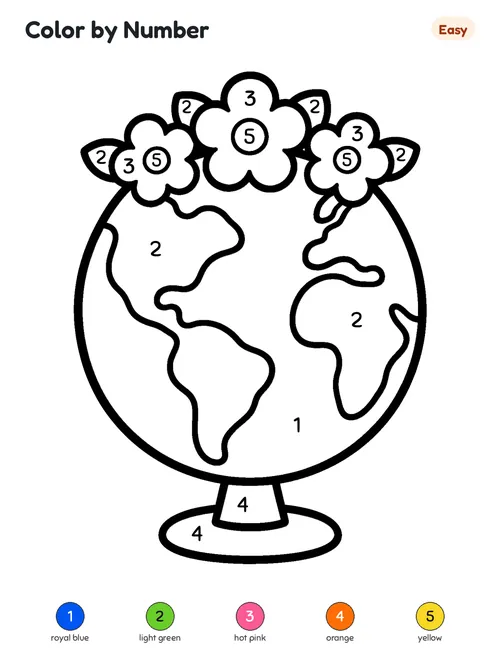
Earth Day arrives on April 22, giving families and teachers a natural moment to discuss caring for nature. Playful designs dress the globe in party hats and flowers. The flower-crowned Earth globe page sets a pink wreath of blooms atop the oceans and continents. Teachers planning an April 22 bulletin board can also pull motifs from our Earth Day pages.
Setting a globe beside a color by number Earth sheet turns a planet lesson into calm desk work. Students can label oceans right after finishing a drawing. Connecting our home planet to nearby stars and moons works well alongside our space color by number pages during a solar system unit. Anyone who prefers freehand shading without numbered guides can switch to our Earth coloring pages instead.
Questions about Earth color by number
What are the main layers inside planet Earth?
Planet Earth consists of a thin rocky crust on the outside, a thick hot mantle underneath, and a dense metal core at the center. Cutaway diagrams usually color the surface green and brown, then shift through red, orange, and yellow to show rising heat deeper inside.
How can you keep blue oceans and green continents looking distinct?
Clearly separated shades keep shorelines crisp once the globe is filled. Use cool navy or sky blue for open water beside warm leaf green or soft brown for land. Tracing each coastline first with a sharp pencil tip keeps small islands neat.
What is Earth Day, and how can you tie Earth drawings to a science unit?
Observed on April 22, Earth Day focuses on environmental awareness, clean water, and caring for natural habitats. During a science lesson, completed globe and cutaway sheets work well as visual prompts for naming continents, comparing oceans, or discussing everyday habits that protect nature.