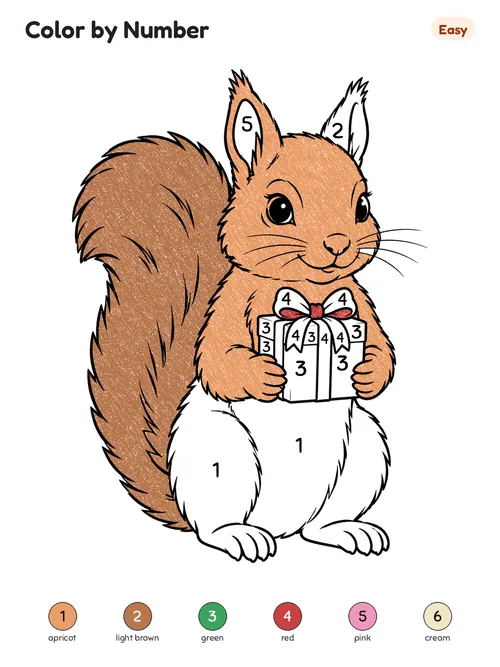
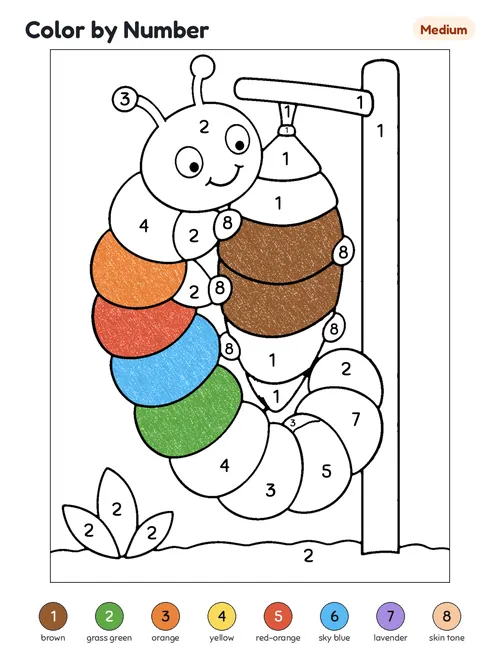
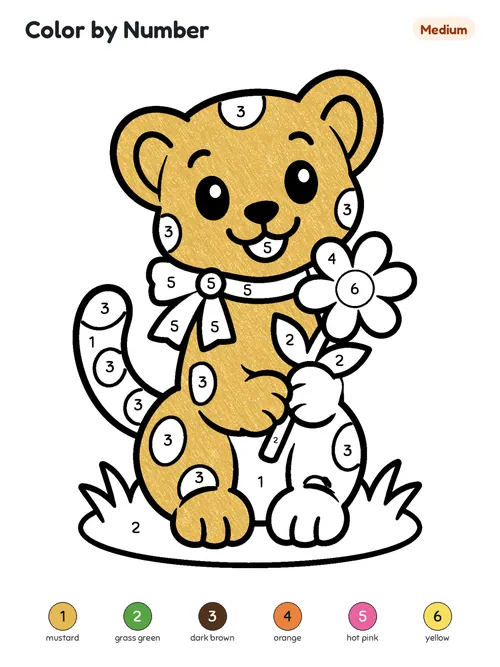
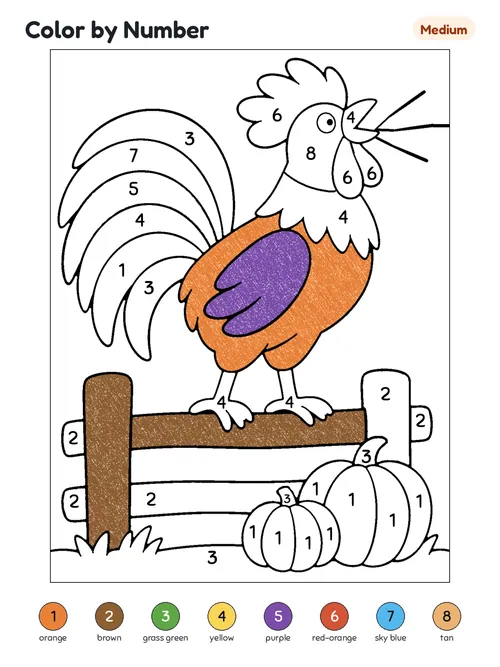
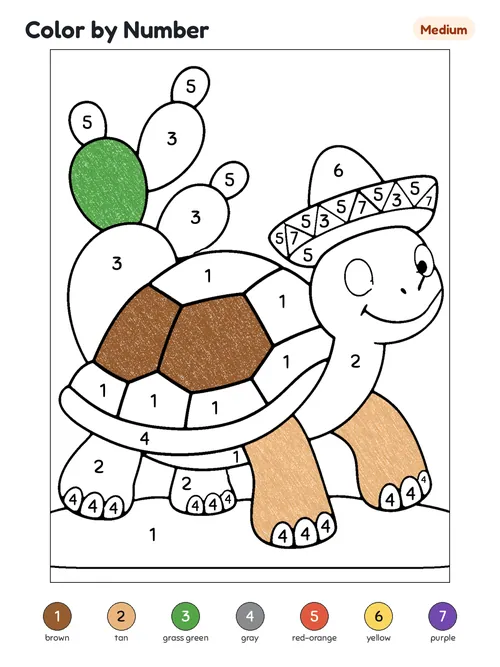
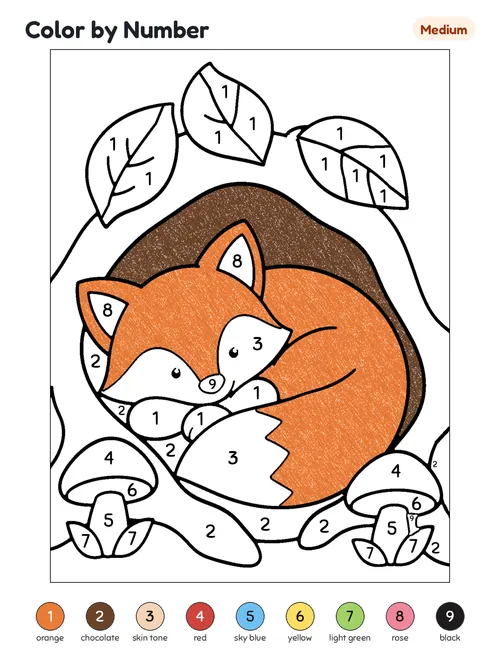
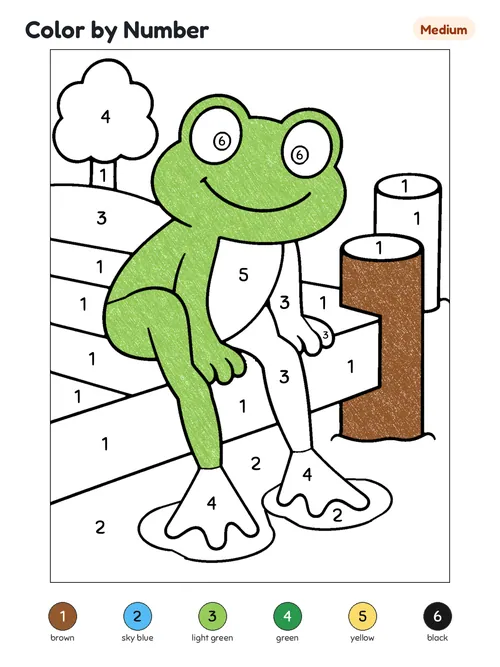
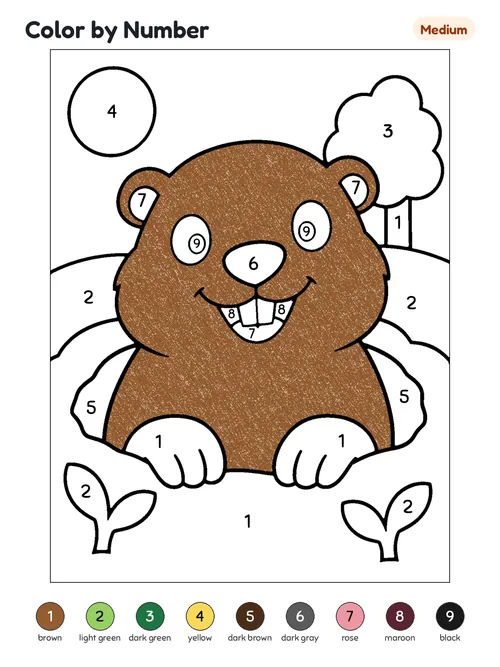
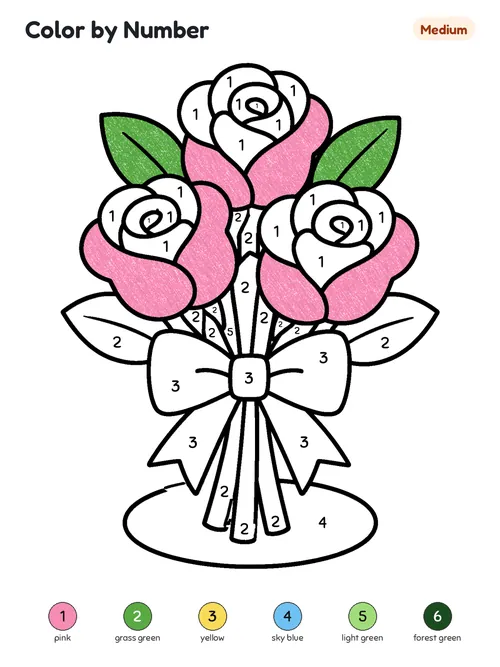
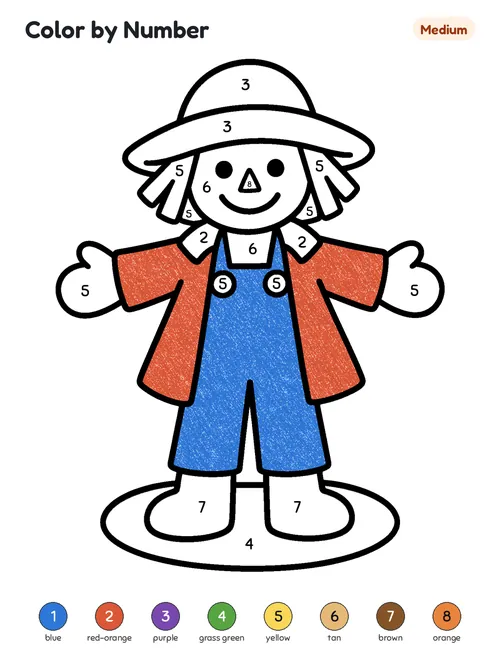
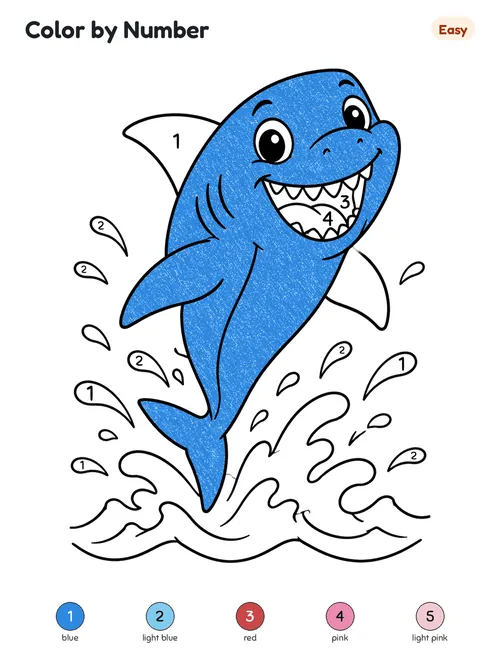
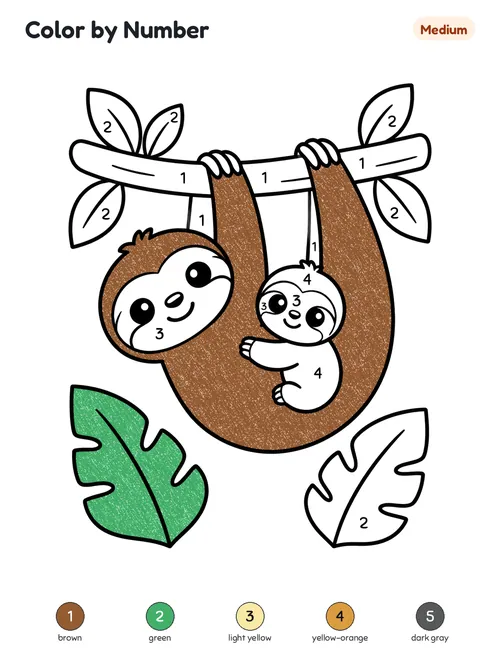
Farm Animals Color by Number Pages
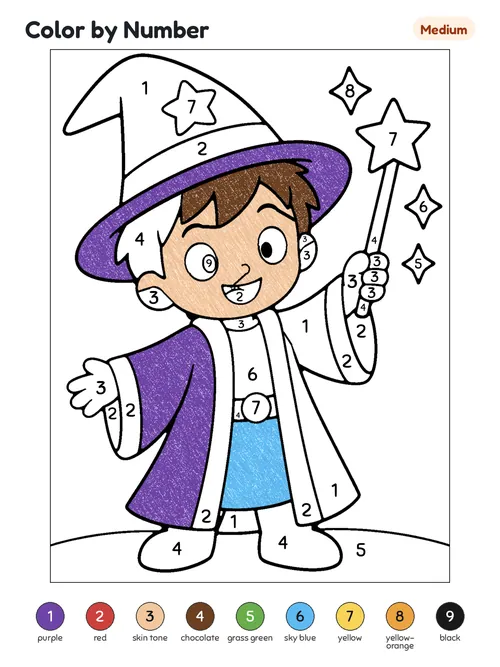
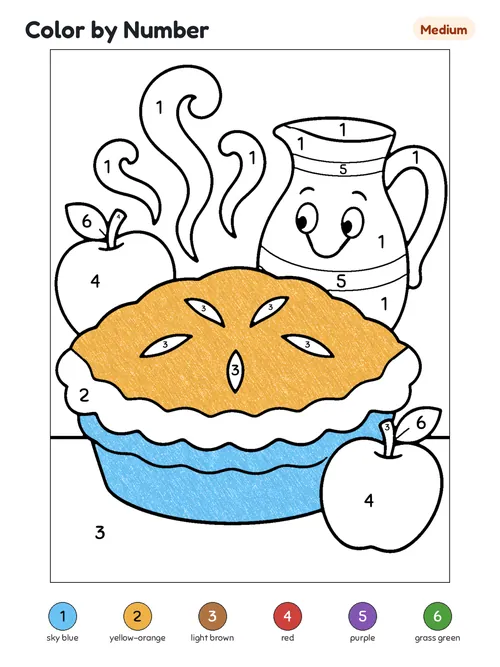
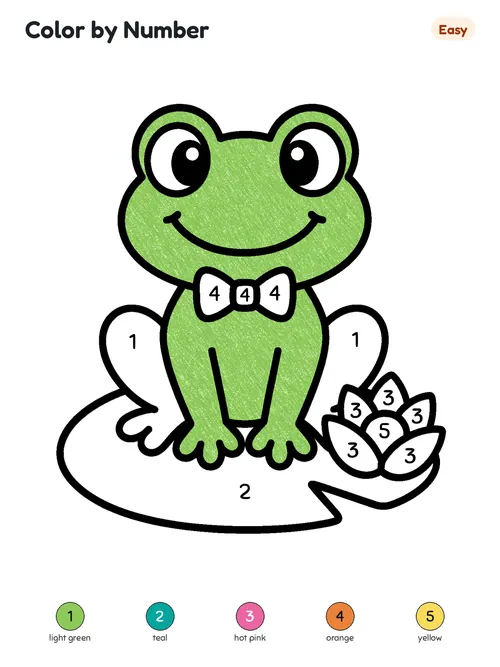
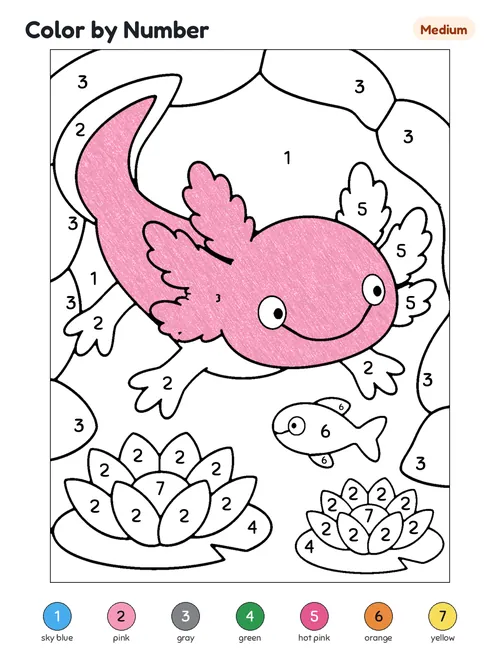
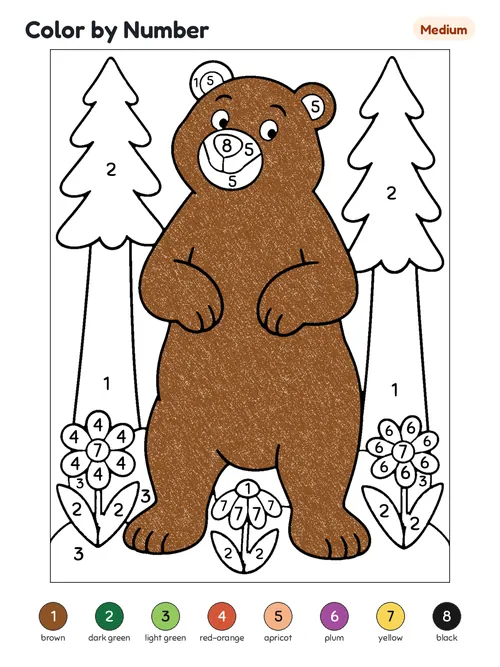
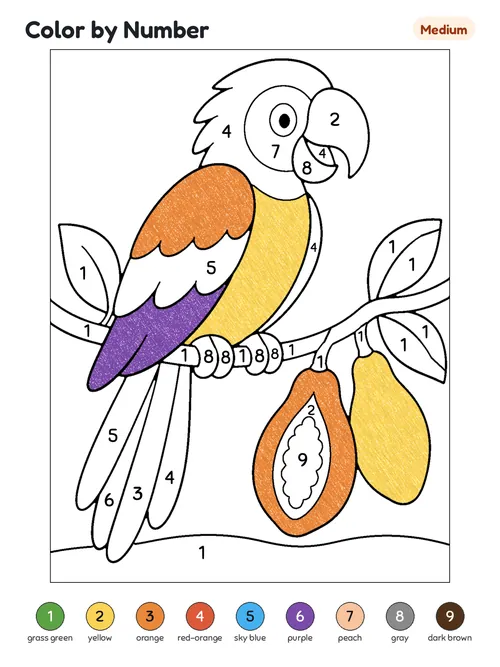
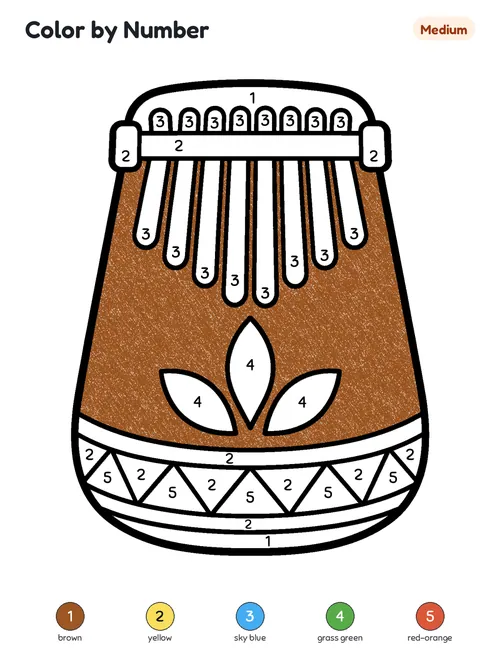
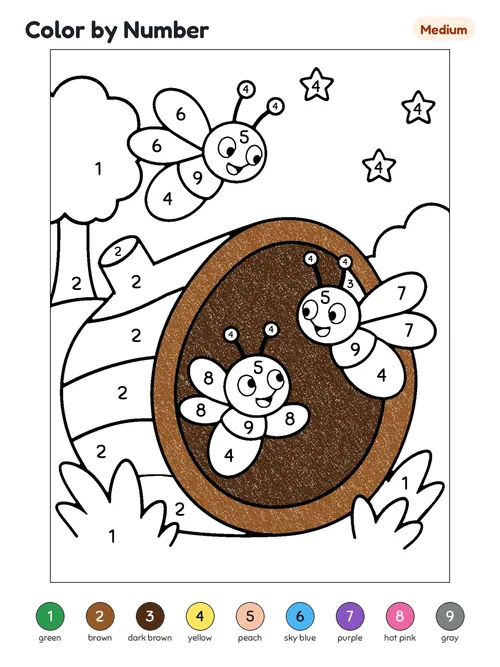
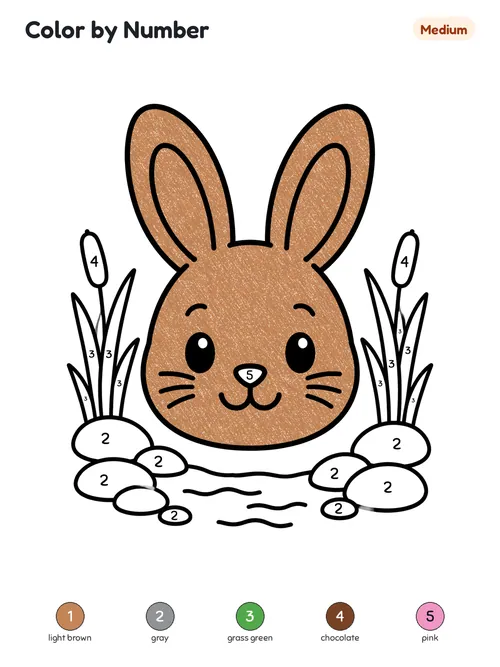
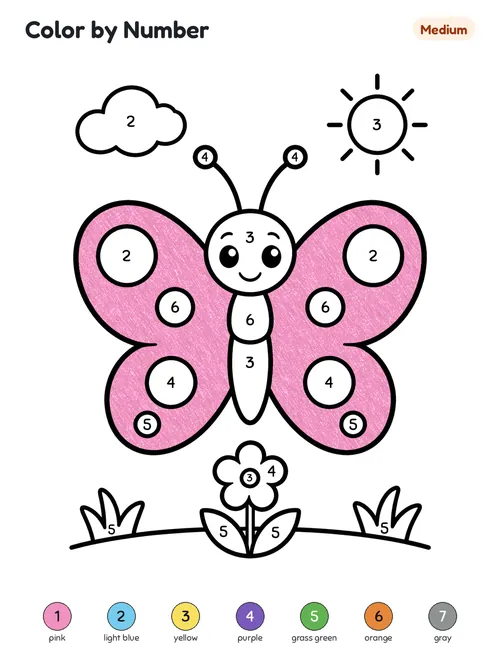
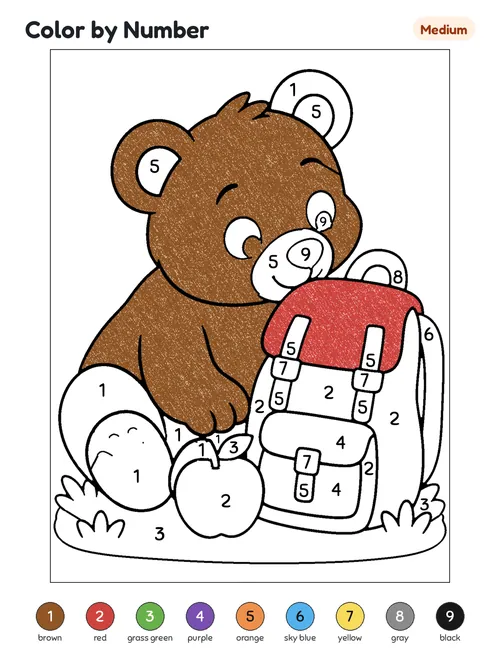
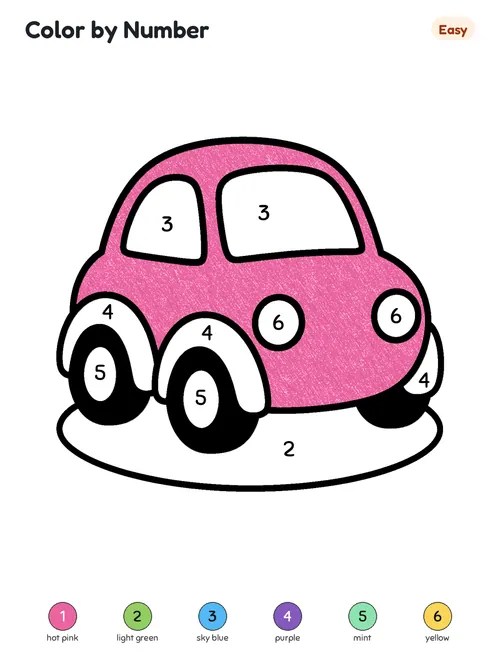
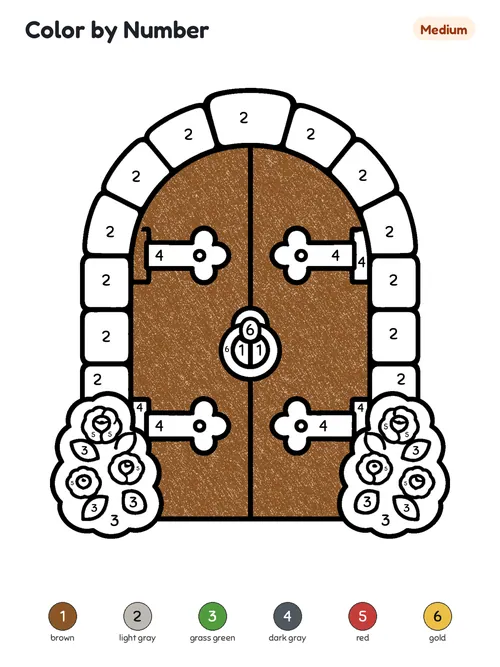
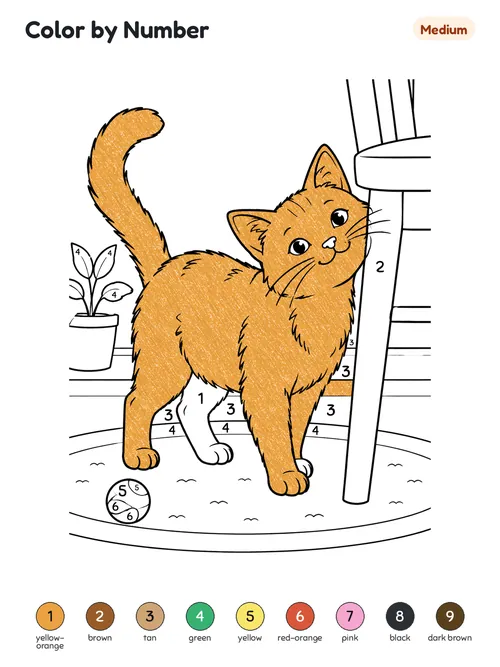
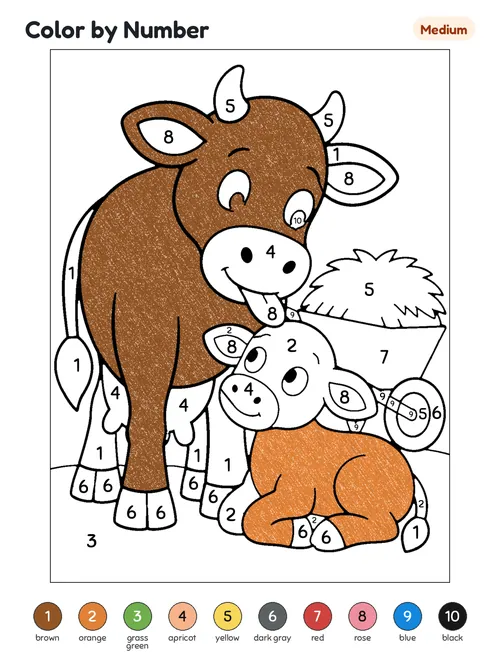
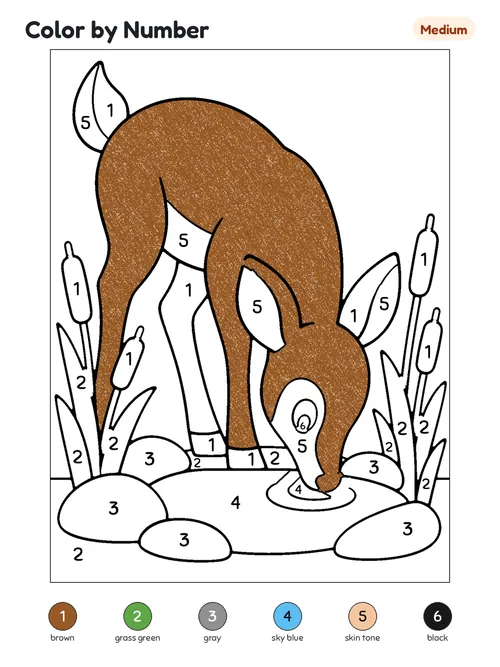
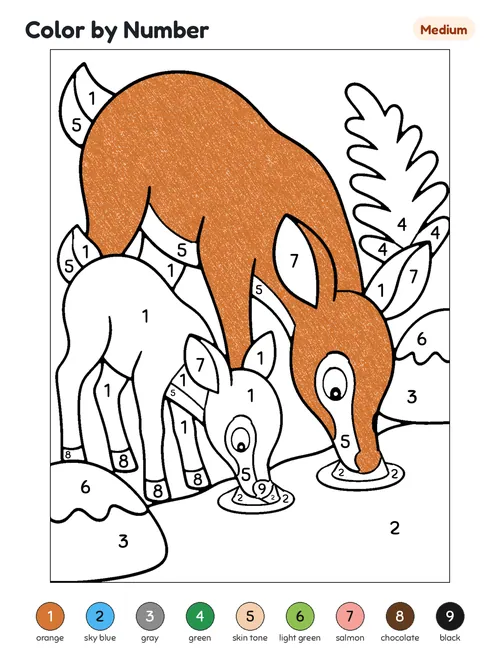
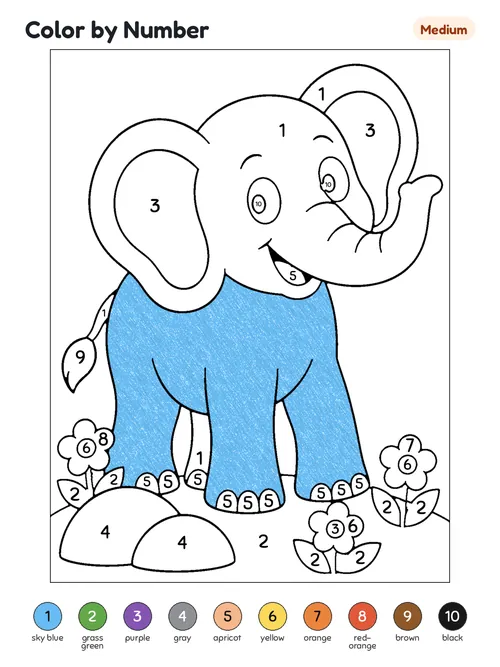
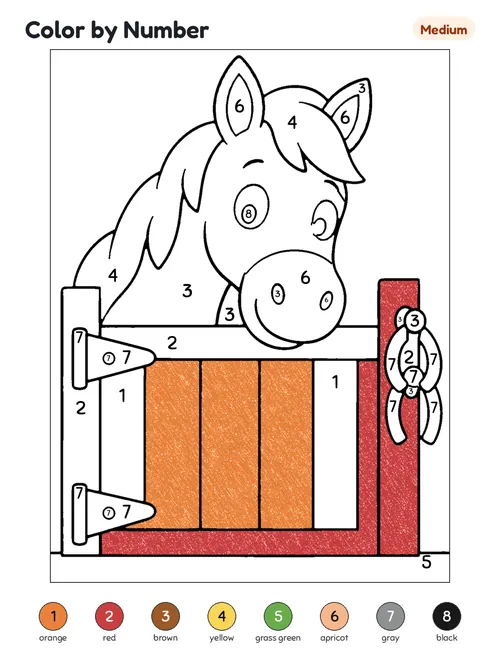
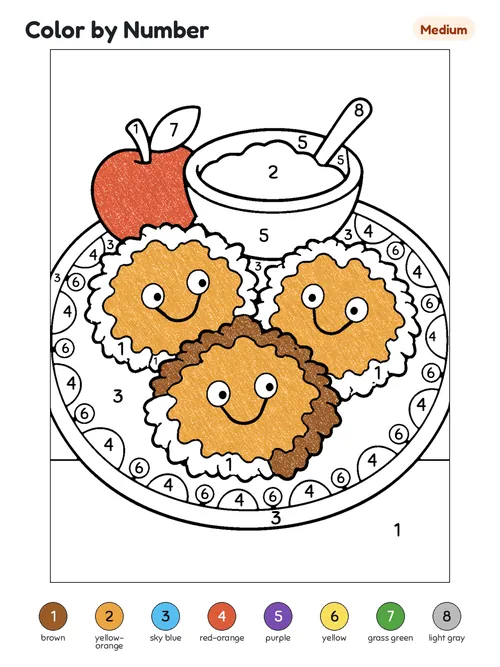
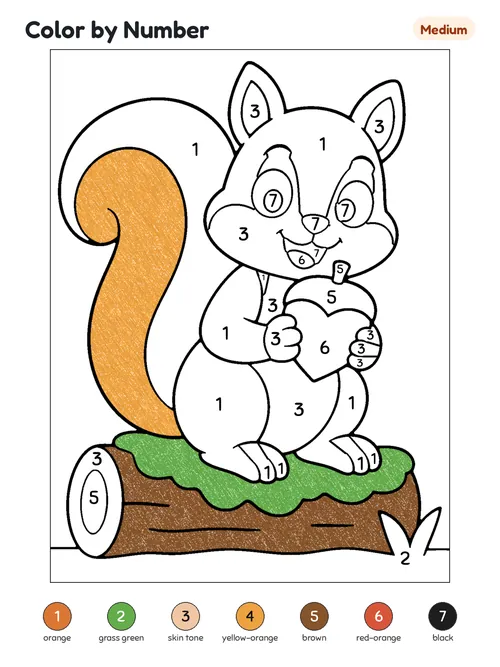
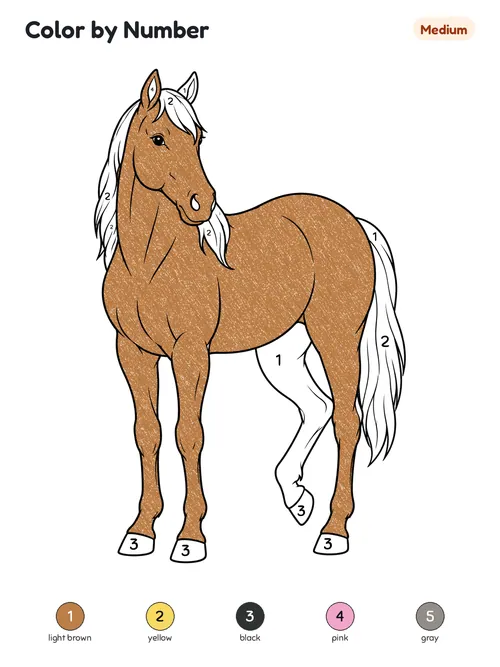
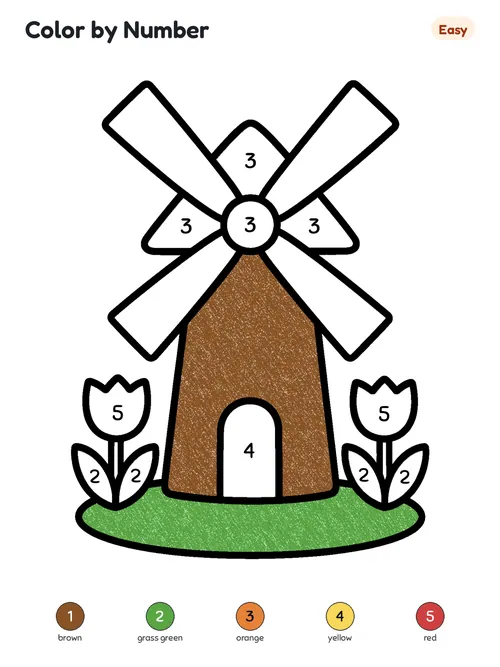
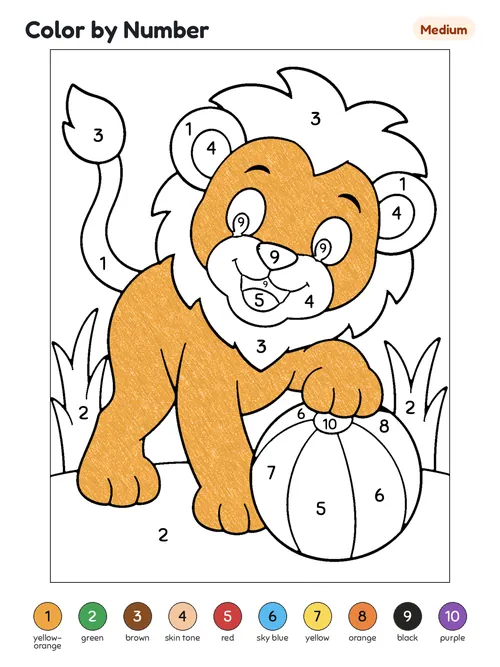
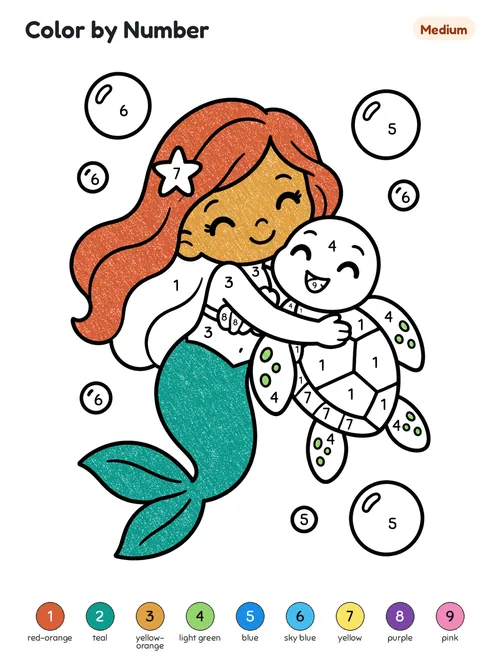
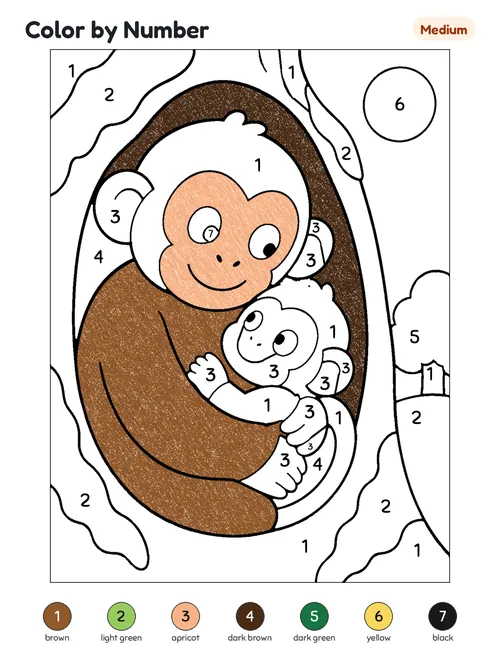
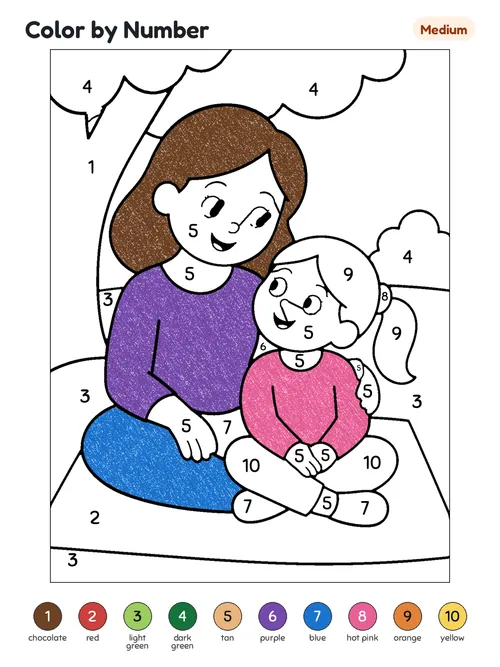
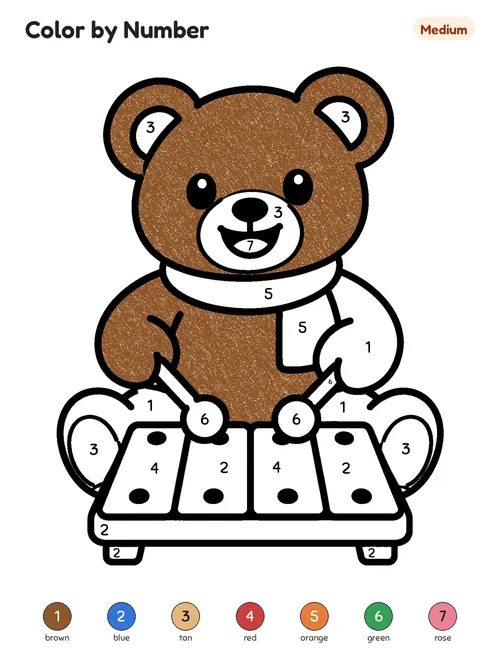
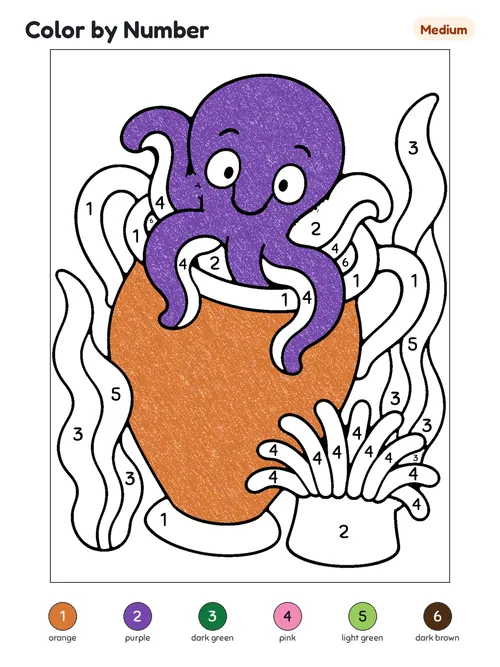
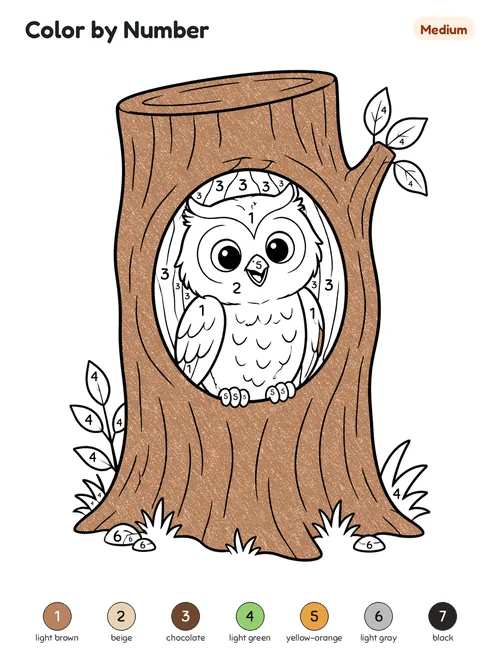
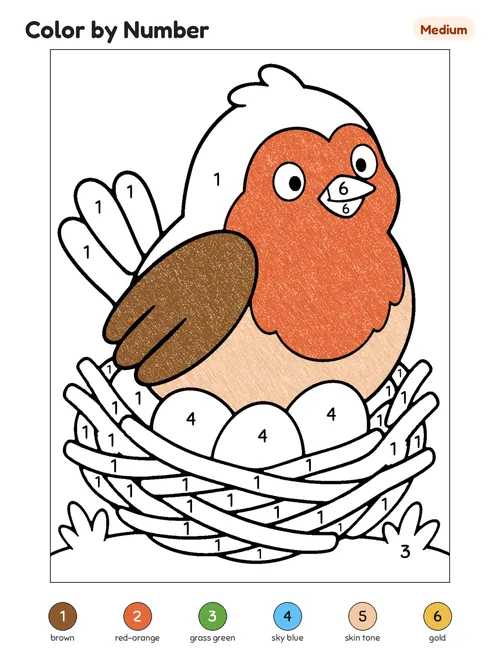
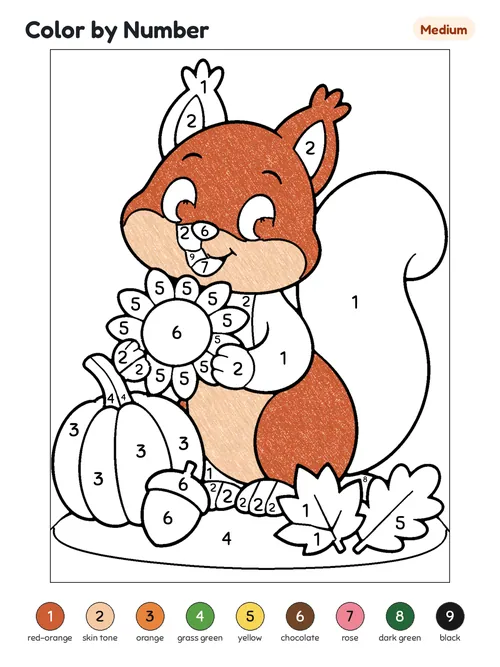
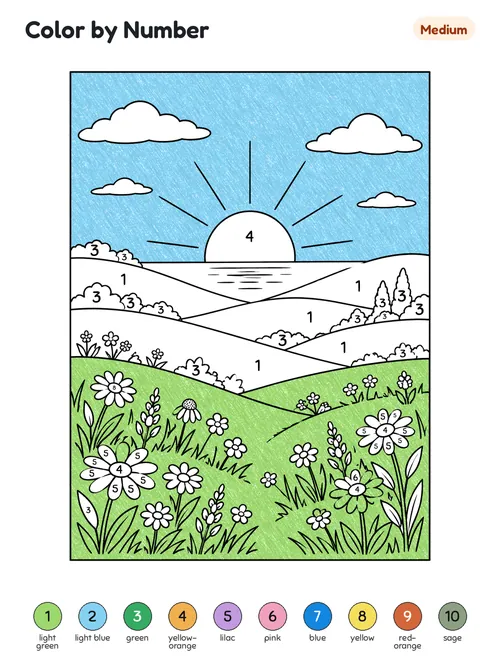
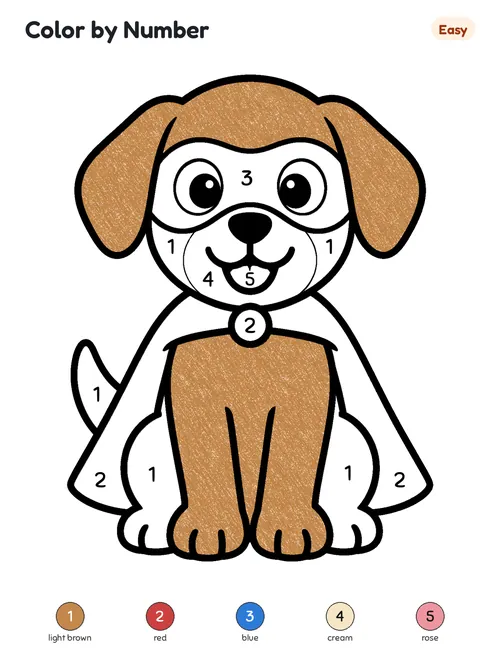
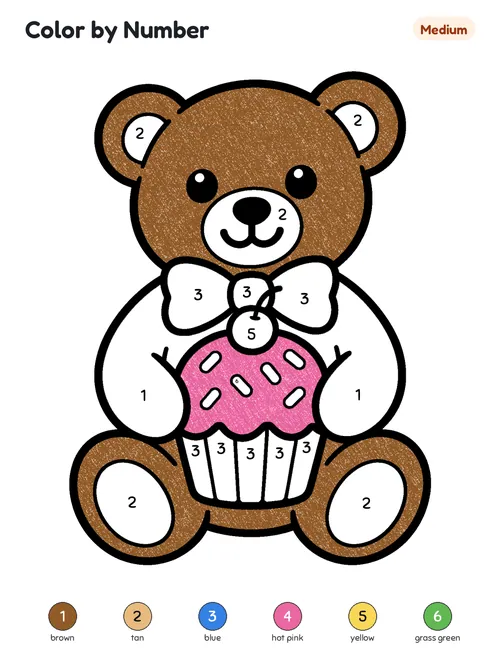
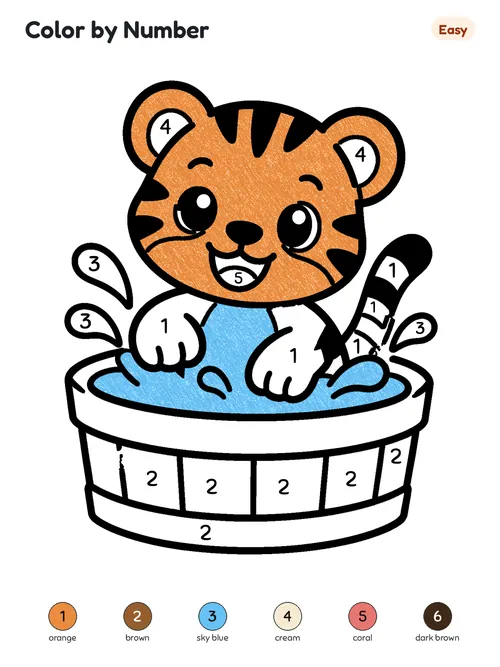
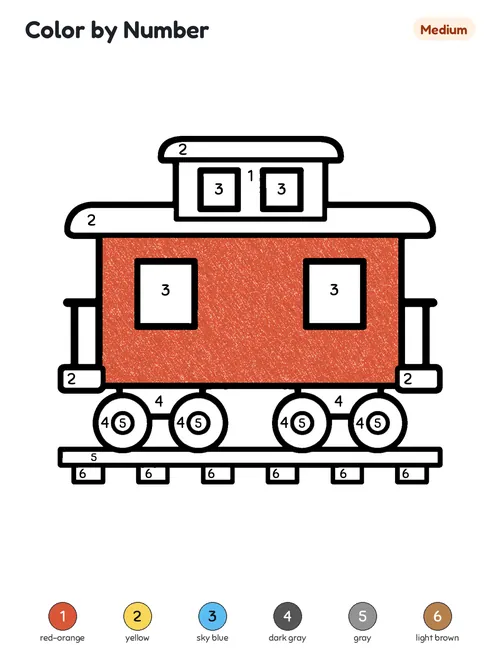
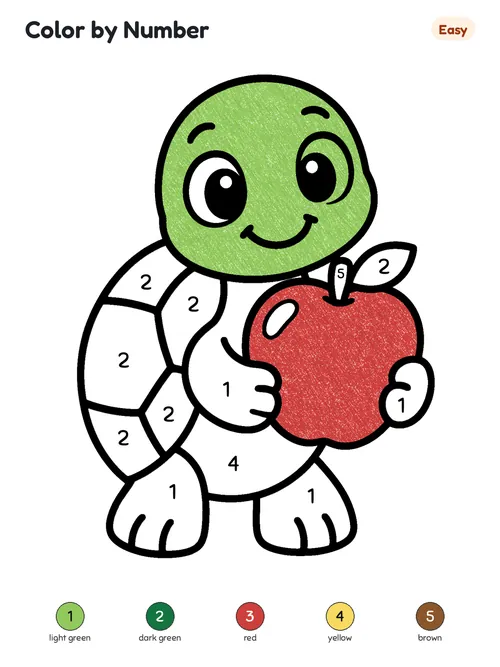
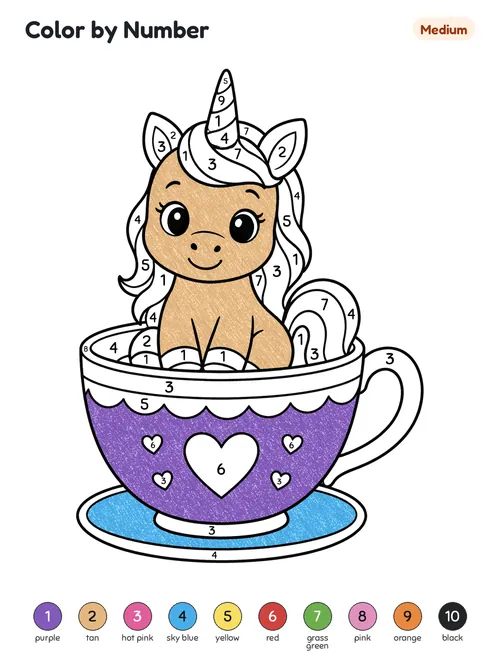
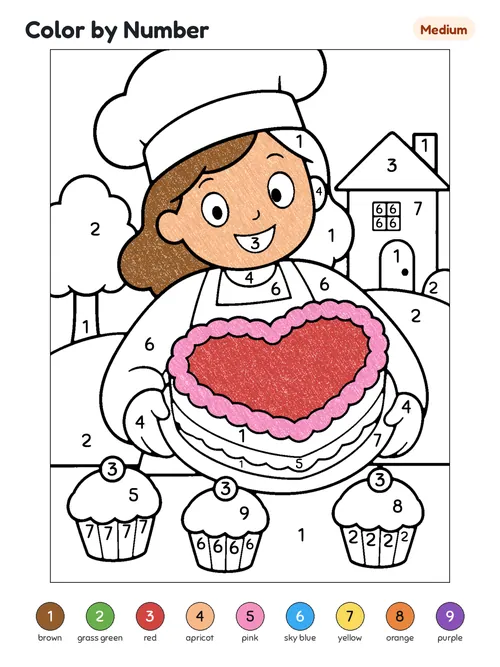
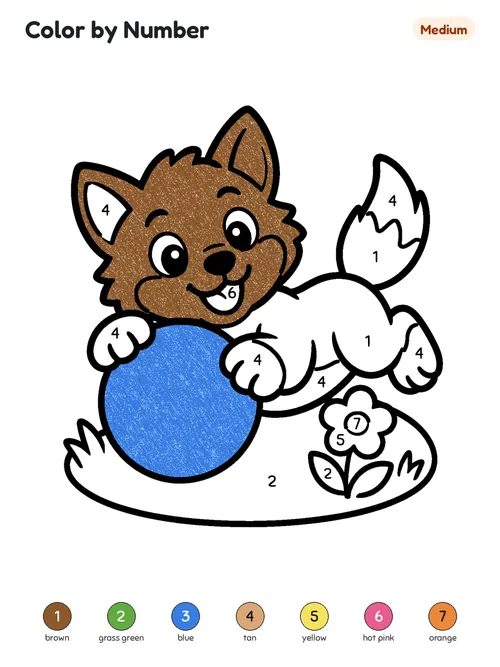
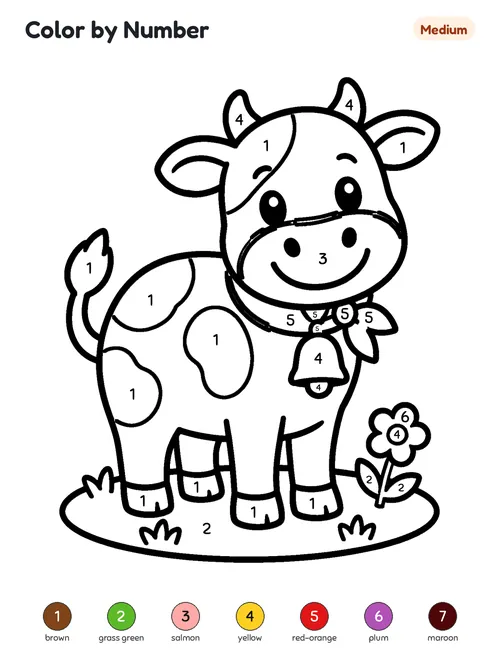
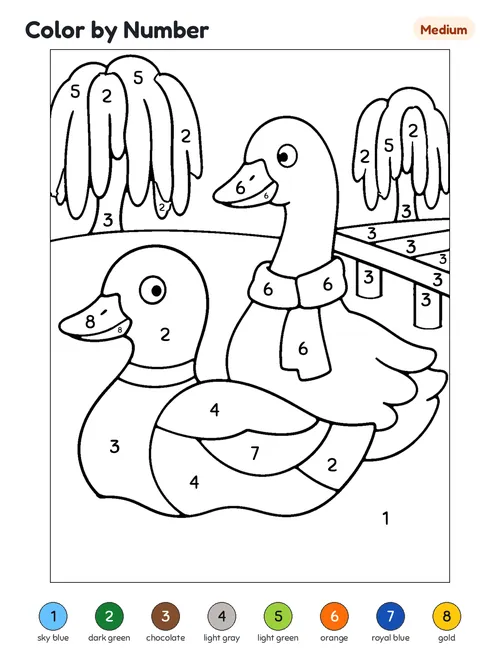
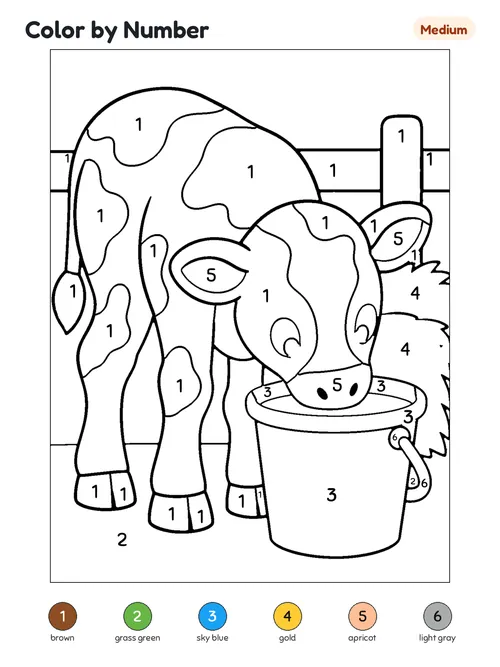
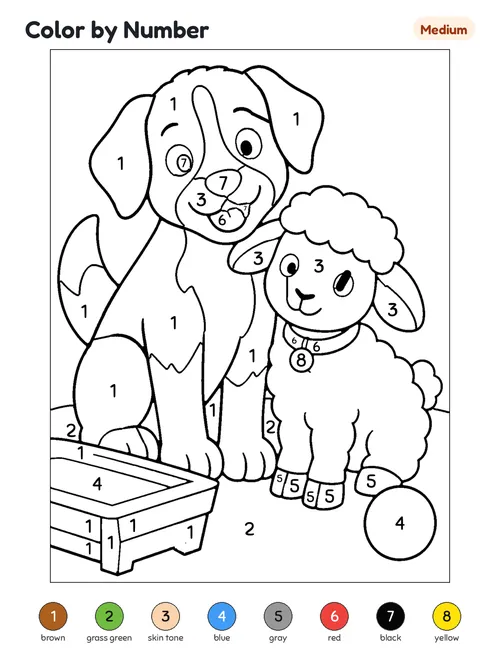
Barn red, meadow green, and barnyard neighbors star in 26 farm animals color by number pages: 3 easy pages for preschool with bold lines, 14 medium pages, 5 challenge pages, and 4 advanced pages for teens and adults.
PDF paper size:
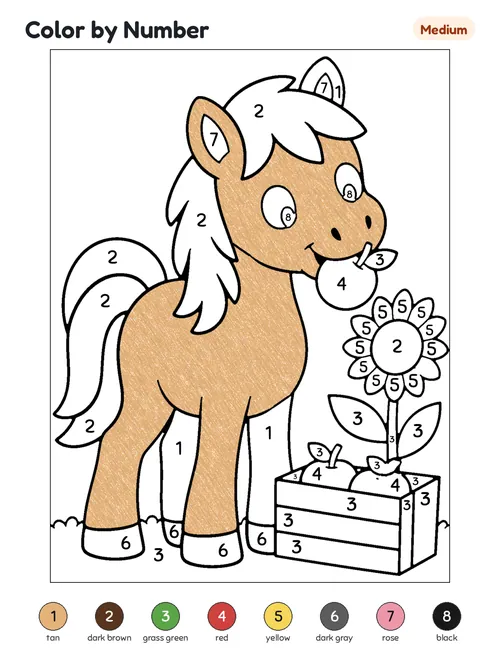
Easy 3 pages · ages 3 to 6


Medium 14 pages · ages 5 to 8
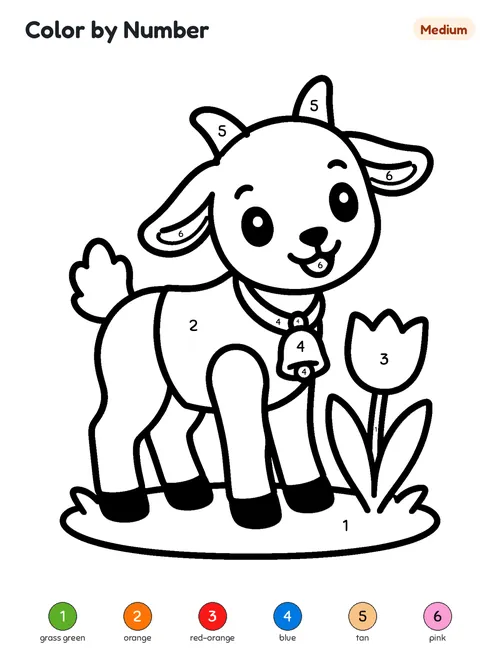


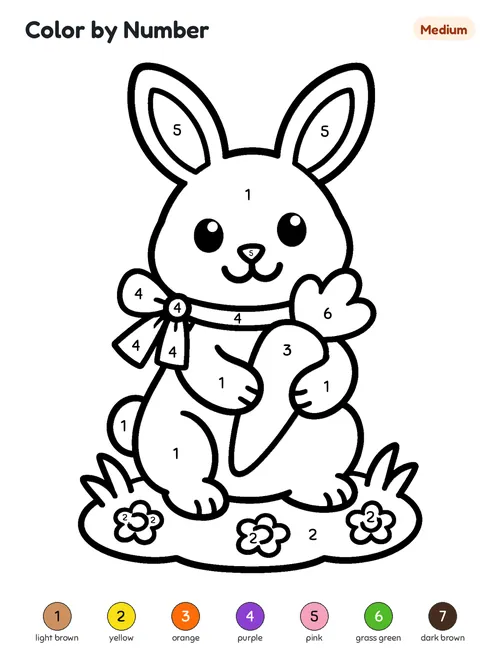

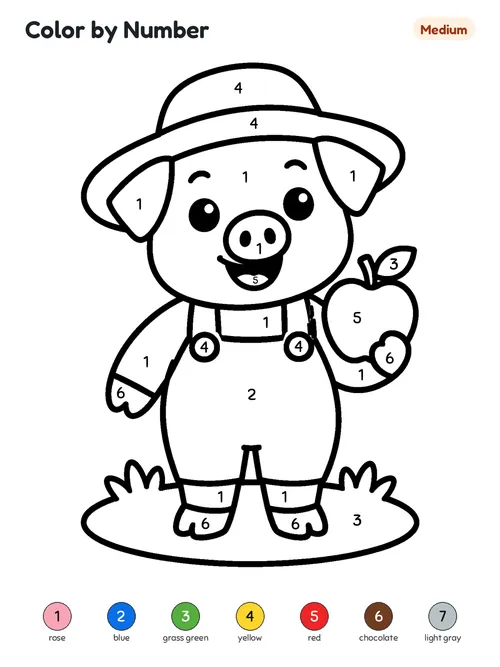






Challenge 5 pages · ages 7 and up


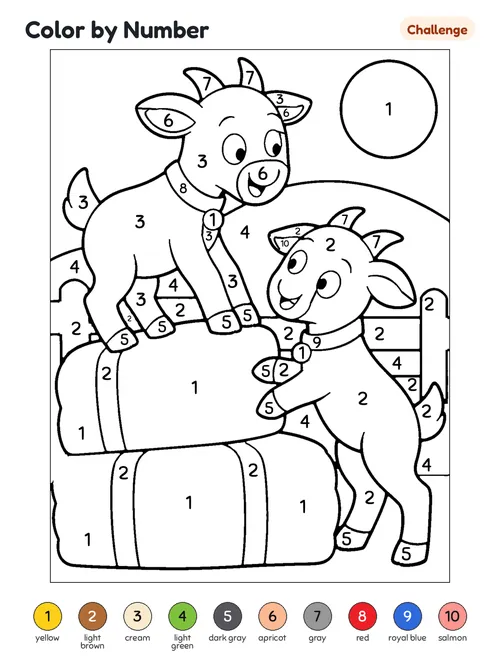


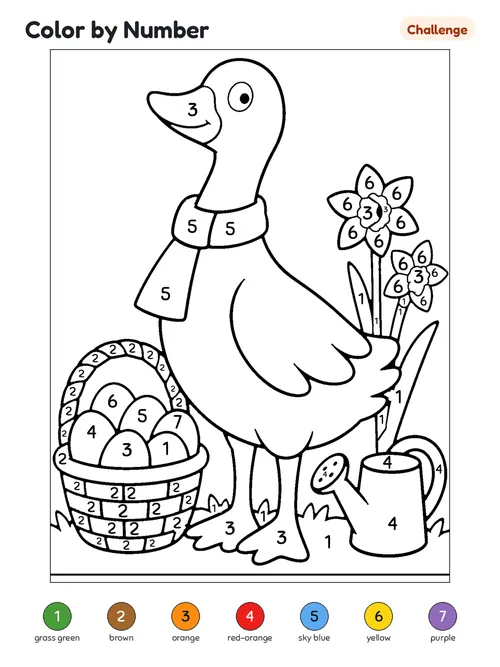

Advanced 4 pages · teens and adults


More Farm Animals coloring pages →
Are farm pigs really bright pink?
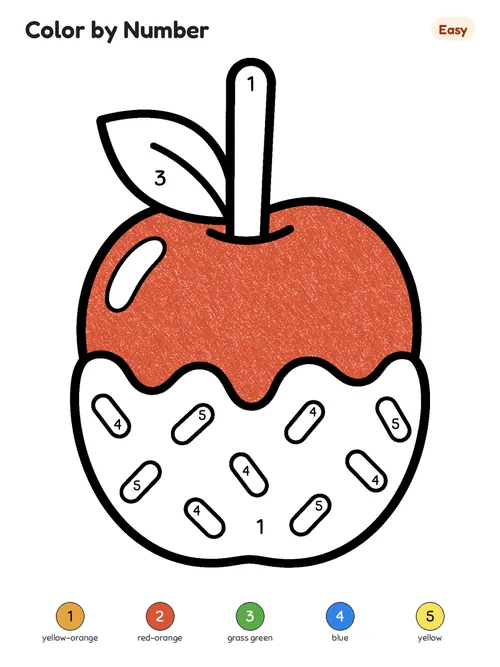
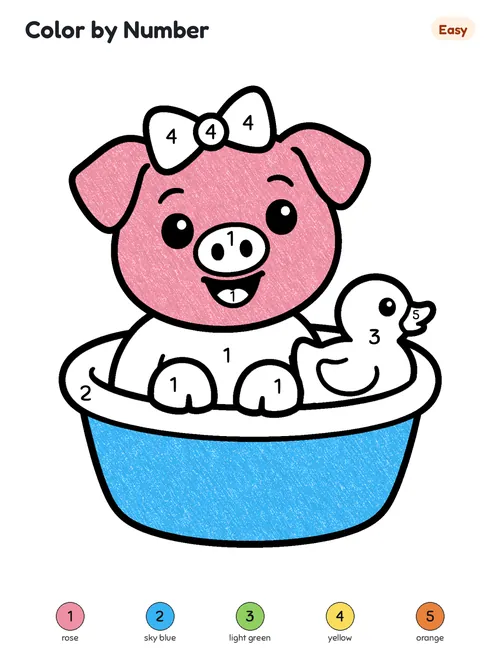
Storybooks almost always show pink pigs and white sheep. Real farm breeds wear tan, gray, and brown coats, while pale pigs use mud to shield their skin. The pink pig in a straw hat page pairs bright clothing with a red apple.
Natural coats suggest a useful tip: shade wool with soft gray so white fur never looks flat. Warm tan also softens pink skin. For freehand spot patterns, our farm animals coloring pages let children pick every coat color.
Matching barnyard animals to milk, wool, and eggs
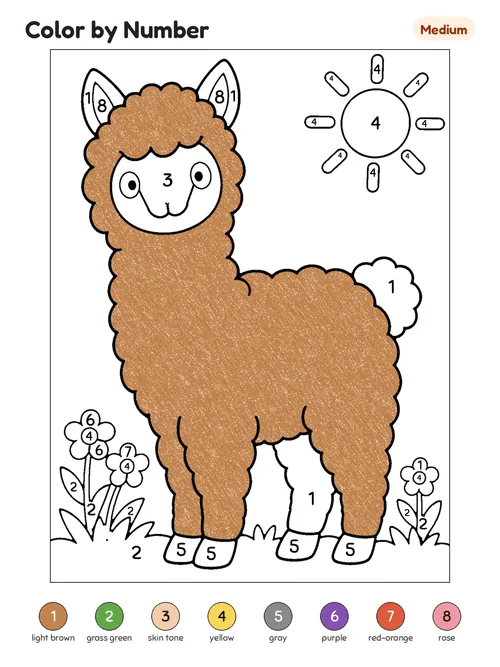
During preschool and kindergarten farm units, printable color by number farm animals bridge circle time and quiet table work. Finished sheets work nicely for sorting games. Have children match animals to products, pairing cows and goats with milk, sheep and llamas with wool, and ducks with eggs.
Each sheet prints as a free PDF with a numbered color key. Teachers planning a dairy lesson can pull extra portraits from our cow color by number set. Completed drawings also brighten a hallway board.
Balancing barn red and meadow green palettes
Barnyard scenes lean on barn red and meadow green, strong tones that easily overpower a horse, rabbit, or rooster. Light pressure helps foreground animals stand out. The folk art farmyard tapestry design gathers a cow, sheep, and rooster beside a red barn. Try to keep meadow greens light so dark browns and red combs pop.
Colored pencils handle tiny rooster feathers cleanly, while crayons cover grassy patches without streaks. Golden yellow ties red and green together. When you want full barnyard backdrops alongside animal portraits, visit our farm color by number pages next.
Questions about Farm Animals color by number
Why do farm pigs roll in mud?
Pigs have very few sweat glands, so wet mud helps lower their temperature on warm days. Once dry, the crust shields pale skin from sunburn and biting insects. That natural habit explains why real barnyard pigs often look dusty brown or gray.
How do you color white sheep wool and duck feathers without leaving them blank?
Trace the outer curls with pale gray or warm cream, leaving the center of each tuft white. Small circular strokes mimic fluffy fleece on sheep and llamas. Short, straight lines along wing edges give white ducks believable feather texture without muddying the page.
How can a kindergarten farm unit pair these sheets with milk, wool, and egg lessons?
Set up labeled chart columns for milk, wool, and eggs after coloring time. Children pin finished cows and goats under milk, sheep and llamas under wool, and ducks beside eggs. Adding real yarn scraps near the wool column helps students remember each barnyard connection.