Music Color by Number Pages
Strings, brass, and percussion come together across 24 music color by number pages: 3 easy pages for preschool with bold lines, 10 medium pages, 7 challenge pages, and 4 advanced pages for teens and adults.
PDF paper size:
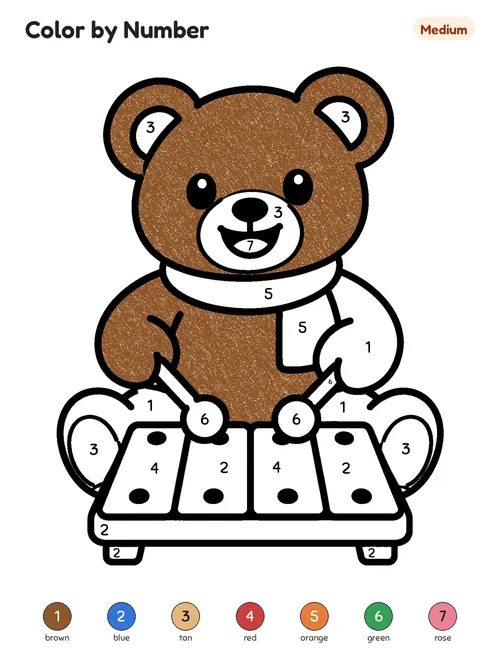
Easy 3 pages · ages 3 to 6


Medium 10 pages · ages 5 to 8


Challenge 7 pages · ages 7 and up


Advanced 4 pages · teens and adults


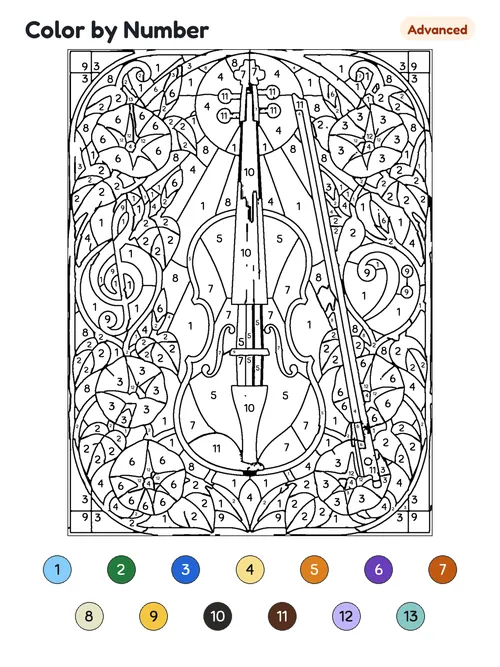


Instrument families and the shades behind their sound
Acoustic guitars and violins rely on hollow wooden bodies to amplify each plucked or bowed string. Layering amber over brown shows that warm wood grain. Trumpets use metal tubing and flared bells to project bright brass tones across a room. Pale yellow highlights make shiny metal pop.
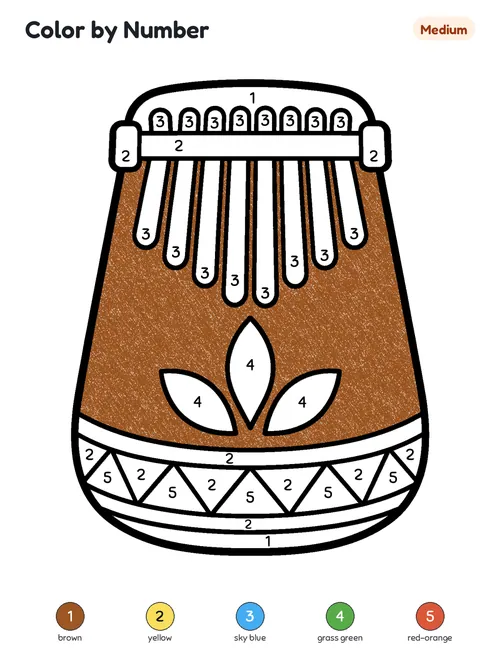
Drums and xylophones belong to the percussion family, making sound whenever hands or mallets strike them. Sorting finished sheets by strings, brass, percussion, and keyboard creates a quick instrument family review. The marching drum page showcases bold percussion shapes cleanly.
Quiet listening sessions in music class or at home
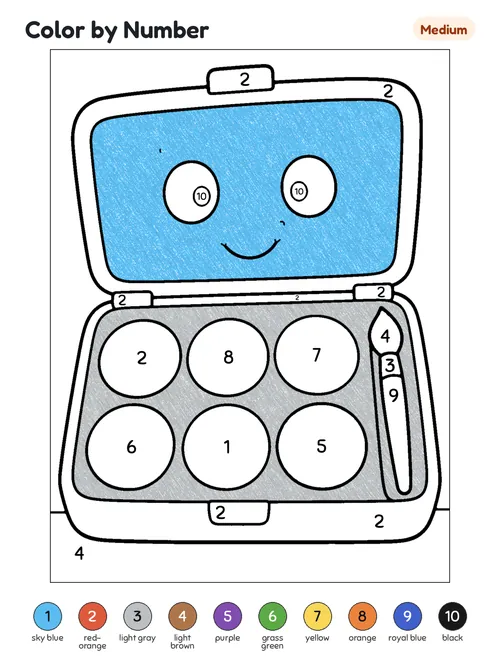
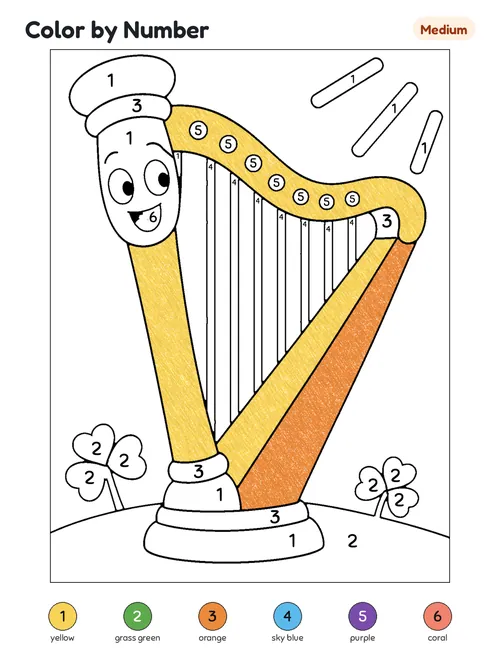
Play a solo piano or trumpet recording during art time. Handing out color by number music worksheets during guided listening time helps students notice changes in tempo and mood. Every free printable PDF includes a color key with swatches and color names.
Saxophones and trumpets also connect naturally to jazz history units alongside our Black History Month pages. The brass saxophone page blends curved metal with sharp rays. Kids who want to invent purple pianos or neon headphones can switch to open-ended music coloring pages instead.
Coloring wood tones, piano keys, and tiny motifs
Sharp colored pencils handle narrow violin strings, clef curves, and packed mandala rings far better than broad markers. Keep a light touch first so wooden shadows build smoothly. Crisp white piano keys pop against dark ink lines.
Finished sheets brighten hallways before a school music recital. Grouping completed guitars, pianos, and drums into a classroom instrument wall gives every student a spot in the band. Anyone unwinding with headphones at night can find extra intricate patterns among our adult color by number pages.
Questions about Music color by number
Why is a saxophone not part of the brass instrument family?
Instrument families sort instruments by how they make sound rather than what covers the outside. Trumpets vibrate the player's lips against a metal mouthpiece. Saxophones instead vibrate a single reed, which puts them in the woodwind family despite their shiny brass bodies.
How do you shade brass horns and wooden guitars so they look realistic?
Lay down a pale base of yellow on a trumpet or light tan on a violin first. Build ochre, gold, or chestnut along curved edges and under strings. Leaving a thin light strip down the center creates realistic shine on metal and polished wood.
How do you pair instrument coloring sheets with a classroom listening lesson?
Play short recordings that feature a single instrument, such as solo piano, acoustic guitar, or marching drums. Pause between tracks so students can name the matching family on their sheet. Ending with a calm ensemble piece lets listeners hear those sounds blend together.