Robot color by number pages
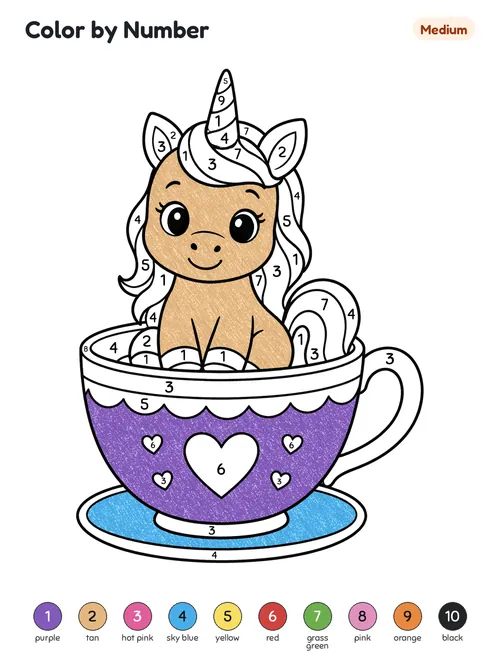
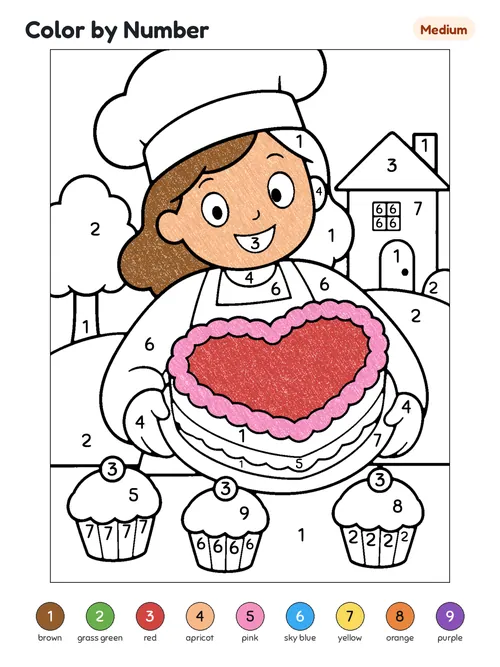
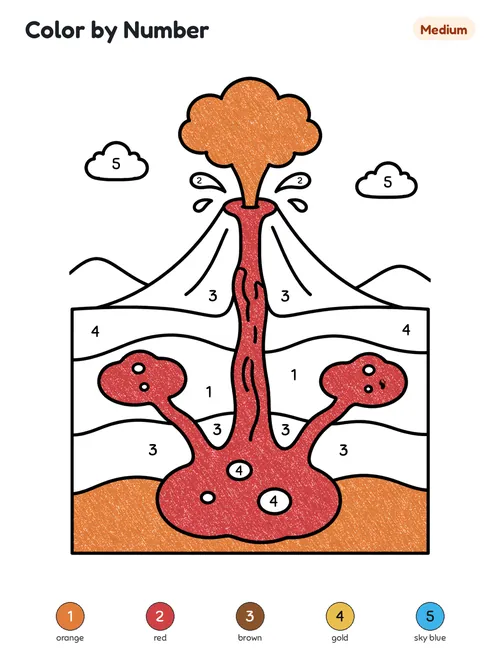
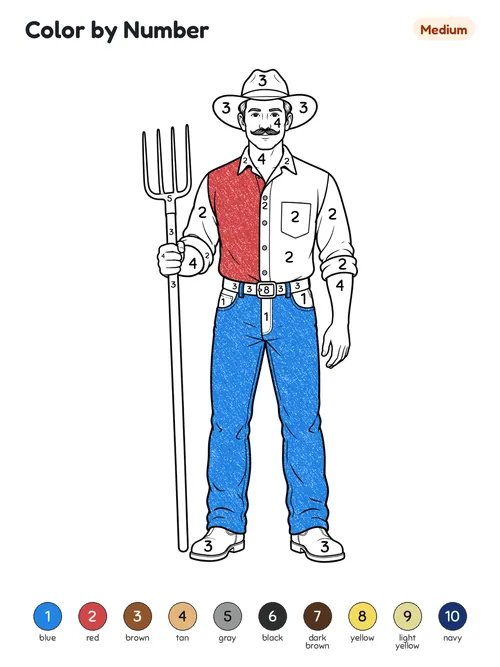
Gears, wheels, and friendly hearts spark big ideas. Here are 27 robot color by number pages: 5 easy pages for preschool with bold lines, 8 medium pages, 10 challenge pages, and 4 advanced pages for teens and adults.
PDF paper size:
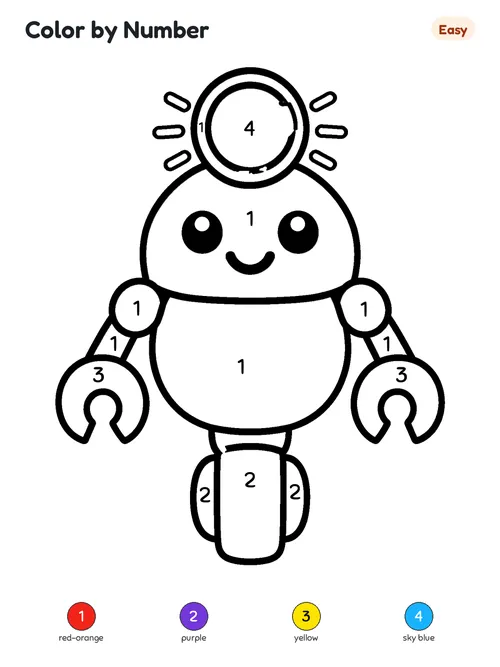
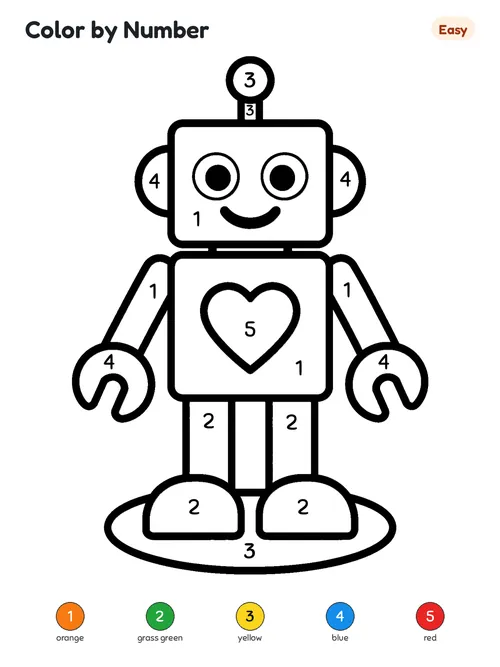
Easy 5 pages · ages 3 to 6


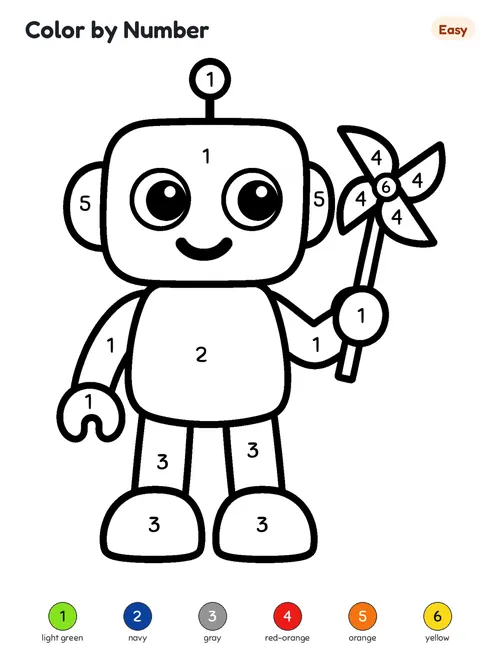

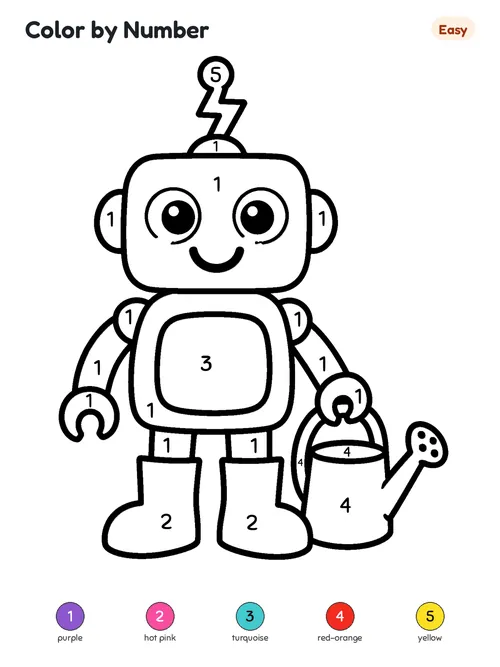


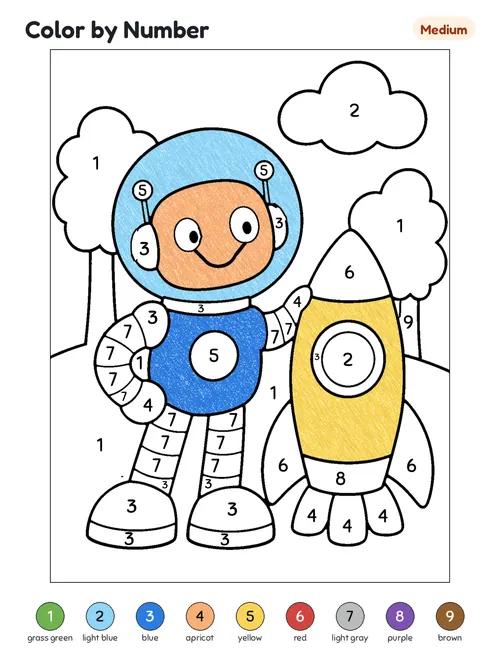
Medium 8 pages · ages 5 to 8
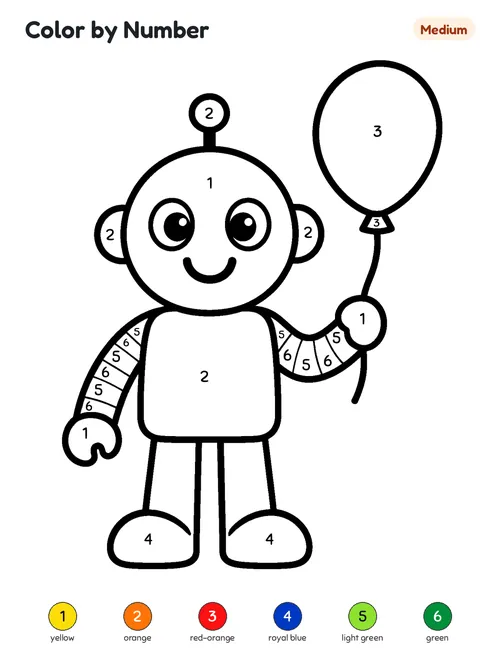

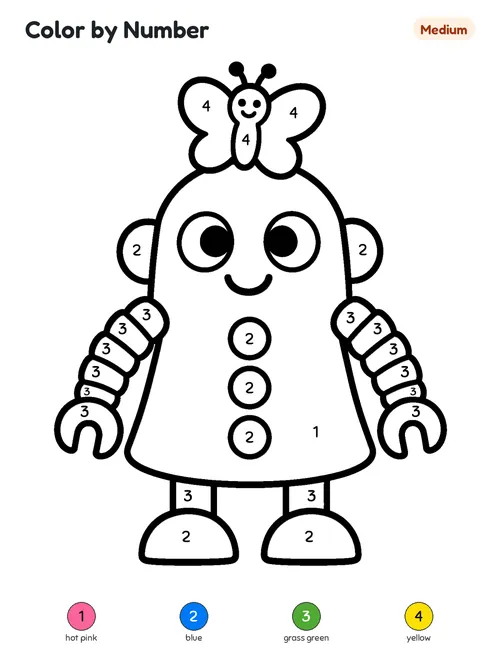

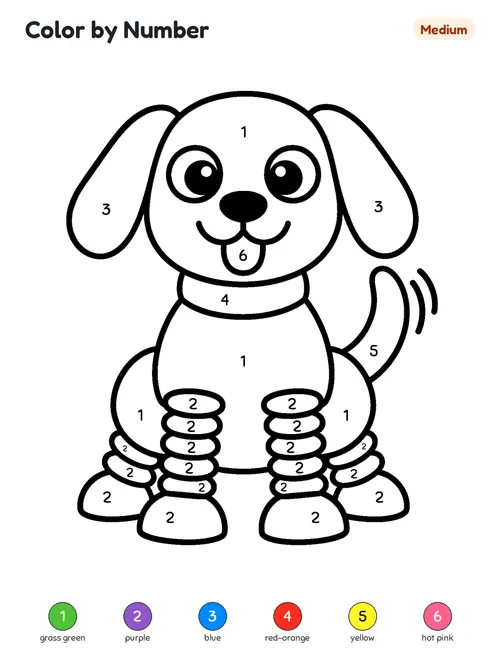

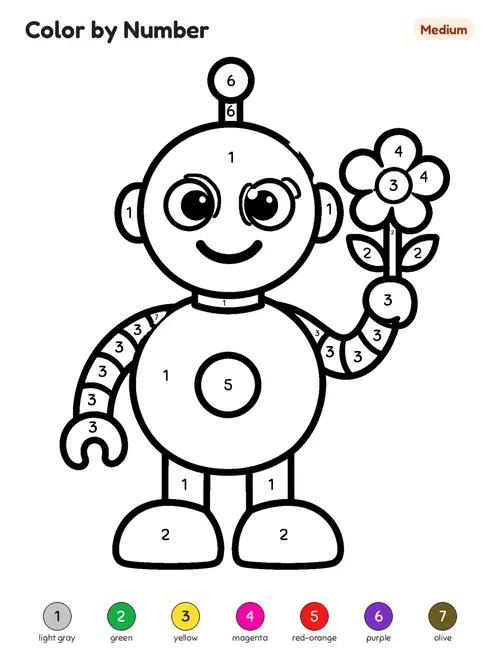

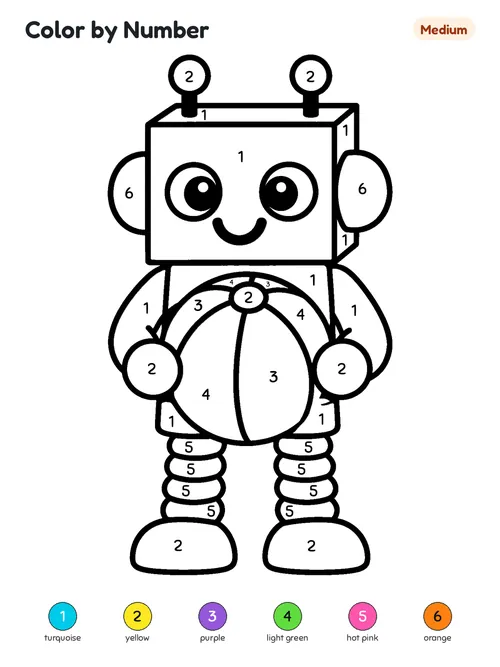


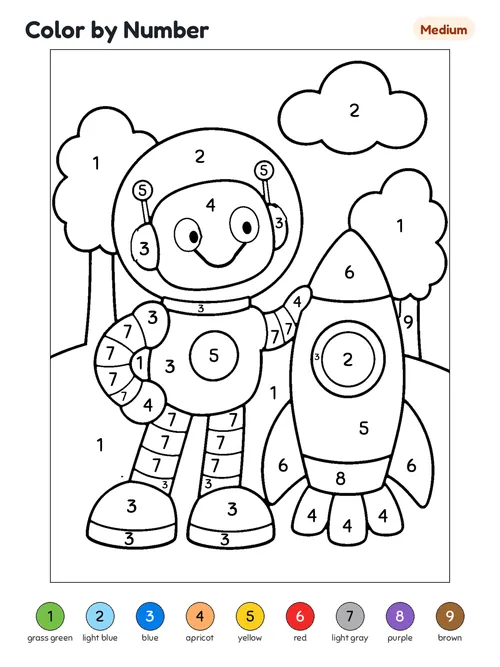

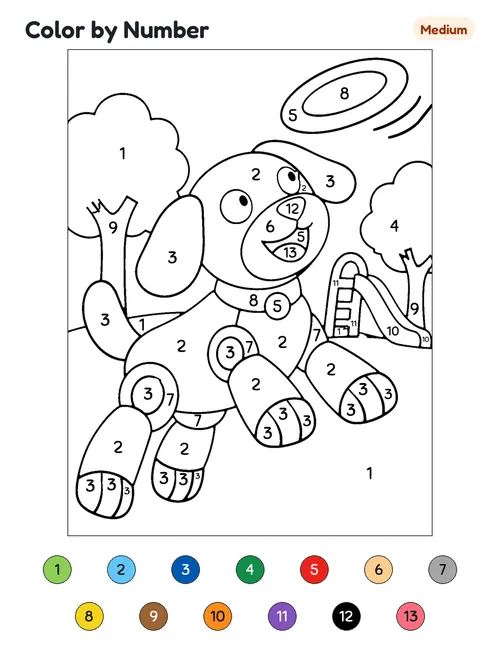

Challenge 10 pages · ages 7 and up
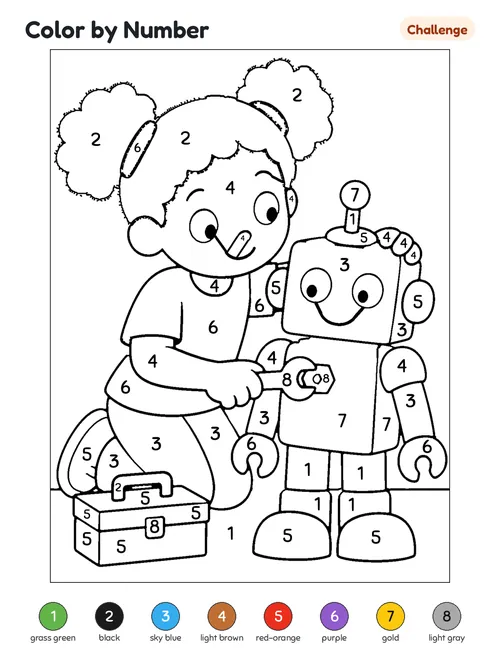


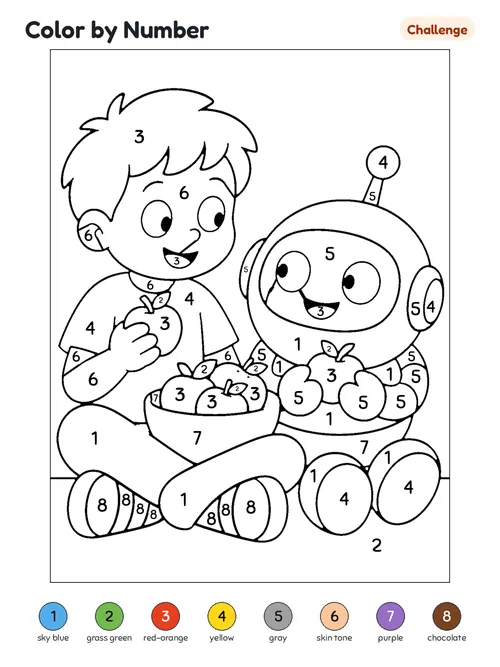

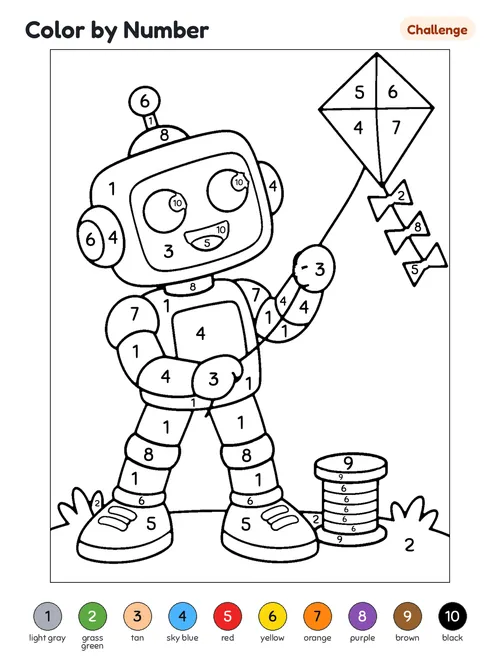

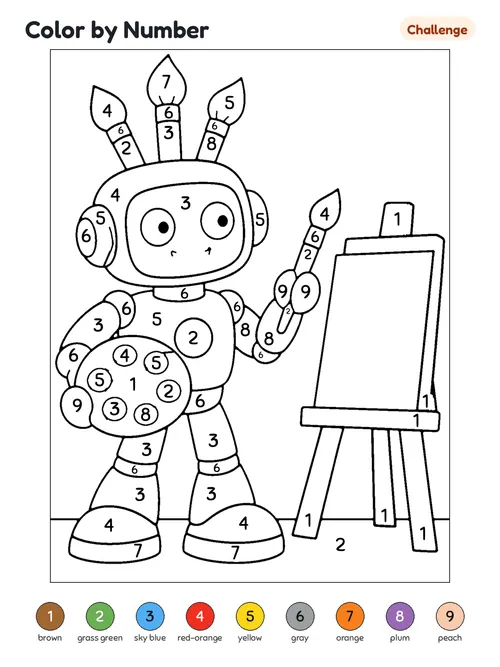


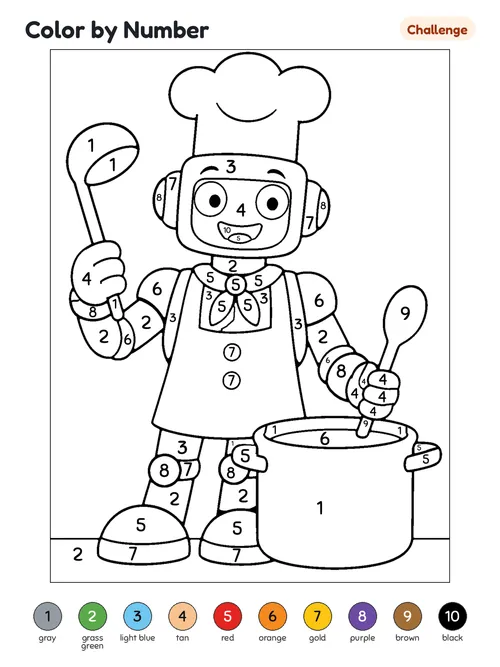

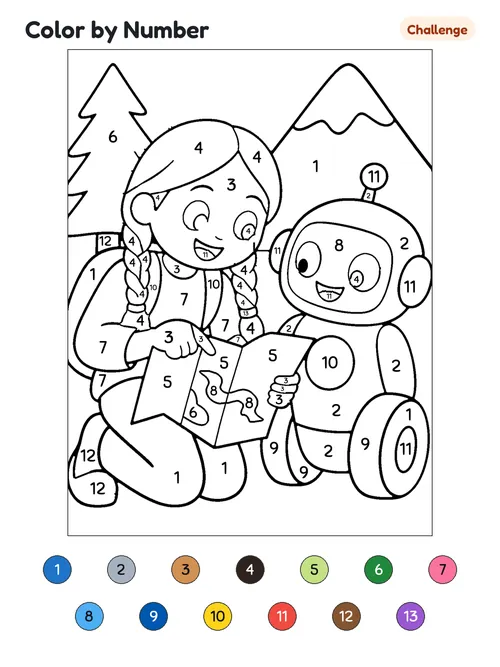


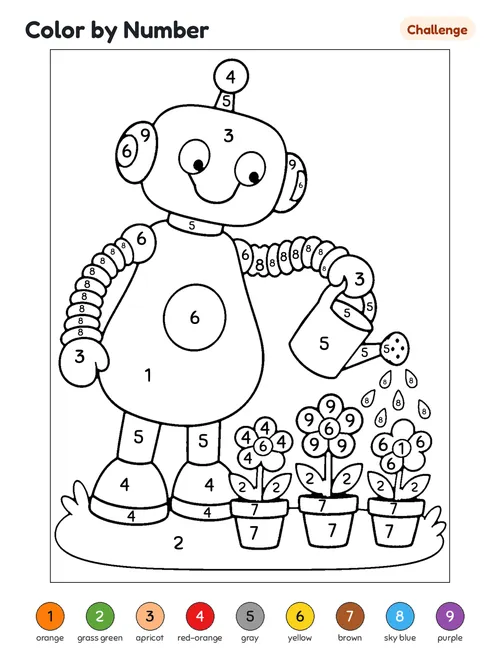

Advanced 4 pages · teens and adults
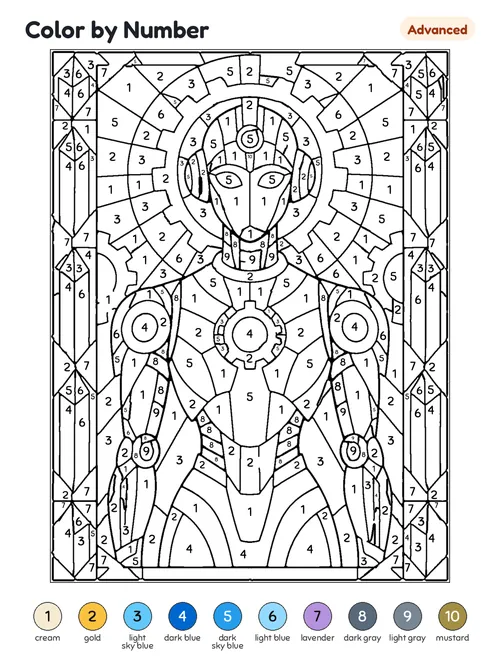

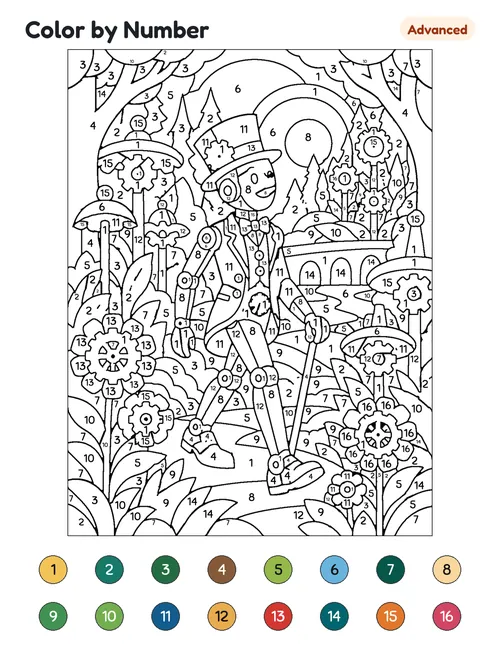


Turn finished robots into home helper cards
The project continues after the last pencil stroke. Glue a finished color by number robot onto cardstock to create a home helper card. Ask your child which daily chore the machine handles, from watering houseplants to sorting stray blocks.
Labeling each wheel, gear, or clamp hand teaches children to connect parts to real functions. Explaining their invention also builds clear everyday storytelling. The tall orange robot page shows a friendly machine with a bright red heart on its chest.
Metal grays paired with bright accent colors
Robot drawings look sharp when cool silver and gray plates meet bright red, yellow, or blue details. Shading softly along panel edges gives rounded metal bodies depth instead of a flat fill. The mechanical gear mandala design frames a round automaton inside layered circles of cogs and springs.
Sharp colored pencils handle tiny bolts and overlapping joints neatly. Washable markers fill wide chest plates cleanly. Anyone ready to design original metal color schemes without numbers can open our robot coloring pages next.
Bringing friendly machines into STEM class
Simple robot sheets fit smoothly into a classroom unit on wheels, axles, and levers. Teachers place them in early-finisher bins or use them as calm warm-ups before a building activity. Each sheet downloads as a free printable PDF, and teachers can choose a version with a full answer key.
Quick design prompts keep quiet table time focused. Ask students whether a classroom helper should roll on wheels or walk on sturdy feet. For a broader science unit, pair these sheets with space pages or check the full color by number gallery.
Questions about Robot color by number
Why do real robots rely on gears, wheels, and sensors?
Gears adjust speed and turning strength so small motors can move heavier arms or legs smoothly. Wheels help machines travel quickly across flat floors, while sensors detect walls, light, or obstacles ahead. Together, those basic parts let a helper machine move safely and repeat tasks accurately.
How do you make gray robot armor look metallic instead of flat?
Press slightly harder with a cool gray or silver pencil along seams, bolts, and curved outer edges, then lighten your grip toward the middle of each panel. Leaving a narrow pale highlight catches the eye, and bright red or yellow buttons make the metal finish stand out.
How can a friendly robot activity fit into a simple machines STEM lesson?
After finishing the sheet, have students circle every wheel, gear, joint, or spring in the drawing. Next, ask them to invent a classroom job for the machine and explain which part creates that motion, turning quiet seatwork into a lively engineering talk.